





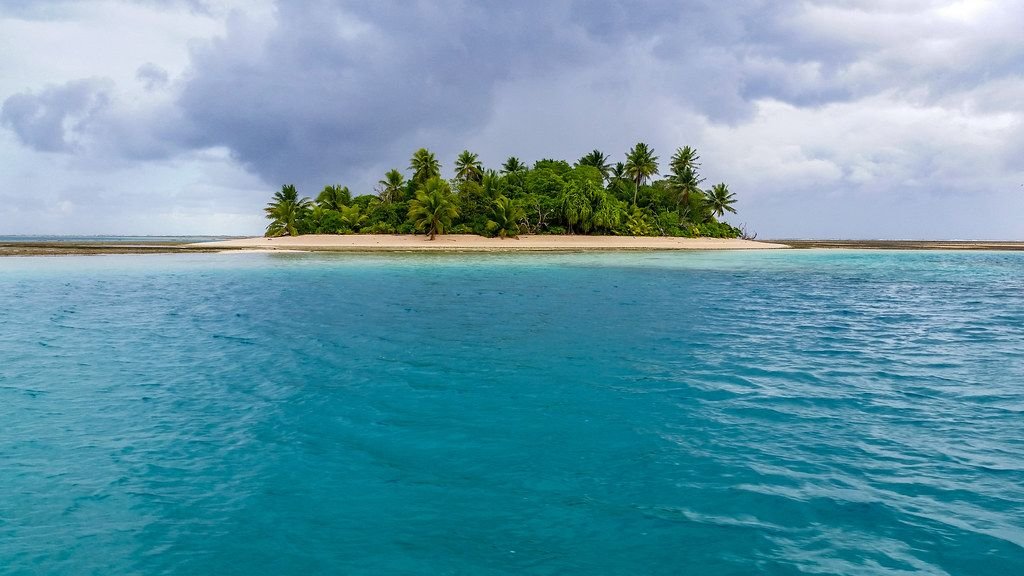

Somewhere between Hawaii and Australia, spread across roughly 26 square kilometres of the Pacific, sits a country most people would struggle to place on a map, let alone name. Tuvalu is widely recognised as the world’s least visited country, a nine-atoll nation of around 12,000 people, and its obscurity isn’t simply a matter of remoteness. It’s a country actively racing against the physical possibility of its own disappearance, and that context shapes everything about what a visit here actually means.
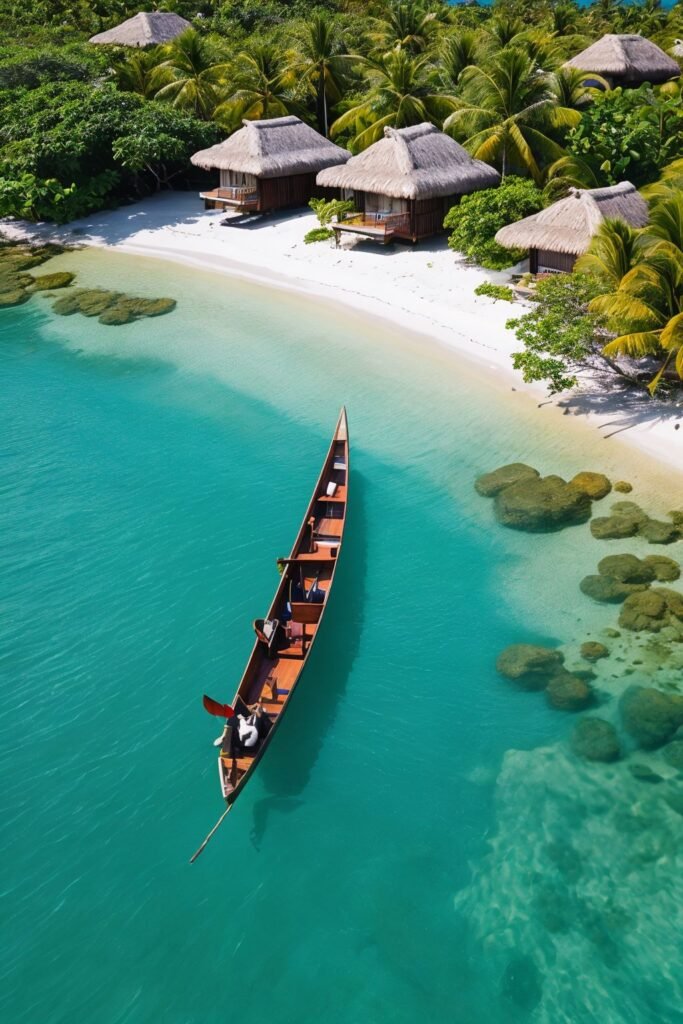
A Nation Built on the Thinnest Possible Margin
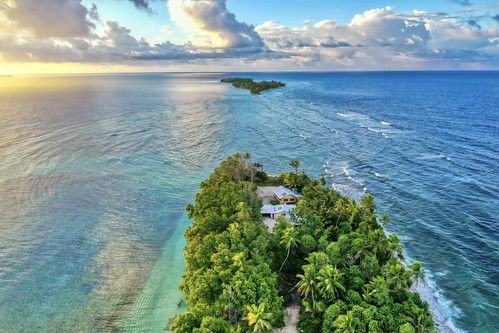
Tuvalu’s geography leaves almost no room for error. Its narrowest points of land sit barely wide enough to walk across, ocean visible on both sides simultaneously, and the entire country’s average elevation hovers just a couple of metres above sea level. Travellers who’ve made the journey describe the relationship between land and water here as inescapably intimate, the ocean isn’t a view from Tuvalu, it’s a constant, pressing presence against every road and home. That fragility isn’t a rhetorical flourish. The United Nations estimates that under high-emission climate scenarios, up to 95 percent of Tuvalu’s land, including the capital, Funafuti, could be underwater by 2100.
A Country Preparing to Move, and to Be Preserved Digitally
Tuvalu’s response to this threat has become one of the more remarkable stories in modern climate adaptation. In 2022, then-Foreign Minister Simon Kofe addressed the COP27 climate summit via a video that appeared to show him standing on a beach, before the frame pulled back to reveal he was actually inside a digitally rendered version of Tuvalu, part of the government’s Digital Nation project. The initiative aims to create a complete digital twin of all 124 of Tuvalu’s islands and islets, alongside a cloud-based archive, called the Digital Ark, preserving cultural artefacts, stories, and values, and e-government infrastructure designed to let Tuvalu’s government continue functioning even if its population is eventually forced to relocate entirely. Kofe’s own words to the summit were direct: “We cannot outrun the rising tides, but we will do what we can to protect our statehood, our spirit, our values.” Alongside this digital effort, a landmark treaty with Australia now offers Tuvaluans a gradual migration pathway with an eventual route to permanent residency, and in 2025, more than 90 percent of the country’s population applied for the associated visa scheme, a staggering figure that says as much about the scale of anticipated displacement as any climate projection could.
Why So Few Travellers Ever Make It Here
Tuvalu’s isolation is severe even by Pacific island standards. There’s no significant tourism infrastructure, flight access runs through Fiji and remains genuinely limited, and the country simply lacks the resources to build the kind of visitor economy that sustains tourism elsewhere in the region. That combination, extreme remoteness, minimal infrastructure, and a population focused on far more pressing survival questions than hospitality development, has kept visitor numbers about as low as any country on Earth. In recent years, that obscurity has started shifting slightly, some travellers are deliberately seeking Tuvalu out specifically because of its climate predicament, a form of visitation sometimes uncomfortably labelled “last chance tourism.”
What Visiting Actually Involves, and Means
For travellers who do reach Tuvalu, the experience is unavoidably shaped by its circumstances. This isn’t a resort destination with curated experiences built for outside consumption, it’s a genuinely lived-in nation whose culture, deeply rooted Polynesian traditions, close-knit atoll communities, remains fully intact and fully its own. Anyone considering a visit should approach it with real awareness of the context: Tuvaluans are living through a slow-motion national emergency, not performing one for visitors, and the appropriate posture is respectful observation and genuine economic support for the community, not treating the country’s vulnerability as a curiosity.
Why Tuvalu’s Story Matters Beyond Its Own Borders
Tuvalu’s situation has become something bigger than a single nation’s crisis, it’s increasingly treated internationally as a preview of what other low-lying coastal nations and cities may eventually face. Its digital preservation project raises a genuinely unresolved question worth sitting with: if a nation’s physical territory disappears entirely while its government, culture, and diaspora persist, does it stop being a country? Tuvalu isn’t waiting for an answer. It’s building one, piece by piece, on the assumption that the physical islands and the nation itself may not, in the end, share the same fate.
Why It Still Belongs on a Traveller’s Radar
Tuvalu isn’t a destination in the conventional bucket-list sense, there’s little infrastructure, minimal access, and a population focused on questions considerably more urgent than tourism growth. What it offers instead is something increasingly rare and genuinely important: a firsthand encounter with a living culture and a functioning nation, actively confronting the possibility of losing its physical home within the lifetime of children being born there today. For travellers willing to visit thoughtfully, Tuvalu offers not spectacle, but a clear-eyed look at what climate change actually means for the people living its consequences first.