





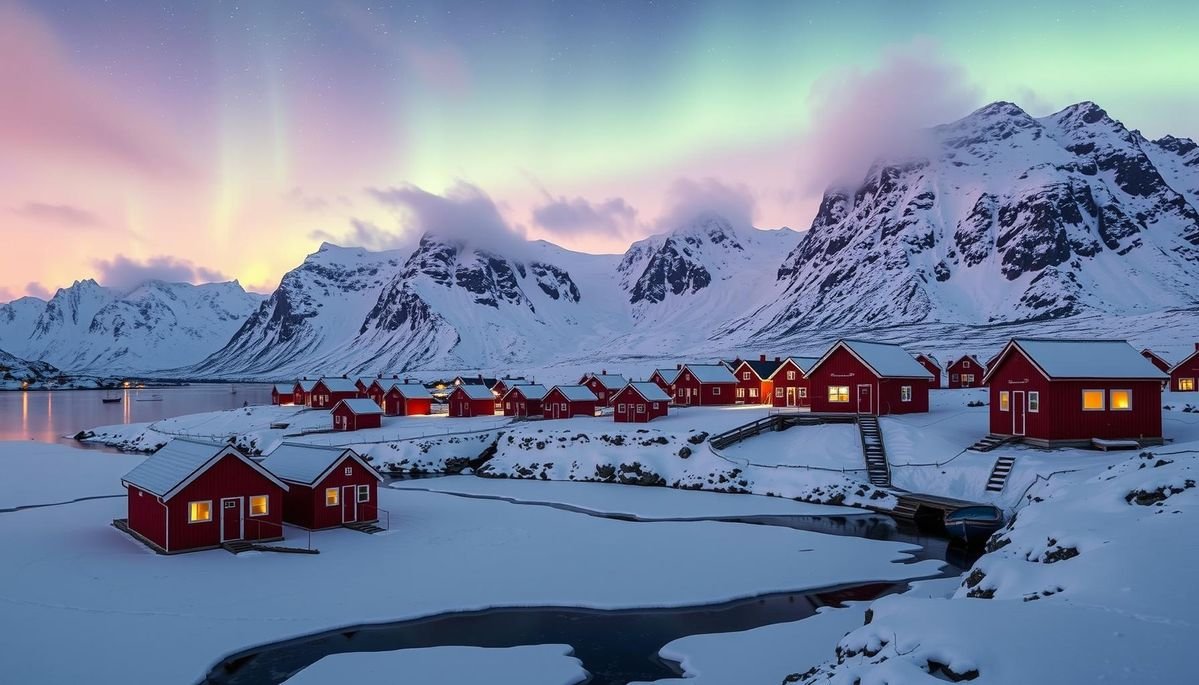

Winter arrives differently in the Lofoten Islands. Snow settles on steep mountain peaks, fishing boats move across dark Arctic waters, and small red cabins glow against a landscape of grey rock and white sand. By evening, the sky becomes a canvas of deep blue, sometimes interrupted by ribbons of green Northern Lights.
Located above the Arctic Circle in northern Norway, Lofoten is famous for dramatic scenery, but winter reveals a quieter, more atmospheric side of the archipelago. The villages are still working fishing communities, the weather can change within hours, and the long nights create opportunities to witness one of nature’s most extraordinary displays.
For travellers willing to embrace the cold, the Lofoten Islands in winter offer something that feels wonderfully removed from ordinary life.
Reine: A Fishing Village Framed by Mountains
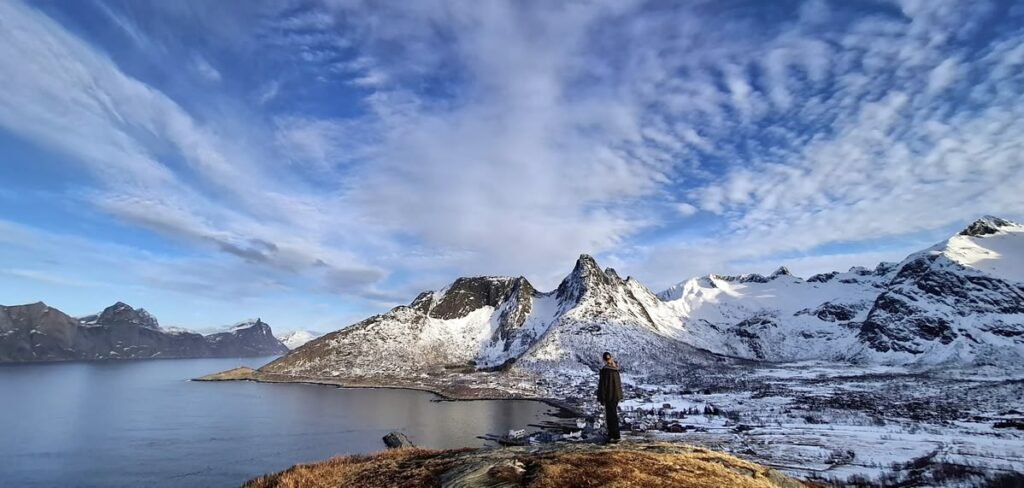
Few places capture Lofoten’s winter beauty quite like Reine. Colourful wooden cabins stand beside the harbour, while steep mountains rise almost vertically behind the village. Snow highlights the rocky ridges, and reflections ripple across the water when the wind settles.
Many of the traditional cabins, known as rorbuer, were originally built to accommodate seasonal fishermen. Today, restored versions offer visitors a chance to stay close to the waterfront, often with kitchens, comfortable bedrooms and views across the harbour.
Reine is especially beautiful during the short winter daylight hours, when the low sun casts pink and golden light across the mountains. Walk through the village, photograph the traditional buildings and stop somewhere warm before the temperature drops after sunset.
The Northern Lights may appear above the surrounding peaks on clear nights, although sightings depend on cloud cover and solar activity. Even without an aurora, Reine’s combination of mountains, sea and traditional architecture makes it one of Norway’s most memorable winter destinations.
Henningsvær: Where Fishing Culture Meets Arctic Creativity
Spread across small islands connected by bridges, Henningsvær feels both remote and unexpectedly lively. Fishing boats line the harbour, galleries occupy converted waterfront buildings, and cafés provide welcoming places to escape the winter wind.
Fishing remains central to the village’s identity. Between February and April, migrating Arctic cod known as skrei arrive in the waters around Lofoten to spawn. The seasonal fishery has supported local communities for centuries, and visitors may see cod drying on traditional wooden racks along the coast.
Winter is also a rewarding time to explore Henningsvær’s creative side. Independent shops, art spaces and restaurants give the village character beyond its famous scenery. Visit without rushing, allowing time to wander along the harbour and watch daily life unfold around the boats.
The official tourism guide to Lofoten highlights Henningsvær as one of the archipelago’s distinctive fishing villages, with cultural attractions and winter activities that continue beyond the summer season.
Chasing the Northern Lights Across the Arctic Sky
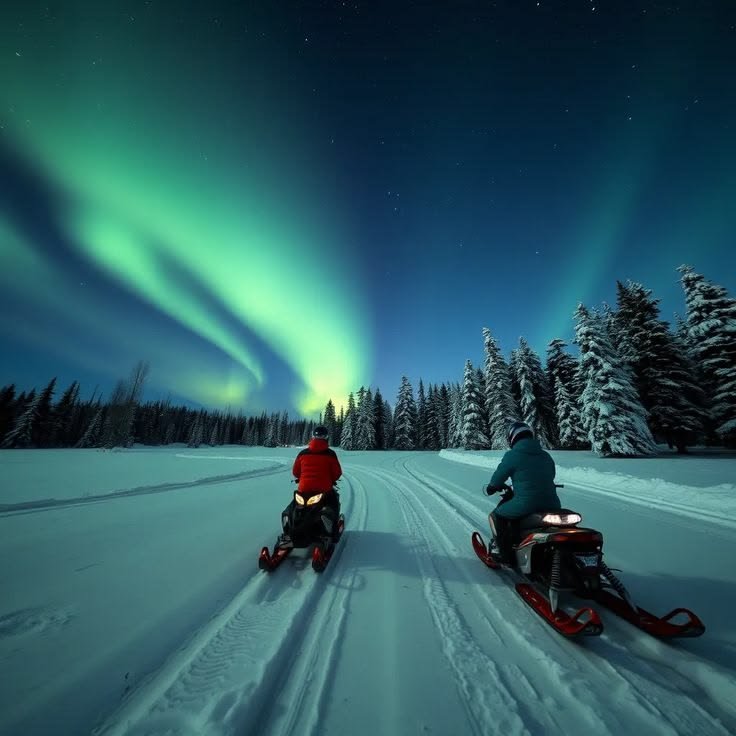
For many travellers, the Northern Lights are the main reason to visit Lofoten in winter. The archipelago lies within the auroral zone, making it a promising destination for seeing the aurora borealis when conditions cooperate.
The viewing season generally extends from late August into early April. Winter brings long hours of darkness, but that does not mean the lights appear every night. Clear skies are essential, and the aurora can be hidden behind clouds even when solar activity is strong.
Rather than spending the entire trip in one place, allow several nights for viewing. Beaches and open coastal areas can provide excellent horizons, while moving away from bright village lights may improve visibility. Local Northern Lights guides can also help travellers find clearer skies and choose suitable viewing locations.
Dress warmly and be patient. Sometimes the sky remains dark for hours before a faint green glow begins to spread overhead. On other nights, the lights may appear briefly and disappear just as quickly.
Winter Adventures Beyond the Villages
Lofoten offers plenty to explore during daylight. Guided snowshoeing trips lead into quiet landscapes, while experienced ski tourers can explore mountain terrain with qualified local guides. Boat excursions may reveal sea eagles soaring above the water, and fishing trips offer insight into the traditions that shaped the islands.
The beaches are another surprise. Places such as Haukland Beach have pale sand and turquoise water that look almost tropical in photographs, although the Arctic wind quickly reminds visitors where they are.
Winter weather can be unpredictable, so check local conditions before setting out. Mountain routes may be affected by avalanche danger, and visitors without appropriate experience should avoid attempting challenging terrain alone.
When to Visit and What to Pack
November through March offers distinctly wintry scenery, although snow conditions vary from year to year. December and early January bring the period when the sun stays below the horizon, creating the region’s characteristic blue twilight. By February and March, daylight increases, making it easier to combine outdoor activities with Northern Lights viewing.
Pack thermal layers, a waterproof outer jacket, insulated boots, gloves and a warm hat. Winter driving requires particular care: roads can be icy, and strong winds may disrupt transport. Leave spare time in your itinerary and check road, ferry and flight conditions regularly.
A Different Kind of Winter Escape
The Lofoten Islands are not simply a place to watch the Northern Lights. Their real charm lies in the connection between landscape and everyday life: fishermen working through the cold, warm windows glowing along the harbour, and mountains changing colour as the day fades.
You might arrive hoping to photograph the aurora and leave remembering something quieter—the sound of waves beneath a wooden cabin, the taste of fresh Arctic cod, or the blue light resting over a snow-covered village.
In winter, Lofoten offers no guarantee of perfect weather or spectacular skies. What it offers instead is a remarkable landscape, a living coastal culture and the possibility of witnessing something extraordinary when the clouds finally part.