






When people plan a trip to Southern Africa, the itinerary almost always looks the same. They book a safari in Kruger, spend a few days tasting wine around Cape Town, or fly out to watch the spray rise over Victoria Falls.
Hardly anyone thinks to look at the tiny, landlocked country sitting entirely inside South Africa’s borders.
That country is Lesotho—and skipping it is a massive mistake.
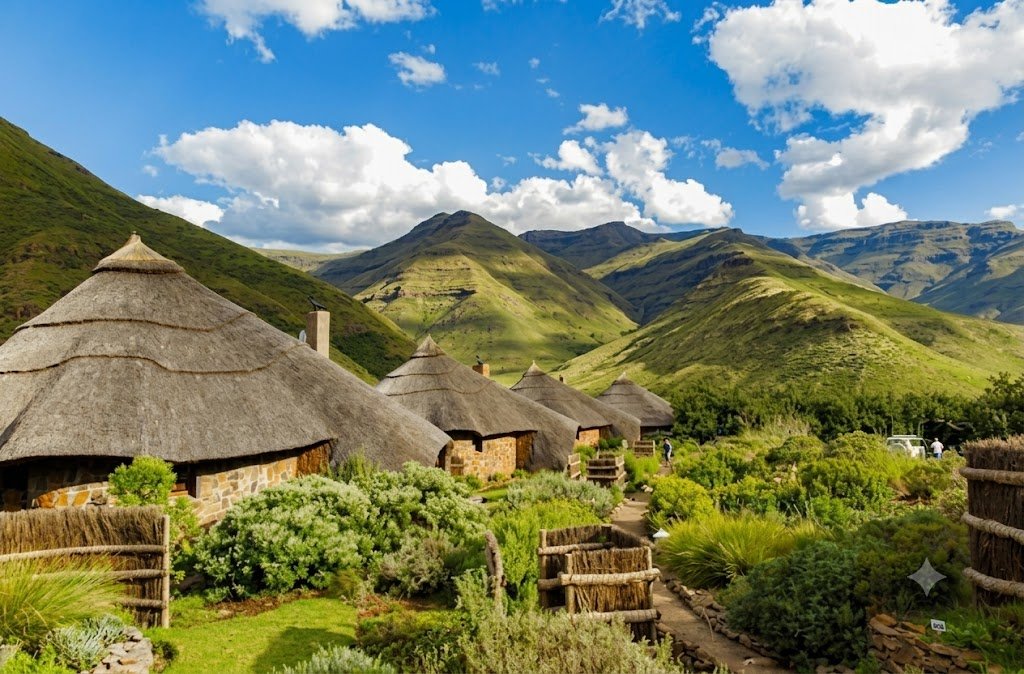
Known officially as the “Kingdom in the Sky,” Lesotho holds a unique geographical title: it’s the only independent state on Earth that sits entirely above 1,000 meters (3,281 feet) in elevation. There are no coastal beaches, palm trees, or sprawling savannahs here. Instead, you’ll find jagged basalt mountain ranges, clear alpine rivers, and sheer sandstone cliffs stretching across the horizon.
And if you want to explore these rugged highlands the way locals have for centuries, you have to leave four-wheel-drive vehicles behind and climb into the saddle of a Basotho pony.
Why Horses Rule the Mountain Kingdom
To understand why horse riding is so central to life in Lesotho, you have to look at the landscape.
A huge portion of the country’s interior consists of isolated mountain villages tucked deep inside the Maloti and Drakensberg ranges. Many of these settlements have no paved roads, no power lines, and no access for regular cars.
When horses were first introduced to the region in the 19th century, the local Basotho people quickly adapted them to the brutal terrain. Through decades of breeding, they developed the Basotho pony—a compact, exceptionally tough horse breed famous for its sure-footedness, thick coat, and calm temperament.
In the highlands, riding a pony isn’t a recreational hobby; it’s essential infrastructure. You’ll see local herdsmen wrapped in traditional patterned wool blankets (seana marena) and conical grass hats (mokorotlo), calmly guiding these sturdy horses along narrow dirt trails that hug the edges of thousand-foot drops.
The Raw Experience of a Multi-Day Trek
Pony trekking in Lesotho is about as far from a polished tourist excursion as you can get. There are no luxury safari lodges waiting for you at the end of the trail, and there is zero cellphone reception once you head into the valleys.
Instead, multi-day routes—like the popular trails starting around Malealea, Semonkong, or the Ts’ehlanyane National Park—take you deep into the heart of the countryside. You spend hours riding along ancient footpaths, crossing cold mountain streams, and scrambling up rocky passes where the air feels thin and crisp.
At night, trekkers stay directly in small rural villages, sleeping in traditional round stone huts with thatched roofs known as rondavels. Local families host travelers, serving simple, hot meals of pap (maize porridge) and slow-cooked vegetable stews.
Sitting outside a stone hut as the sun dips behind the peaks, watching the sky fill with millions of stars without a single city light in sight, is an experience that stays with you long after you leave.
What You Need to Know Before You Go
If you’re thinking about adding Lesotho to an African travel itinerary, a little preparation goes a long way:
- Expect Unpredictable Weather: Because of the extreme elevation, weather in the highlands can turn in minutes. Bright morning sunshine can quickly give way to afternoon thunderstorms or sudden temperature plummets, even during the summer months. Pack warm layers and solid rain gear.
- No Riding Experience Required: You don’t need to be an expert equestrian to go pony trekking. Basotho ponies are famous for their steady, relaxed pace. They know the mountain tracks better than any human guide, so your main job is simply holding the reins and letting the horse do the work.
- Visiting Maletsunyane Falls: If your route takes you near Semonkong, make sure to visit Maletsunyane Falls—one of the highest single-drop waterfalls in Africa, cascading over 190 meters (630 feet) down a sheer basalt amphitheater.
A Journey Back to the Essentials
In a world where travel often feels overly choreographed and crowded, Lesotho offers something increasingly rare: genuine, untouched open space.
Riding a Basotho pony through these high mountain passes isn’t just a great way to see breathtaking scenery. It’s a quiet, humbling invitation to slow down, disconnect from screens, and move at the steady, timeless pace of the mountains.