





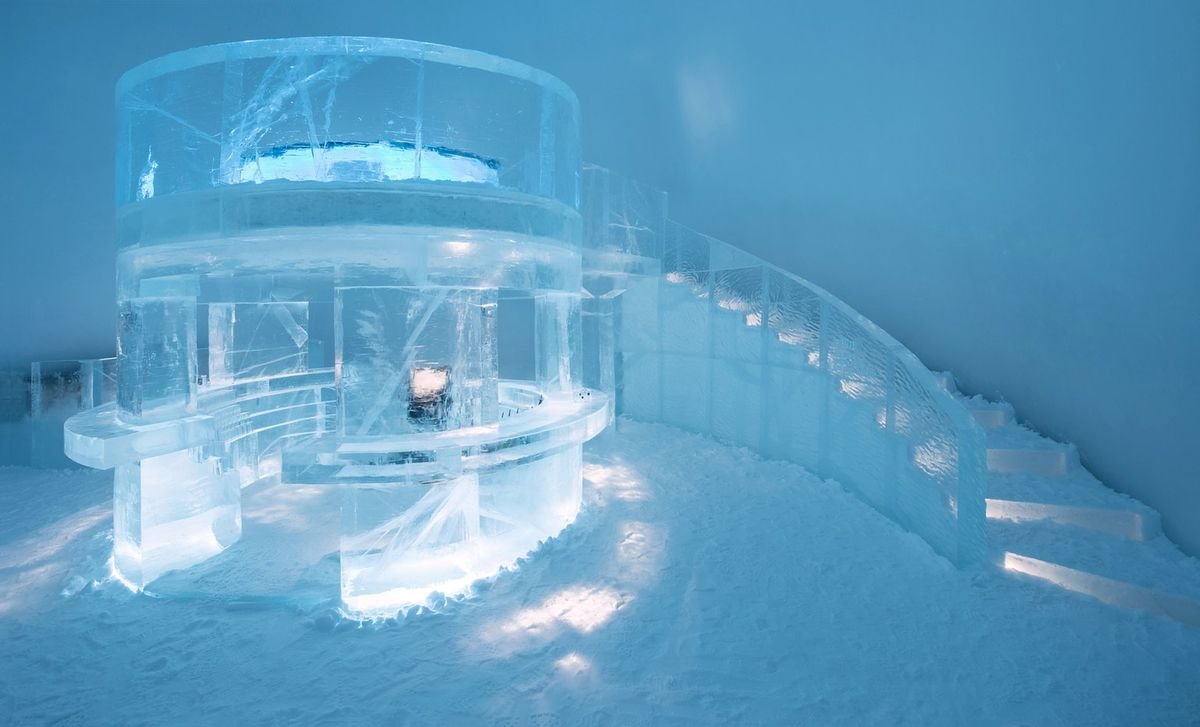

Most hotels are built once and maintained for decades. The Icehotel in Jukkasjärvi, Sweden, does the opposite on purpose: every single winter, it is built entirely from scratch, and every spring, it melts back into the river it came from. This isn’t a maintenance quirk or a marketing gimmick. It is the founding principle of the world’s original ice hotel, an idea that has now defined an entire genre of travel for more than three decades.
Where the Idea Actually Came From
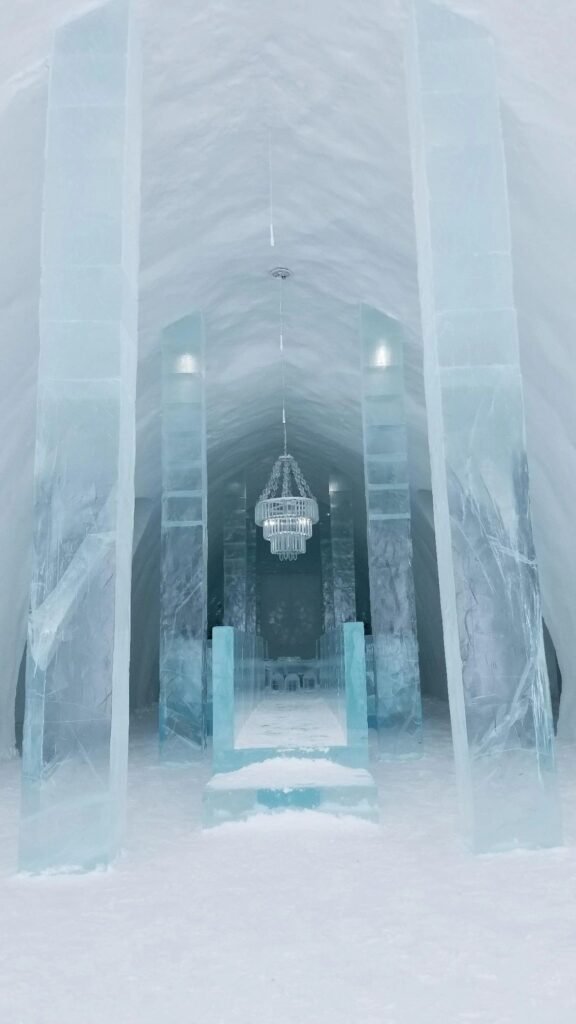
The Icehotel traces its origins to 1989, when Japanese ice sculptors created temporary igloo structures on the Torne River in Swedish Lapland as an art exhibition. Local visionary Yngve Bergqvist recognised something bigger in the concept and formalised it into an annual hotel, launching what has since become one of Sweden’s most recognisable tourism institutions and inspired imitators across the world’s colder regions, though none with quite the same original claim. Located seventeen kilometres from Kiruna, in the small village of Jukkasjärvi, the hotel now draws roughly fifty thousand visitors a year, a remarkable figure for a structure that exists for only a few months at a time.
Built From the River It Sits Beside
Construction begins each March, when around 1,000 tons of natural ice are harvested directly from the Torne River and placed into cold storage to survive the summer months. Actual building work starts in the depths of Arctic winter and typically takes six to eight weeks, involving teams of roughly a hundred people, architects, structural engineers, and international artists working together on ice and snow in quantities that vary year to year but have run as high as 2,500 tons of river ice combined with a snow-and-ice mixture equivalent to ten Olympic swimming pools. Recent editions have brought together dozens of artists from more than a dozen countries, working under a creative director to design each season’s individual art suites, sculptural rooms themed around anything from mythology to pure abstraction, each one entirely unique and destined to exist for a single season.
Sleeping at Seventeen Degrees Fahrenheit
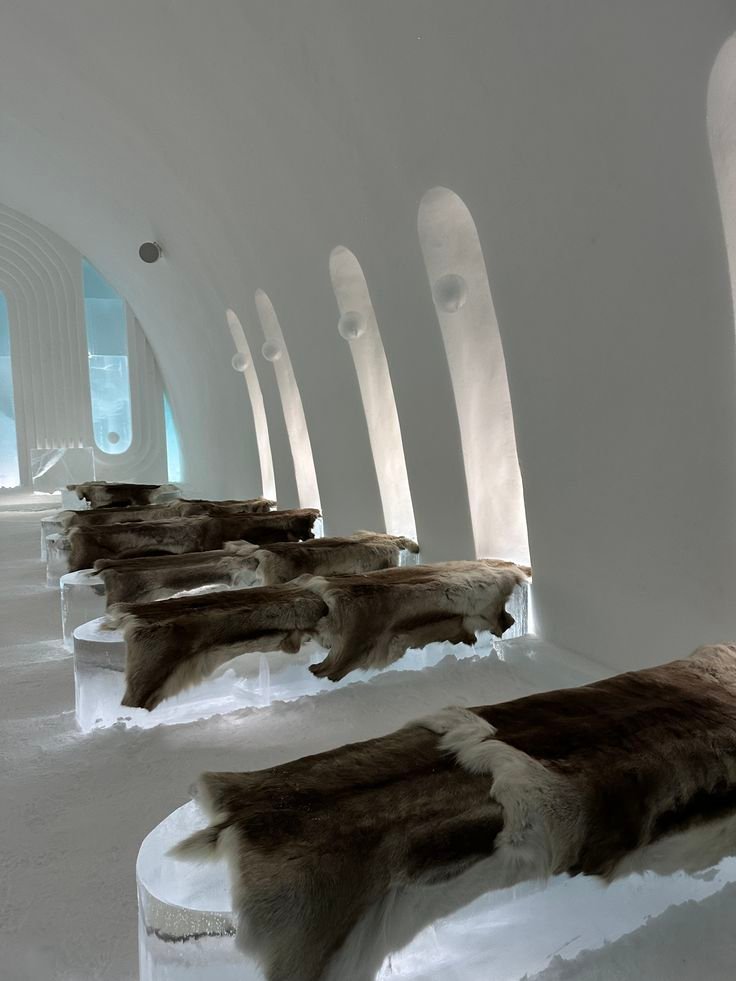
Guests who book an overnight stay in the ice section sleep in a room that holds a steady air temperature around minus eight degrees Celsius, roughly seventeen degrees Fahrenheit, on ice beds layered with reindeer hides and insulated thermal sleeping bags rated for the cold. It sounds extreme, and it is, but the hotel has refined the experience into something closer to adventure than endurance test: guests receive a full orientation before their stay, sauna access is included, and each visitor departs with a diploma recording the exact indoor and outdoor temperatures on the night they stayed, a small but genuinely charming souvenir of an experience that, by design, cannot be repeated exactly the same way twice.
The Part That Doesn’t Melt
Not all of the Icehotel disappears each spring. In 2016, the property added ICEHOTEL 365, a permanent section cooled year-round using solar power harvested from the Arctic’s near-endless summer daylight, allowing visitors to experience ice suites, an ice gallery, and the hotel’s famous Icebar even in the height of a Swedish summer. This permanent wing runs alongside the seasonal structure, meaning the Icehotel now operates in some form 365 days a year, even as its most famous seasonal suites continue to be rebuilt, redesigned, and allowed to disappear on schedule every single winter.
Why the Impermanence Is the Point
It would be technically possible to preserve the Icehotel artificially year-round. That the team chooses not to, letting most of each year’s work return to the river that supplied it, is central to what makes the place genuinely resonate rather than simply impress. Every art suite is, by design, a once-only creation. No guest who books a stay is seeing what last year’s guests saw, and no future guest will see this year’s rooms again. In an industry increasingly built around permanence and scale, the Icehotel has built its entire identity around the opposite: a hotel that exists specifically because it is willing to disappear.