





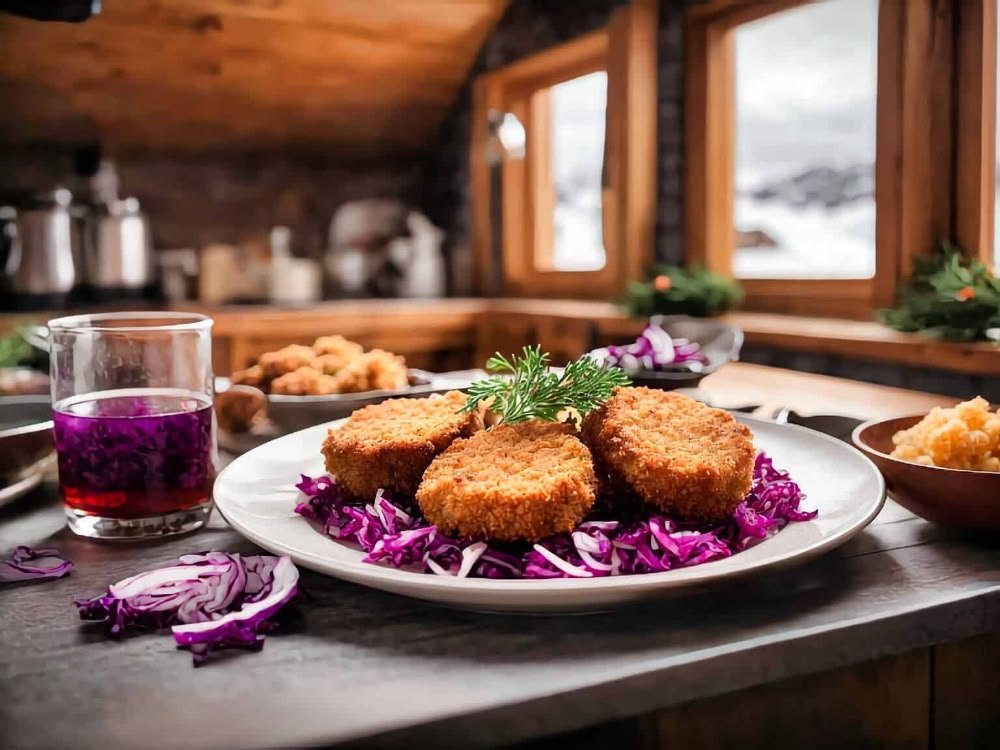

Most travellers arrive in Iceland for the landscape. They come for the glaciers and the geysers, for the Northern Lights trembling overhead and the black sand beaches stretching to a horizon that feels like the edge of the known world. Food, if they think about it at all, tends to be an afterthought — something to fuel the next adventure rather than an adventure in its own right. This is a profound mistake. Iceland’s food culture is one of the most distinctive, most historically layered, and most honestly revealing in the entire world. To understand what Icelanders eat — and why they eat it — is to understand something essential about what it means to build a civilisation at the very outer limit of where human life is possible.
A cuisine born from survival
Iceland was settled by Norse Vikings in the ninth century, and for the better part of a thousand years the people who chose to remain on this remote, volcanically active, sub-Arctic island had to survive on what the land and sea could provide — which, for most of that history, was considerably less than abundant. The harsh climate made grain farming nearly impossible. Fruits and vegetables were scarce for most of the year. What Iceland had in extraordinary abundance was fish, lamb, seabirds, and geothermal heat — and Icelandic food culture was built entirely around making the most of all four. The result is a cuisine that is not flashy or elaborate, but that carries within it a kind of raw, unadorned honesty that is rare in the modern food world. Every traditional Icelandic dish is a direct conversation between a people and their environment, and that conversation has been going on for over eleven hundred years.
Skyr — the ancient superfood the world just discovered
If you have visited a supermarket in Europe or North America recently, you will have encountered skyr marketed as an Icelandic yoghurt and positioned as a premium health food. What the packaging rarely mentions is that skyr has been a daily staple of the Icelandic diet for over a thousand years, making it one of the oldest continuously consumed dairy products on earth. Technically a soft cheese rather than a yoghurt — it is made by separating curds from whey and has a thick, creamy texture and a clean, slightly tangy flavour — skyr was historically the food that kept Icelandic families alive through long winters when little else was available. Today it is eaten at almost every Icelandic breakfast table, often with a drizzle of local crowberry or bilberry preserves, and its recent global popularity has done nothing to diminish its centrality to everyday Icelandic life. It is one of those rare foods that is simultaneously ancient and entirely of the present moment.
Lamb raised on freedom
Icelandic lamb is, by almost universal agreement among chefs who have worked with it, among the finest in the world — and the reason is entirely environmental. Every summer, Icelandic sheep are released into the highland wilderness to roam completely freely across thousands of acres of untouched pasture, grazing on wild Arctic thyme, angelica, crowberries, and mosses that grow nowhere else on earth. In autumn, the entire nation participates in the réttir — the traditional sheep roundup — in which farmers and volunteers on horseback gather the flocks from the mountains in a practice unchanged in its essential character since the age of the sagas. The meat that results from this extraordinary life is lean, deeply flavoured, and entirely free of the industrial livestock practices that define most of the world’s meat production. Slow-roasted leg of Icelandic lamb, known as hangikjöt when smoked over birchwood and dried sheep dung, is the centrepiece of the traditional Christmas table and one of the most profoundly flavoured things you will eat anywhere in the world.
“Icelandic food does not try to impress you. It tries to sustain you — and in doing so honestly, without pretension or ornament, it ends up being more impressive than almost any cuisine that does.”
The sea at the centre of everything
Fish has been the economic and cultural foundation of Iceland since its earliest settlement, and it remains so today. Iceland’s waters — where the warm Gulf Stream meets the cold Arctic currents — produce some of the most sustainably managed and extraordinarily fresh seafood anywhere on the planet. Cod, haddock, Arctic char, and langoustine are the stars of the modern Icelandic table, but the most culturally significant preparation is also the most ancient: harðfiskur, or wind-dried fish, which has been produced by hanging split cod and haddock on outdoor wooden frames in the cold coastal air for centuries. Eaten as a snack with a scraping of butter, harðfiskur is intensely flavoured, extraordinarily high in protein, and entirely representative of the Icelandic genius for preserving food through environmental conditions rather than technology. You will find it sold in paper bags at petrol stations across the country — which tells you everything you need to know about how deeply embedded it remains in everyday Icelandic life.
Geothermal cooking — the most extraordinary kitchen on earth
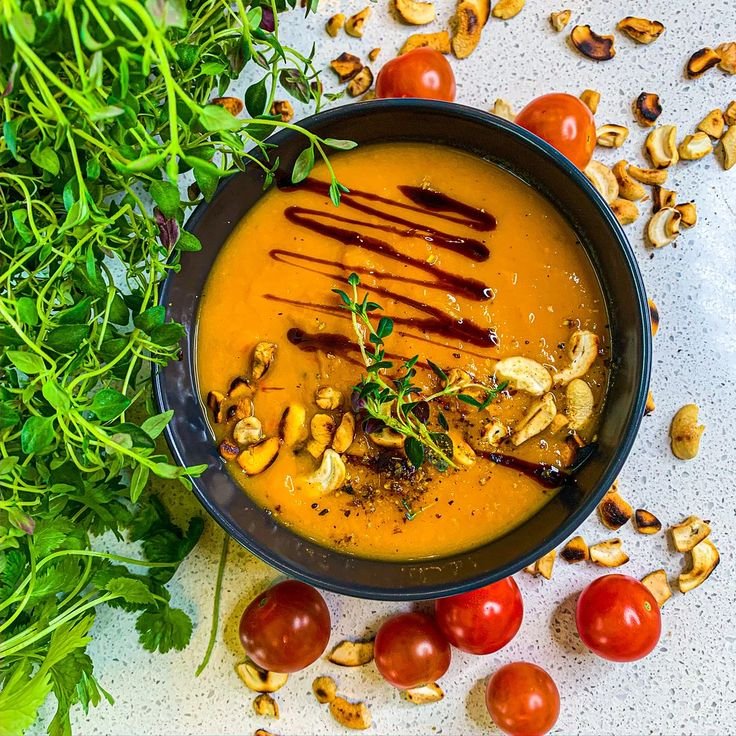
Perhaps the most uniquely Icelandic culinary tradition is the use of geothermal heat for cooking — a practice with no real equivalent anywhere else in the world. The most famous example is hverabrauð, or hot spring bread: a dense, dark, slightly sweet rye bread whose dough is sealed in a pot and buried directly in the geothermally heated ground near a hot spring, where it bakes slowly at a consistent temperature of around 100 degrees Celsius for twenty-four hours. The result is a bread with a moist, dense crumb and a deep, almost caramel sweetness that no oven-baked bread can replicate. Served warm with Icelandic butter and smoked salmon, it is one of the most genuinely singular food experiences available to any traveller anywhere on earth — and it is entirely free of spectacle or pretension. It is simply bread, baked by the earth itself, eaten by a people who learned long ago that the land, however harsh, always provides something worth being grateful for.
Eating Iceland honestly
The traveller who arrives in Iceland and eats only at the tourist-facing restaurants of Reykjavik’s main street will leave having tasted very little of what Iceland actually is. The real food culture lives at the breakfast table where skyr is eaten without ceremony, at the petrol station where harðfiskur is bought by locals on the way to work, at the family farm where hangikjöt has been smoked over the same fire for generations, and at the hot spring where rye bread has been buried in the ground since before anyone thought to write the recipe down. Iceland’s food is not sophisticated in the way that French cuisine is sophisticated. It is sophisticated in a far rarer and more impressive way — it is perfectly, completely, unimprovably itself. And in a world of endless culinary trend-chasing and performative gastronomy, that kind of honest, ancient, deeply rooted food culture is worth travelling a very long way to find.