







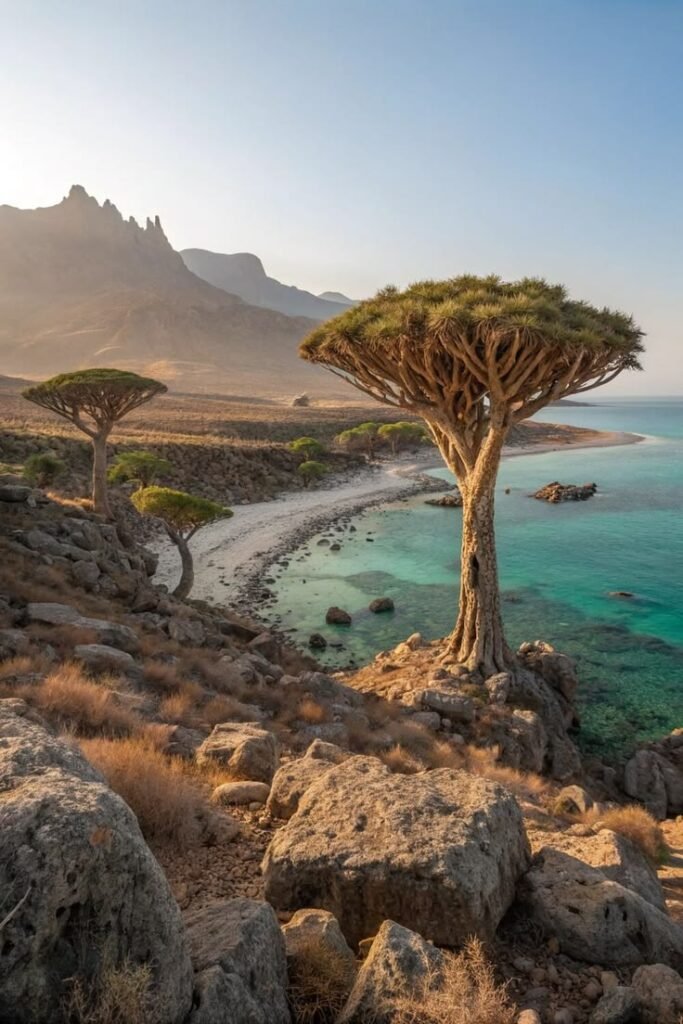
Some places look so unusual that photographs of them seem almost impossible to believe. Socotra Island, off the coast of Yemen in the Arabian Sea, is one of those places. Its landscapes are dotted with umbrella-shaped trees, strange bottle-like plants and rugged limestone mountains, while beaches of white sand meet water so clear it appears almost unreal. It is easy to understand why visitors describe Socotra as a place that looks as though it belongs to another planet.
Yet this remarkable island is very much part of our own world. Its unusual appearance comes from millions of years of geographical isolation, which allowed plants and animals to evolve in ways rarely seen elsewhere. For travellers drawn to remote destinations and extraordinary natural scenery, Socotra offers an experience unlike a conventional island holiday.

The Dragon’s Blood Trees That Define the Island
Socotra’s most recognisable sight is the dragon’s blood tree, a distinctive plant with a thick trunk and an umbrella-shaped crown of branches. Seen across the rocky highlands, these trees create a landscape that looks almost like a scene from a fantasy film.
Their name comes from the dark red resin produced by the tree, traditionally valued for dyes, crafts and various medicinal uses. The trees grow particularly well on the island’s elevated plateaus, where their unusual shape helps them capture moisture from the surrounding air.
One of the best-known places to see them is the Firmihin area, where clusters of dragon’s blood trees spread across the rugged terrain. Their presence is more than a visual attraction: they are part of an exceptionally fragile ecosystem that has developed over a long period of isolation. According to UNESCO, around 37 per cent of Socotra’s plant species occur nowhere else on Earth.
Landscapes That Change Around Every Corner
Socotra is not simply a forest of unusual trees. The island’s scenery shifts dramatically from one region to another, making exploration feel like a journey through several different worlds.
At Diksam Plateau, rocky ground and scattered dragon’s blood trees create wide, open views across the island’s interior. Elsewhere, the Haggeher Mountains rise into the clouds, offering cooler conditions and challenging terrain for hikers. Their jagged peaks provide a striking contrast to the island’s coastal plains.
Then there is Detwah Lagoon, near the western settlement of Qalansiyah. Its shallow turquoise water, pale sand and surrounding cliffs create one of Socotra’s most photogenic coastal landscapes. Visitors may also explore secluded beaches, limestone caves and natural pools, depending on local conditions and their itinerary.
The island’s appeal lies in these contrasts. A day might begin among unusual trees in the highlands and end beside a quiet stretch of coastline, with the colour of the landscape changing as the sun moves across the sky.
A Natural World Found Almost Nowhere Else
Socotra is internationally important for much more than its scenery. The wider archipelago is home to rare reptiles, land snails, birds and marine life, including numerous species found nowhere else.
Its waters support coral reefs and a remarkable variety of coastal fish, making the surrounding sea another essential part of the island’s natural heritage. On land, plants such as the desert rose and several unusual frankincense species add to the island’s distinctive appearance.
This biodiversity also makes Socotra vulnerable. Habitat damage, invasive species, climate change and unsustainable development threaten parts of its ecosystem. Responsible travel matters here: visitors should avoid disturbing wildlife, collecting plants or leaving waste behind. UNESCO recognises the Socotra Archipelago as a World Heritage Site because of its exceptional biodiversity, and protecting that natural heritage is crucial to its future.
When to Visit Socotra Island
Travel generally takes place during the calmer months, from around October to April or May, although conditions and transport schedules vary. The southwest monsoon brings powerful winds and rough seas during summer, making travel difficult or impractical.
February and March can be particularly appealing for visitors hoping to see the island’s bottle trees and desert roses flowering. Before planning a trip, travellers should confirm seasonal access, flights, permits and arrangements with an experienced local operator.
It is equally important to check current official travel advisories. Socotra belongs to Yemen, where the wider security situation remains complex and can affect transport and visitor safety. The island’s extraordinary scenery should never be considered separately from the practical realities of reaching it.
Why Socotra Stays With You
Socotra is not a destination built around luxury resorts, shopping streets or carefully packaged attractions. Its greatest experiences are found outdoors: walking beneath ancient-looking trees, watching waves roll into an empty bay and seeing unfamiliar plants survive in a landscape shaped by wind, rock and heat.
That is what makes the island so compelling. It reminds visitors that Earth still holds places that feel genuinely unfamiliar, even in an age when almost every corner of the planet seems to have been photographed.
On Socotra, the trees look alien, the coastline feels untouched, and the mountains seem to belong to another age. But the real wonder is knowing that this extraordinary world has been here all along.