






There are places on Earth that look beautiful, and then there are places that make you question whether you’re still standing on the same planet. High in the Andes of southwest Bolivia, perched nearly 12,000 feet above sea level, lies Salar de Uyuni—the world’s largest salt flat.
Stretching across more than 4,000 square miles, this vast expanse was formed when prehistoric lakes dried up over millennia, leaving behind a thick crust of stark white salt. For decades, it was a remote secret known mostly to intrepid overland backpackers.
Today, it has evolved into a global travel obsession. Travelers from every corner of the world make the journey to witness a surreal landscape where the horizon disappears completely, turning Earth and sky into a single, seamless canvas.
The Two Faces of Salar de Uyuni
What makes Salar de Uyuni so captivating is that it offers two completely different, mind-bending experiences depending on when you visit.
The Mirror Effect (The Rainy Season)
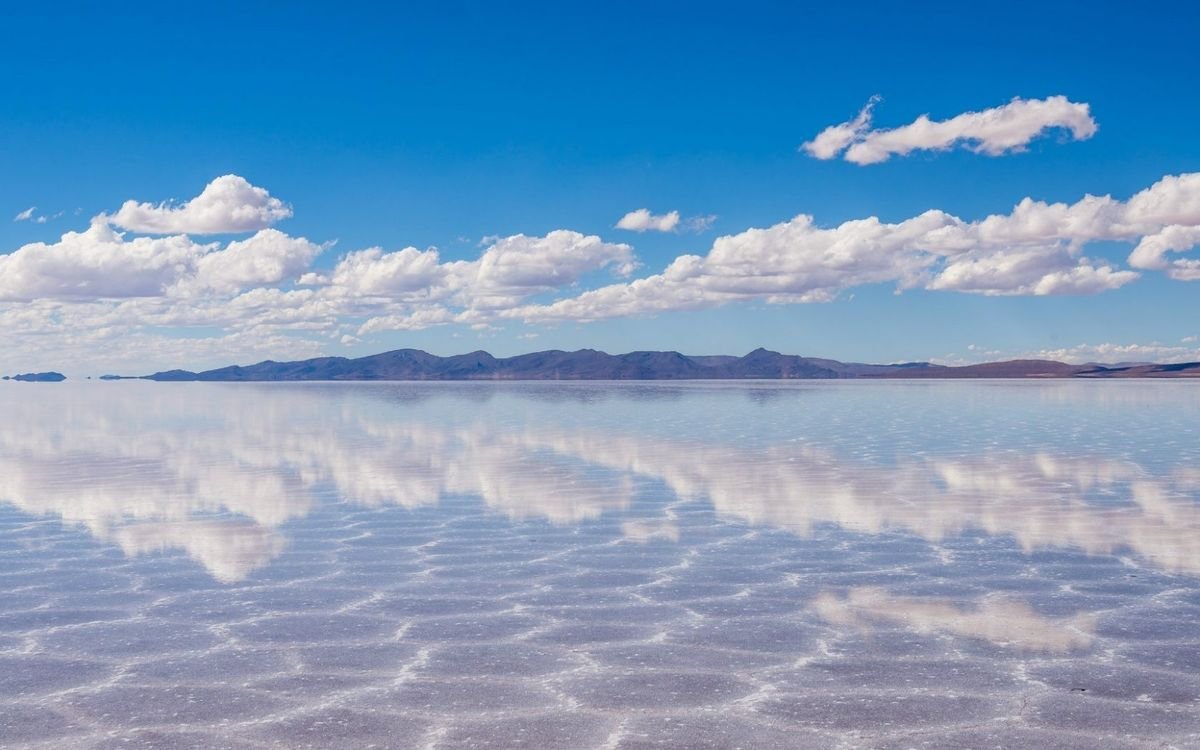
From December through April, seasonal rains flood the salt flats, covering the hard crust with a thin layer of standing water just a few inches deep. Because there is virtually no incline across the entire expanse, the water doesn’t run off—it sits perfectly still.
The result is the world’s largest natural mirror. Cloud formations, golden sunsets, and starlit night skies reflect with such incredible clarity that walking across the water feels like floating through middle space. It is easily one of the most photographed natural phenomena on the planet.
The Endless White Desert (The Dry Season)
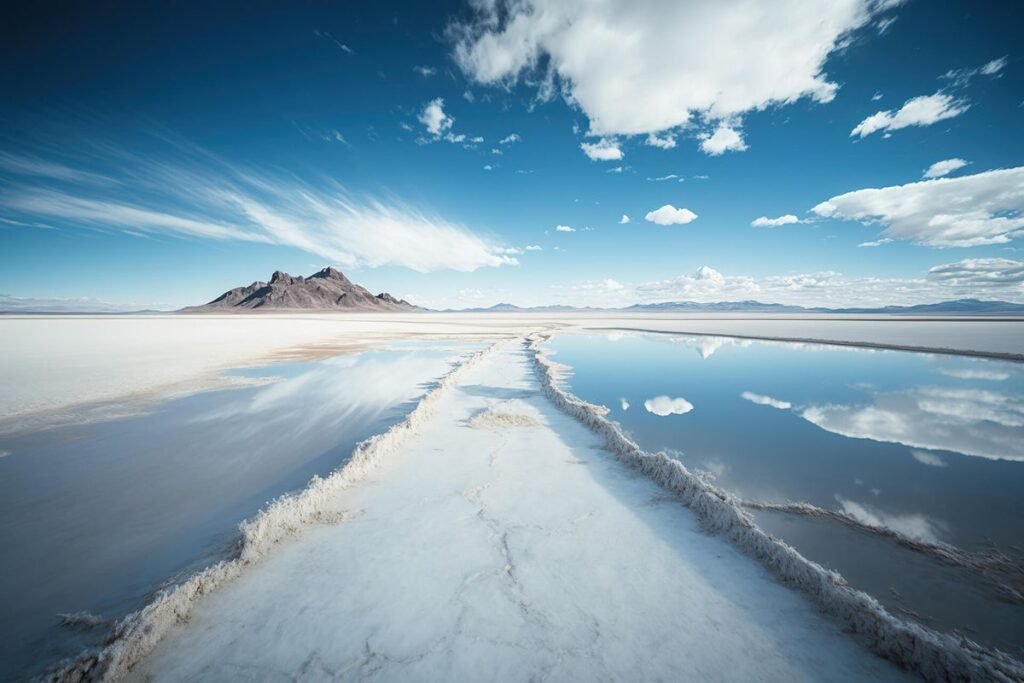
From May through November, the water evaporates, revealing a blindingly white, cracked-salt desert patterned in geometric hexes.
Without a liquid surface, the lack of perspective and horizon creates a bizarre optical illusion. Travelers use this depth-perception trick to snap famous perspective photos—making tiny toy dinosaurs look like towering monsters chasing tourists across the salt.
More Than Just Salt: What Lies Inside the Flats
While the flat horizon steals the spotlight, the surrounding landscape is packed with unexpected geological wonders that make a multi-day tour well worth the effort.
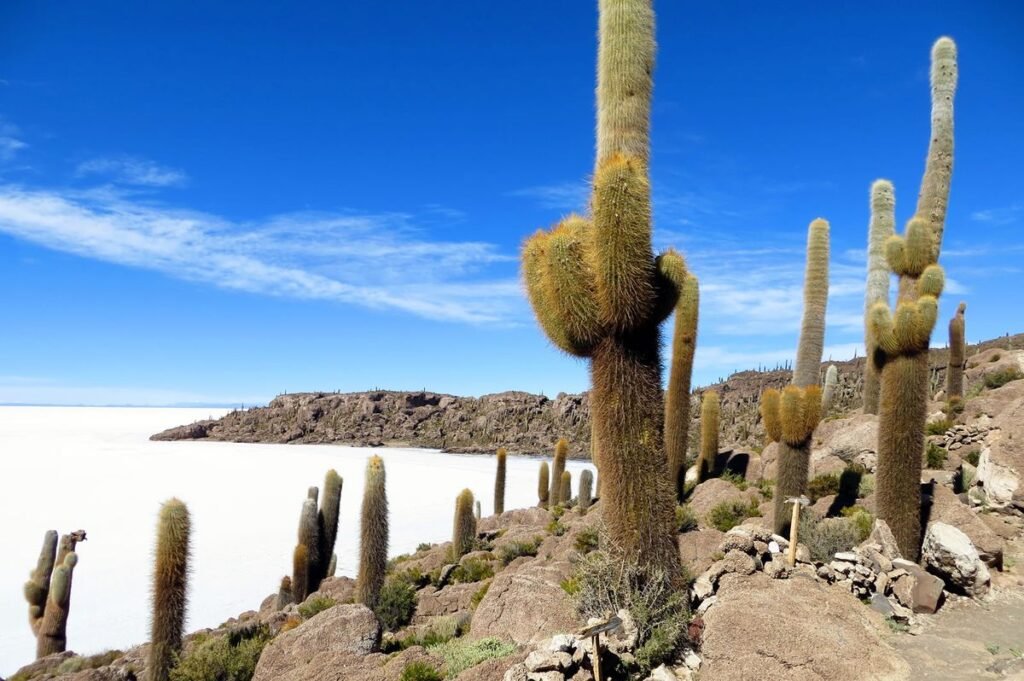
- Incahuasi Island (Cactus Island): Rising straight out of the white salt ocean is a hilly outcrop of ancient coral covered in giant cacti, some over 30 feet tall and centuries old. Climbing to the top gives you a jaw-dropping 360-degree view of the vast white plain surrounding you.
- The Train Cemetery: Just on the outskirts of Uyuni town lie dozens of rusted, abandoned steam locomotives from the early 20th century, offering a hauntingly cool backdrop for photos.
- High-Altitude Geysers and Pink Lagoons: Extending your trip into the broader Eduardo Avaroa Reserve brings you past bubbling thermal vents, natural hot springs, and high-altitude mineral lakes filled with thousands of pink flamingos.
What to Know Before You Go
Visiting Salar de Uyuni isn’t your average beach getaway—it requires a bit of physical preparation and practical planning.
- Respect the Altitude: Sitting at almost 3,650 meters (12,000 feet), altitude sickness is a very real possibility. Plan to spend a couple of days acclimatizing in La Paz, Sucre, or Calama before setting off on your salt tour. Drink plenty of water and keep coca tea handy.
- Pack Severe Weather Gear: The sun on the bright white salt can be blinding during the day, requiring heavy-duty sunglasses and strong sunscreen. However, temperatures plunge well below freezing at night, so warm thermal layers, gloves, and a heavy jacket are non-negotiable.
- Book a Reputable 4×4 Tour: The salt flat is vast and featureless, making navigation tricky. Joining a multi-day 4×4 tour with an experienced local guide ensures you navigate safely while visiting hidden spots off the standard path.
The bottom line? Salar de Uyuni isn’t just a destination you visit; it’s an experience that temporarily resets your perception of nature. Whether you catch the magical mirror reflections or the endless geometric desert, it remains one of the most unforgettable journeys you can take.