





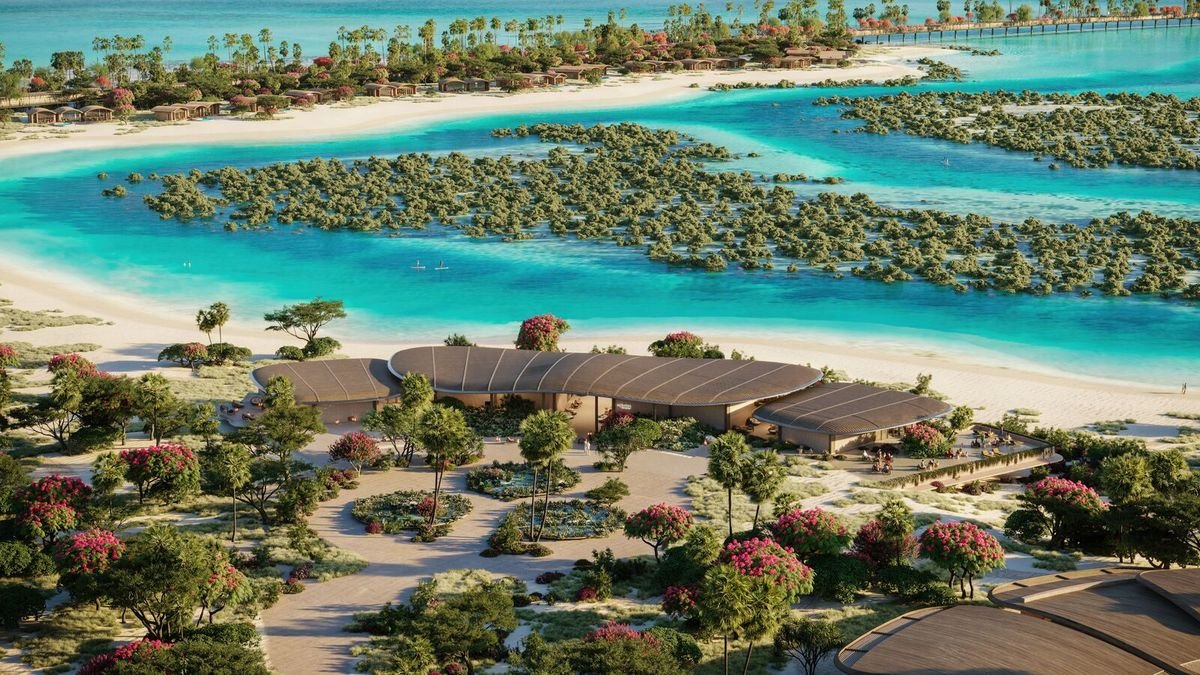

Saudi Arabia is preparing to change the way the world thinks about luxury travel, and its Red Sea coastline is at the centre of that ambition. Far from the familiar image of desert highways and bustling cities, the country’s northwestern coast is emerging as a destination of turquoise waters, untouched islands, dramatic mountains, and extraordinary architecture. Among the most fascinating developments is Red Sea Global’s vision of creating luxury resorts that blend naturally into their surroundings, including the remarkable Desert Rock resort, set within a spectacular granite mountain landscape.
This is not simply another attempt to build expensive holiday accommodation. It is part of a much larger ambition to put Saudi Arabia on the international tourism map while exploring how luxury hospitality can coexist with environmental protection. For travellers searching for unusual destinations, the region offers a glimpse of a very different kind of Middle Eastern escape.
A New Luxury Destination Along the Red Sea
The Red Sea destination stretches across approximately 28,000 square kilometres of Saudi Arabia’s western coastline, between Umluj and Al Wajh. Its landscape includes more than 90 islands, pristine beaches, coral reefs, desert terrain, and mountain formations. Unlike conventional beach destinations, the region offers several contrasting environments within one journey.
Developed by Red Sea Global, the project forms an important part of Saudi Arabia’s Vision 2030 strategy, which aims to diversify the country’s economy and strengthen its tourism industry. The development is planned around carefully selected islands and coastal locations, with a strong emphasis on protecting the surrounding natural environment.
The destination has already welcomed guests at several properties, including luxury island resorts and distinctive inland retreats. Its growing portfolio reflects an ambition to attract international travellers interested in privacy, architecture, marine adventures, and personalised hospitality. Red Sea Global+2
Desert Rock: A Resort Hidden Within Ancient Mountains
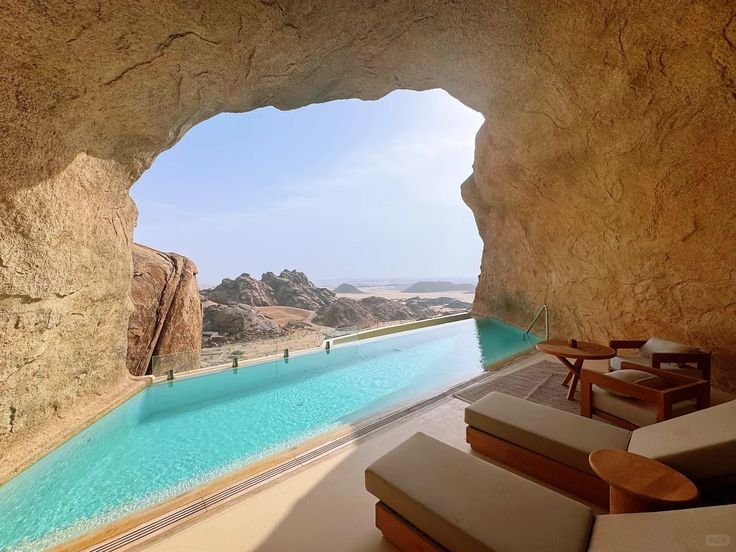
One of the most striking properties associated with this vision is Desert Rock. Rather than placing a conventional hotel on top of a mountain or along a beach, its designers have integrated the resort into the dramatic rock formations of the Hijaz Mountains.
The result is an architectural experience that feels connected to the landscape rather than imposed upon it. Designed by Oppenheim Architecture with interiors by Studio Paolo Ferrari, Desert Rock features 54 villas and 10 suites. Some accommodations are built into the mountainside, while others offer elevated views across the surrounding valley.
The resort’s design philosophy focuses on working with the natural terrain, using the existing rock formations as an important part of the architectural experience. Guests can enjoy secluded accommodation, mountain views, swimming facilities, and outdoor experiences without losing the feeling of being surrounded by nature. Desert Rock+1
Beyond the Mountains: Islands, Coral Reefs and Turquoise Waters
While Desert Rock celebrates the beauty of the mountains, the wider Red Sea development focuses on an entirely different experience: life along the water. More than 90 islands form part of this extraordinary coastal environment, offering opportunities for diving, snorkelling, sailing, and discovering secluded beaches.
Shura Island is becoming the heart of the destination, with luxury resorts, a marina, and a golf course. Meanwhile, Shebara Resort offers a futuristic interpretation of island hospitality, with reflective stainless-steel villas positioned above the water. Their unusual designs mirror the surrounding sea and sky, creating an architectural experience that feels almost futuristic.
Marine conservation is another important part of the development. The surrounding waters contain extensive coral reef systems and diverse marine life, making the region particularly attractive to underwater explorers. Red Sea Global+1
Can Luxury Tourism Really Protect Nature?
One of the most interesting aspects of Red Sea Global’s development is its emphasis on regenerative tourism. Rather than focusing exclusively on building hotels and attracting visitors, the company aims to protect and improve the natural ecosystems surrounding its destinations.
Its environmental strategy includes coral restoration, mangrove conservation, renewable energy, and limiting the areas available for development. The Red Sea destination also aims to achieve a 30% net conservation benefit by 2040.
The project is designed to operate using renewable energy, supported by extensive solar infrastructure and battery storage. These initiatives reflect a growing interest in making luxury travel more environmentally responsible, although their long-term success will ultimately depend on how effectively they are implemented and maintained. Red Sea Global+1
When to Visit and How to Reach the Destination
The Red Sea region is being developed as a year-round luxury destination, although the cooler months are generally more comfortable for outdoor exploration. Travellers can reach the area through Red Sea International Airport, which connects the destination with selected domestic and international locations.
Visitors can combine coastal experiences with desert excursions, wellness retreats, marine adventures, and visits to other Saudi destinations. Accommodation should be arranged in advance, particularly during popular travel periods.
Saudi Arabia’s Next Big Travel Story
Red Sea Global’s ambitions represent a significant shift in Saudi Arabia’s tourism landscape. From the extraordinary mountain architecture of Desert Rock to the futuristic island villas of Shebara, the development is introducing experiences that go beyond traditional luxury holidays.
What makes this destination particularly interesting is its variety. Travellers can explore ancient geological formations in the morning, spend an afternoon surrounded by coral reefs, and finish the day overlooking a spectacular desert landscape.
For those searching for extraordinary architecture, untouched natural scenery, and a fresh perspective on Middle Eastern luxury travel, Saudi Arabia’s Red Sea coast is certainly worth watching. Its greatest achievement, however, will not simply be attracting international visitors. It will be proving that some of the world’s most ambitious tourism developments can create memorable experiences while giving nature a meaningful place in the future of travel.