





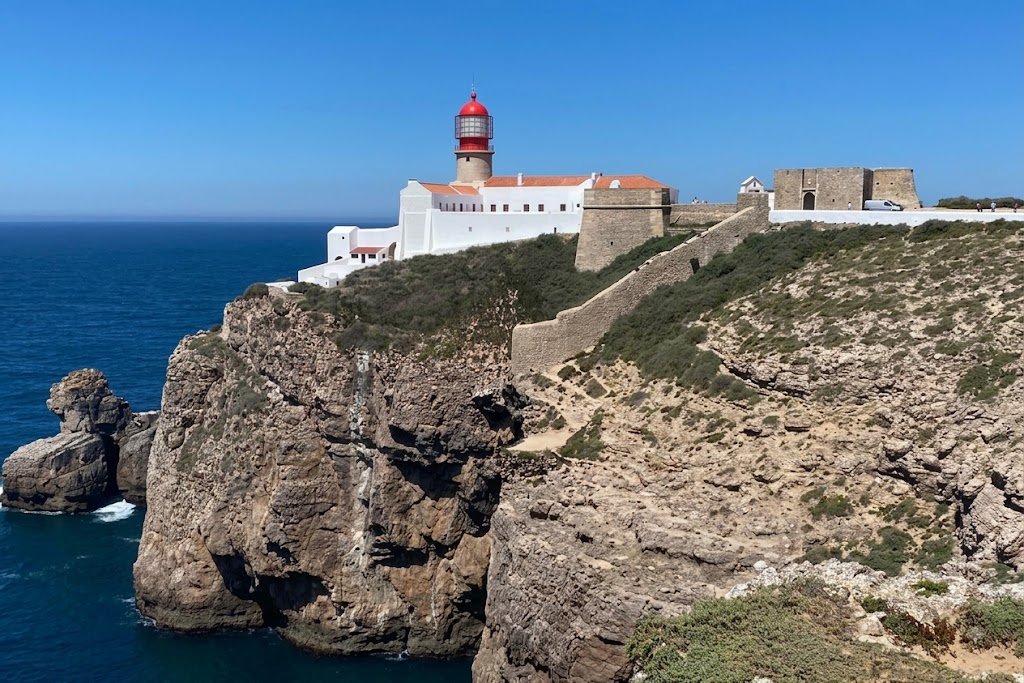

There’s a particular kind of quiet that settles over a coastline once the day-trippers leave, and Portugal’s lighthouses sit at the centre of it. The country’s coast is dotted with dozens of active beacons, some dating to the 1700s, most still operational, all built on the most dramatic, wind-scoured real estate the Atlantic has to offer. A handful of hotels have figured out how to put guests right beside them, not inside the lighthouse towers themselves, which mostly remain working navigational structures under the Directorate for Lighthouses, but close enough to fall asleep to the same rhythm of light sweeping across the water.
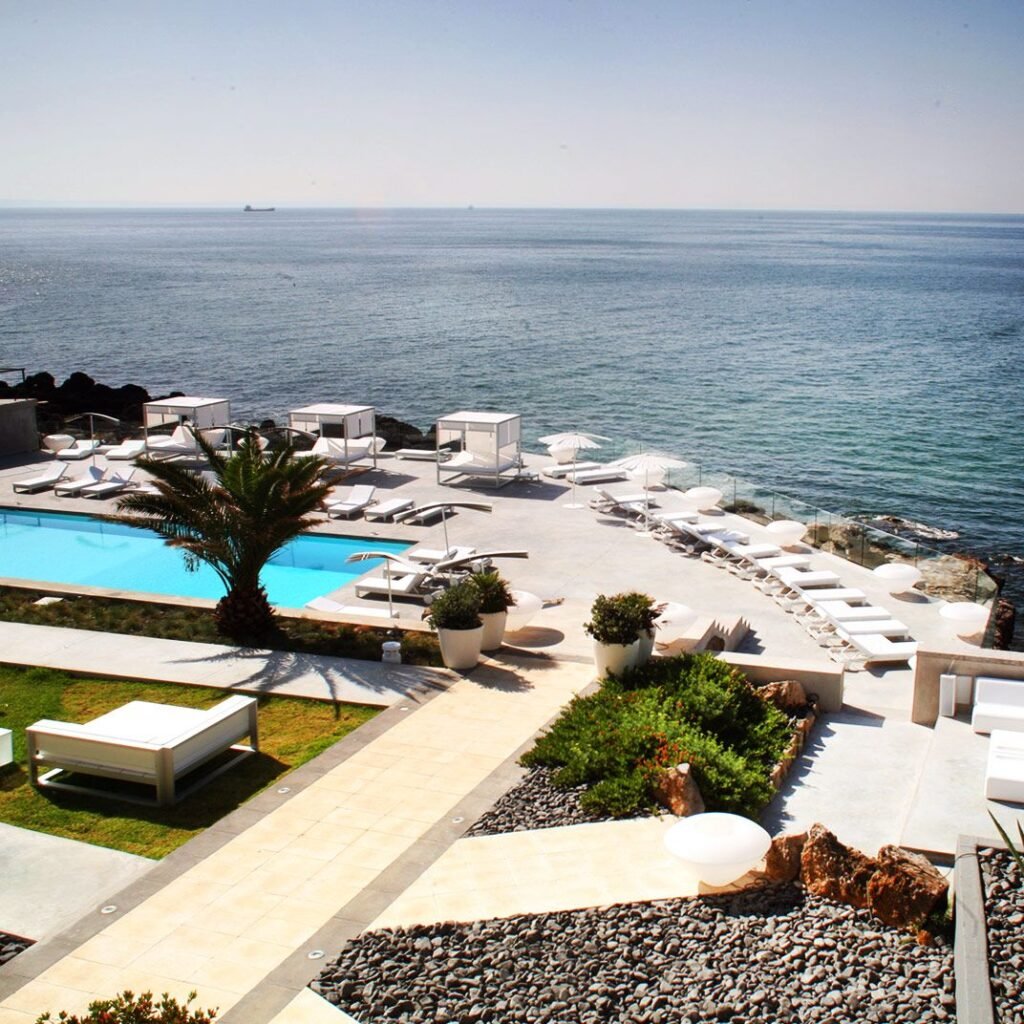
The Farol Hotel: Cascais’s Answer to Lighthouse Living
The clearest example of this idea done properly is the Farol Hotel in Cascais, a Design Hotels property built around a nineteenth-century mansion originally constructed in 1890 as a summer retreat for the Count of Cabral. Perched on a promontory beside the Forte de Santa Maria, the hotel sits directly beside Cascais’s own working lighthouse, with the original whitewashed building expanded into thirty-three individually designed guest rooms, several of Lisbon’s leading interior designers and artists were brought in to shape different rooms, the cocktail bar, and the restaurants, so no two stays here look quite alike. Rather than facing back toward the town, the hotel deliberately turns outward, toward the wide mouth of the Tagus estuary meeting the Atlantic, putting the lighthouse and the open sea front and centre of the experience rather than an afterthought.
Madeira’s Working Lighthouse Guesthouses
Off the mainland, Madeira offers a genuinely different version of lighthouse-adjacent travel. At Ponta do Pargo, on the island’s dramatic western cape, a cluster of small guesthouses, Residencial O Farol among them, sit within a five-minute walk of the still-active Ponta do Pargo lighthouse, built in 1922 and standing 312 metres above the Atlantic on one of the most exposed cliffs in the archipelago. The lighthouse itself has operated as a small public museum since 2001, tracing the history of lighthouse keeping across Madeira’s isolated coastline, and it remains, by some measures, the second-most visited lighthouse in Portugal. Staying nearby means genuinely quiet evenings, minimal light pollution, and sunsets that draw visitors from across the island specifically for this stretch of coast.
Ilha do Farol: An Entire Village Built Around a Lighthouse
Perhaps the most atmospheric option sits off the Algarve coast on Ilha do Farol, a barrier island near Olhão reachable only by boat, where a small fishing community has grown up in the direct shadow of the Farol de Santa Maria, one of Portugal’s tallest lighthouses, built in 1851. Vacation cottages and small guesthouses scattered across the island put guests within walking distance of both the lighthouse and genuinely unspoiled beaches along the Ria Formosa lagoon system, a setting that feels considerably more remote than its proximity to the mainland Algarve would suggest.
What to Actually Expect
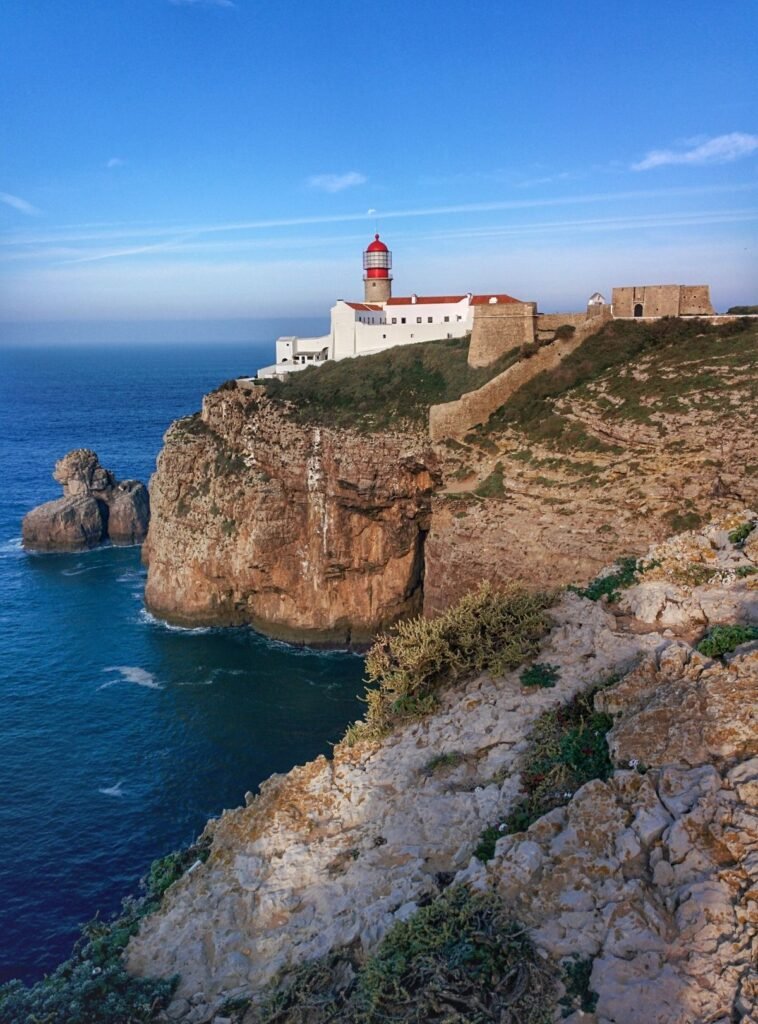
It’s worth setting expectations accurately here. These aren’t decommissioned lighthouse towers converted into individual guest rooms, Portugal’s beacons remain active navigational infrastructure, still operated by the country’s Directorate for Lighthouses and, in most cases, still flashing through the night exactly as they have for a century or more. What travellers are booking is proximity: hotels and guesthouses built specifically to sit beside these structures, close enough to watch the light sweep the coastline from a window or a terrace, without the lighthouse itself functioning as a hotel room. For most visitors, that distinction barely matters once the sun sets and the beam starts turning.
Why It’s Worth Seeking Out
Portugal’s coastline runs long enough, and its lighthouses are scattered widely enough, that this kind of stay rewards genuine detours rather than casual proximity. Cascais offers the most polished, design-forward version of the experience within easy reach of Lisbon. Madeira and the Algarve’s barrier islands offer something rawer, quieter, and considerably more remote. Whichever version a traveller chooses, the appeal comes down to the same simple thing: falling asleep at the literal edge of the Atlantic, with a working beacon still doing exactly the job it was built for, a century or more after the first keeper climbed its stairs.