






Papua New Guinea’s Sepik River: The Last Great Unexplored Cultural Journey Left in the Pacific
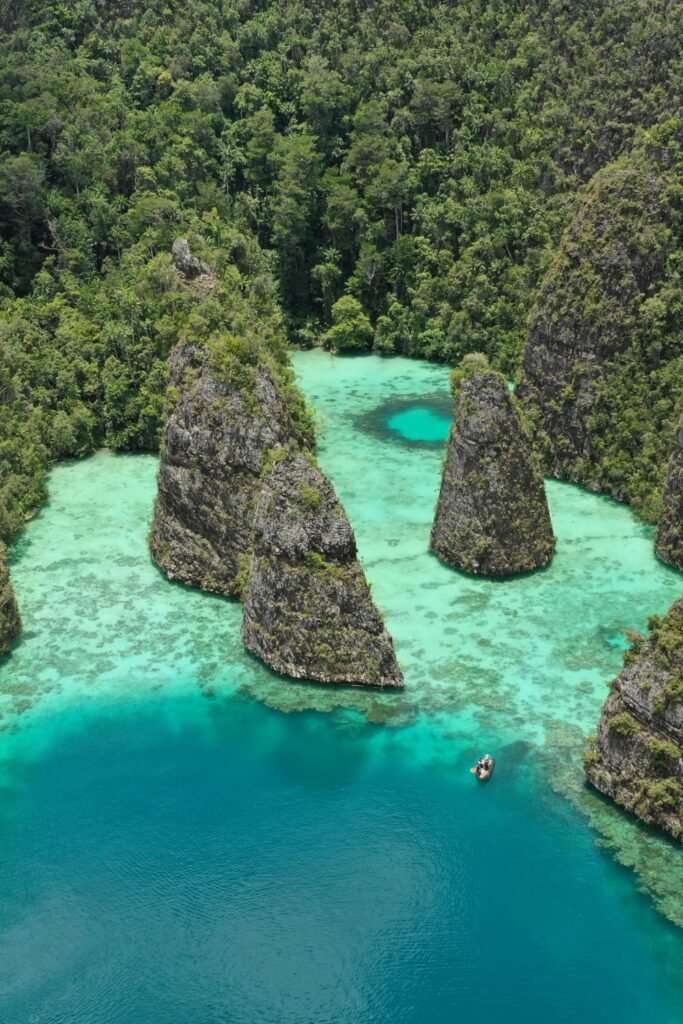
There are rivers travellers visit, and there are rivers that still operate on their own terms, indifferent to the itinerary anyone brings to them. The Sepik, winding roughly seven hundred miles from the cloud forests of Papua New Guinea’s Central Range to the Bismarck Sea, belongs firmly to the second category. Often compared to the Amazon and the Nile for its scale and biodiversity, it remains the largest unpolluted freshwater system in New Guinea, and one of the very few places left where the word “unexplored” is not marketing exaggeration but a fair description of how little the outside world has actually reached.
A River That Holds an Entire Civilisation’s Diversity
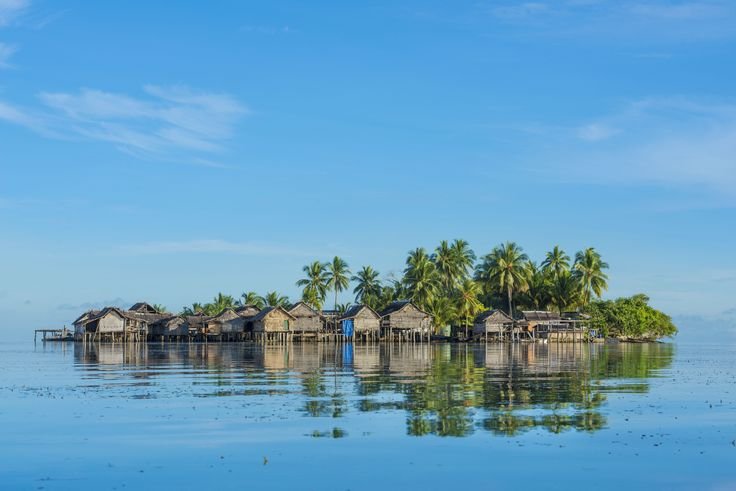
The numbers alone explain why anthropologists treat the Sepik basin as a living archive. An area smaller than the state of Texas is home to more than three hundred distinct languages, making it among the most linguistically dense regions on Earth. Roughly 430,000 people live along its banks and tributaries, most in villages reachable only by dugout canoe, sustaining themselves almost entirely on what the river and surrounding forest provide. Development has largely bypassed the middle and upper Sepik, not through neglect alone but because the terrain itself resists roads, infrastructure, and the kind of easy access that tends to flatten a place’s distinctiveness. That isolation is precisely what has kept its cultural traditions intact for millennia rather than reduced to performance.
The Spirit Houses That Define the Skyline
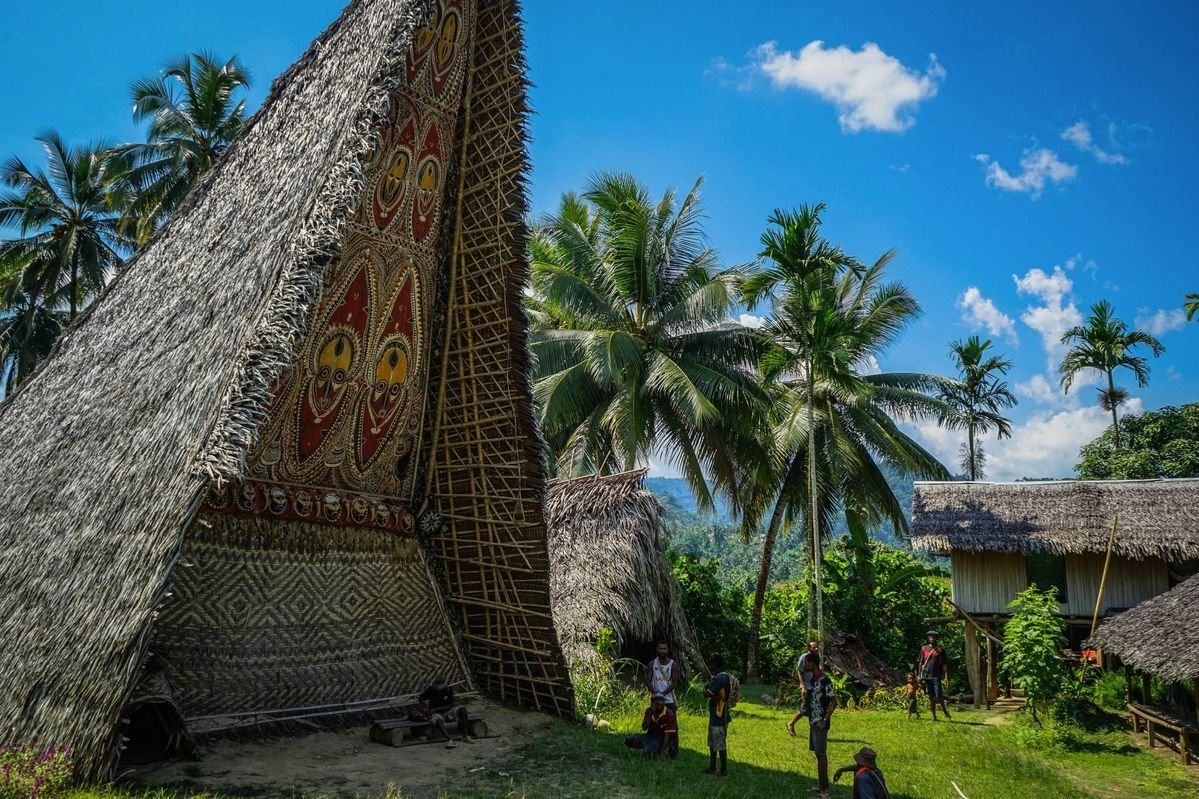
Nothing announces a Sepik village faster than its haus tambaran, the towering, intricately carved spirit house that serves as both civic hall and sacred space. These twin-level structures, among the most striking examples of Melanesian architecture anywhere in the Pacific, are where village decisions are debated, where ceremonies are performed to honour ancestral spirits, and where young men undergo initiation into adulthood. The carvings themselves, house posts, ceremonial hooks, orators’ stools, and drums known as garamuts, are created by artisans whose work has become genuinely prized among Pacific art collectors, yet the pieces are made first for spiritual function, not for sale.
The Crocodile Cult and the Rite That Gives It Meaning
At the centre of Sepik cosmology sits the crocodile, revered not as a predator to fear but as an ancestral spirit that moves between the physical and spiritual worlds. For the Iatmul and Chambri peoples in particular, this reverence culminates in one of the most demanding initiation rites practised anywhere in the world: young men undergo an extended scarification process, hundreds of precise cuts made into the skin of the back and chest to recreate the raised, textured pattern of a crocodile’s hide. The ritual marks the formal passage from boyhood to manhood, and its significance is honoured publicly each August at the Sepik River Crocodile and Arts Festival, when communities from across the basin gather for sing-sing performances, canoe races, and ceremonial displays that outsiders rarely otherwise witness.
Why the Window Is Narrowing
Conservationists and anthropologists increasingly flag the same concern: proposed mining projects and gradual infrastructure development threaten the ecological balance that has allowed Sepik culture to remain this intact for so long. That tension is worth naming honestly rather than romanticising away. A serious traveller heading to the Sepik should understand they are witnessing a living culture under real environmental and economic pressure, not a museum piece preserved for visitors.
Planning the Journey
There is no shortcut into the Sepik. Most journeys begin in Wewak or Pagwi, followed by days moving upriver by motorised canoe between villages like Palambei and Kanganaman, sleeping in basic guesthouses or with host families where electricity is scarce and mobile signal scarcer. This is not a trip for travellers seeking comfort or certainty. It is, however, one of the last places in the Pacific where the culture on display has not been reshaped for the person watching it, which is exactly why it belongs on the map for anyone serious about travel with substance.There are rivers travellers visit, and there are rivers that still operate on their own terms, indifferent to the itinerary anyone brings to them. The Sepik, winding roughly seven hundred miles from the cloud forests of Papua New Guinea’s Central Range to the Bismarck Sea, belongs firmly to the second category. Often compared to the Amazon and the Nile for its scale and biodiversity, it remains the largest unpolluted freshwater system in New Guinea, and one of the very few places left where the word “unexplored” is not marketing exaggeration but a fair description of how little the outside world has actually reached.
A River That Holds an Entire Civilisation’s Diversity
The numbers alone explain why anthropologists treat the Sepik basin as a living archive. An area smaller than the state of Texas is home to more than three hundred distinct languages, making it among the most linguistically dense regions on Earth. Roughly 430,000 people live along its banks and tributaries, most in villages reachable only by dugout canoe, sustaining themselves almost entirely on what the river and surrounding forest provide. Development has largely bypassed the middle and upper Sepik, not through neglect alone but because the terrain itself resists roads, infrastructure, and the kind of easy access that tends to flatten a place’s distinctiveness. That isolation is precisely what has kept its cultural traditions intact for millennia rather than reduced to performance.
The Spirit Houses That Define the Skyline
Nothing announces a Sepik village faster than its haus tambaran, the towering, intricately carved spirit house that serves as both civic hall and sacred space. These twin-level structures, among the most striking examples of Melanesian architecture anywhere in the Pacific, are where village decisions are debated, where ceremonies are performed to honour ancestral spirits, and where young men undergo initiation into adulthood. The carvings themselves, house posts, ceremonial hooks, orators’ stools, and drums known as garamuts, are created by artisans whose work has become genuinely prized among Pacific art collectors, yet the pieces are made first for spiritual function, not for sale.
The Crocodile Cult and the Rite That Gives It Meaning
At the centre of Sepik cosmology sits the crocodile, revered not as a predator to fear but as an ancestral spirit that moves between the physical and spiritual worlds. For the Iatmul and Chambri peoples in particular, this reverence culminates in one of the most demanding initiation rites practised anywhere in the world: young men undergo an extended scarification process, hundreds of precise cuts made into the skin of the back and chest to recreate the raised, textured pattern of a crocodile’s hide. The ritual marks the formal passage from boyhood to manhood, and its significance is honoured publicly each August at the Sepik River Crocodile and Arts Festival, when communities from across the basin gather for sing-sing performances, canoe races, and ceremonial displays that outsiders rarely otherwise witness.
Why the Window Is Narrowing
Conservationists and anthropologists increasingly flag the same concern: proposed mining projects and gradual infrastructure development threaten the ecological balance that has allowed Sepik culture to remain this intact for so long. That tension is worth naming honestly rather than romanticising away. A serious traveller heading to the Sepik should understand they are witnessing a living culture under real environmental and economic pressure, not a museum piece preserved for visitors.
Planning the Journey
There is no shortcut into the Sepik. Most journeys begin in Wewak or Pagwi, followed by days moving upriver by motorised canoe between villages like Palambei and Kanganaman, sleeping in basic guesthouses or with host families where electricity is scarce and mobile signal scarcer. This is not a trip for travellers seeking comfort or certainty. It is, however, one of the last places in the Pacific where the culture on display has not been reshaped for the person watching it, which is exactly why it belongs on the map for anyone serious about travel with substance.