






If you were dropped blindly into the far southwestern corner of Madagascar without any context, you would be forgiven for thinking you had landed on an entirely different planet.
Forget the lush, tropical rainforests or sweeping savannahs typically associated with African nature documentaries. Here, stretching across an arid landscape of red dirt and blinding white limestone, lies the Spiny Forest (or Spiny Thicket)—a biome so bizarre, jagged, and architectural that it feels less like a real place and more like a rendered backdrop from a high-budget sci-fi film.
For eco-adventurers, photographers, and nature lovers, this forgotten landscape represents one of the most remarkable evolutionary marvels on Earth.
Evolution Gone Wild: Plants That Defy Logic
What makes Madagascar’s Spiny Forest look so strikingly unearthly is its flora. Because this region receives precious little rainfall each year, plants have had to adapt in extreme, hyper-specific ways to survive the harsh, drought-ridden conditions.
Over millions of years of complete isolation from the mainland, evolution ran wild, resulting in a landscape where 95% of the plant species are found nowhere else on the planet.
The true stars of this botanical alien world are:
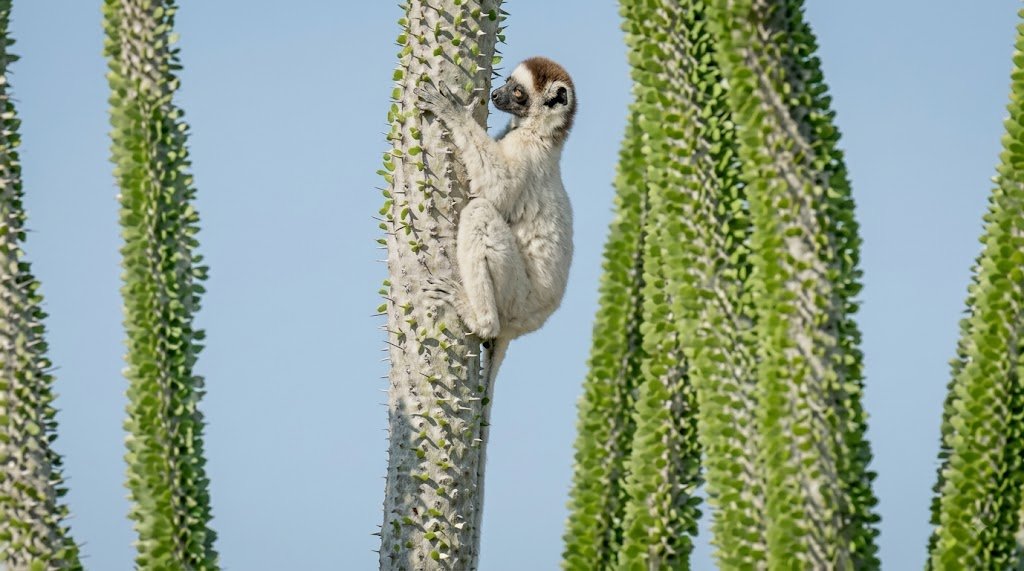
- Octopus Trees (Alluaudia procera): Rising high into the clear blue sky, these tall, woody plants feature thick, succulent stems completely covered in sharp, formidable thorns. Thin green leaves sprout directly between the spikes, giving the impression of tangled sea creature tentacles reaching up toward the sun.
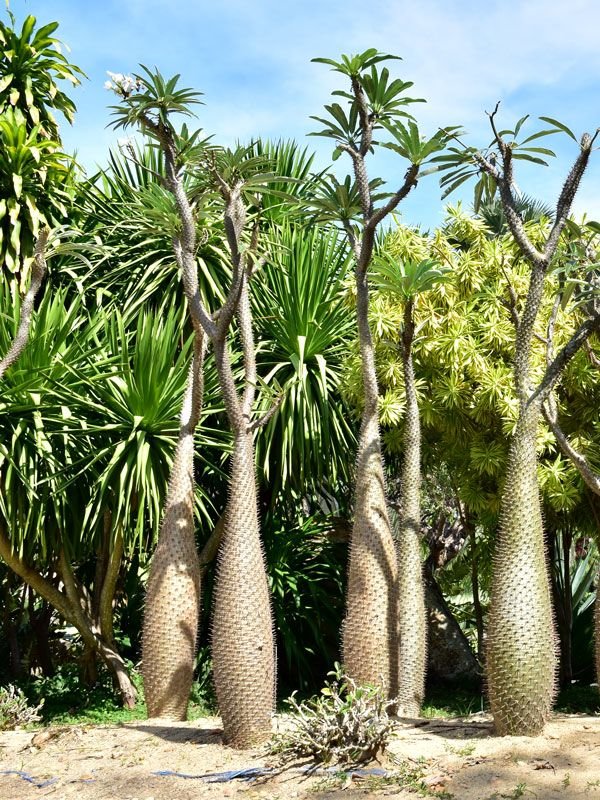
- Swollen Baobabs (Adansonia rubrostipa): Unlike the massive, classic baobabs of Morondava, the species native to the spiny thickets are shorter, bottle-shaped, and often sport reddish, peeling bark that holds thousands of gallons of water like a biological storage tank.
- Armored Succulents: Everywhere you look, low-slung euphorbias, spiked pachypodiums (elephant’s foot), and razor-sharp aloes choke the ground, creating an impenetrable fortress of thorns.
The Lemurs That Walk on Needles
It isn’t just the plants that adapted to this hostile environment—the local wildlife had to evolve right alongside them.
Navigating a forest made entirely of sharp spikes sounds like an impossible nightmare for arboreal animals, yet several species of lemur call this thorny maze home. The most famous resident is the Verreaux’s Sifaka (often called the “dancing lemur”).
Watching a Sifaka leap effortlessly through the Spiny Forest is an unbelievable sight. With thick, padded leathery skin on their hands and feet, these acrobatic primates leap 30 feet through the air from one razor-sharp, thorn-covered trunk to another without suffering a single scratch. When forced to cross open ground between patches of forest, they hop sideways across the red dirt in a joyful, dancing motion that looks almost choreographed.
Alongside the Sifakas, the forest is home to the tiny, nocturnal Sportive Lemur, the rare Spider Tortoise, and dozens of endemic bird species that nest safely within the prickly canopy, protected from predators.
Why This Alien World Needs Our Protection
Despite its harsh, defensive appearance, the Spiny Forest is actually one of Madagascar’s most fragile and endangered ecosystems.
Because the trees grow at an agonizingly slow pace due to the arid climate, deforested areas take centuries to recover. Local communities, facing extreme economic hardship, often rely on charcoal production and slash-and-burn agriculture (tavy) to survive, leading to rapid habitat loss. Additionally, illegal logging for rare succulents and exotic woods threatens the unique plant species that anchor the biome.
Sustainable eco-tourism is proving to be one of the strongest tools for saving this landscape. By visiting protected reserves like the Reniala Reserve near Ifaty or Cap Sainte Marie, travelers help provide direct financial incentives for local communities to protect these ancient botanical treasures rather than clear them.
Visiting the Spiny Forest: What to Know
Getting to the Spiny Forest requires a bit of spirit and a love for off-the-beaten-path travel. Most visitors fly into Toliara (Tuléar) in the southwest and travel north toward Ifaty or south toward Anandrano by 4×4 vehicle.
The best time to visit is during the dry winter months (May through October), when temperatures are comfortable for walking through the thickets. Make sure to hire a local guide—not only will they spot camouflaged nocturnal lemurs and rare geckos you would otherwise miss, but they will also ensure you don’t accidentally brush against one of the forest’s more painful thorny residents!
The bottom line? In a world where so many travel destinations can start to feel familiar, Madagascar’s Spiny Forest stands as a stunning reminder of just how strange, inventive, and breathtakingly beautiful nature can be when left to do its own thing.