




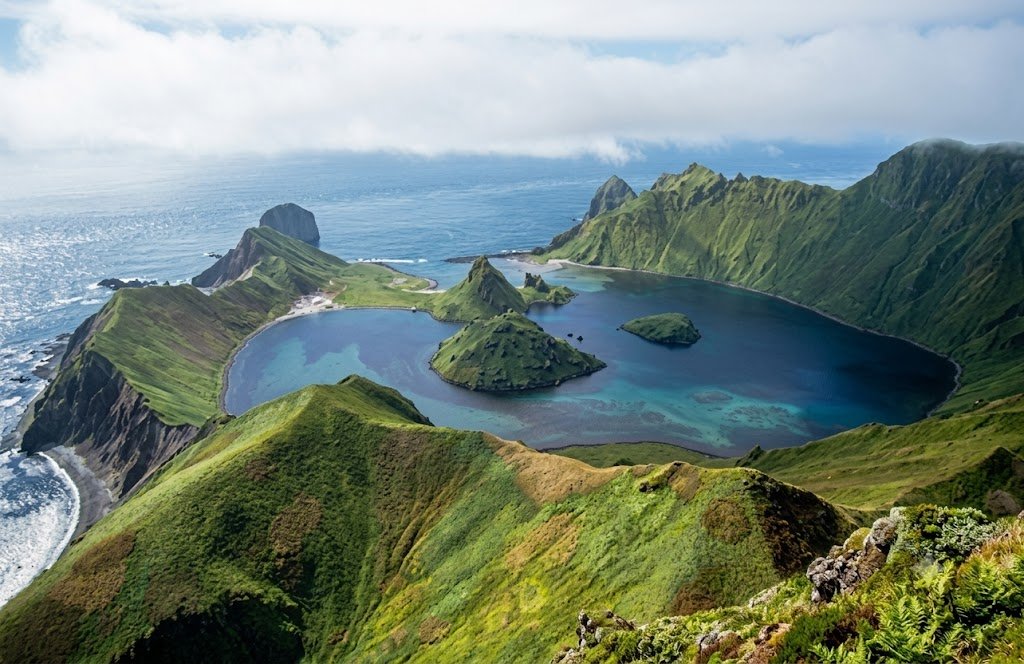

If you want to find the most isolated place on Earth, look at the southern Indian Ocean. Roughly 2,000 miles away from the nearest inhabited landmass—Madagascar—sits a jagged, wind-battered archipelago known as the Kerguelen Islands.
Often called the “Desolation Islands” by 18th-century explorers, this French overseas territory is one of the most remote volcanic outposts in existence. There are no airports, no permanent residents, and no hotels. To get here, you have to board a specialized research vessel in Réunion Island and endure a six-day journey across the most turbulent seas on the planet.
For the few scientists, researchers, and engineers who make the trek, Kerguelen offers a rare, haunting look at a world where nature remains entirely in charge.
A Landscape Forged by Fire and Ice
The Kerguelen archipelago is essentially the tip of a massive submerged volcanic plateau. The main island, Grande Terre, is roughly the size of Corsica, defined by deep, glacier-carved fjords, towering basalt cliffs, and the massive Cook Ice Cap, which blankets the island’s western flank.
The climate here is famously unforgiving. Located in the “Furious Fifties”—the latitude notorious for relentless westerly winds—the islands experience constant shifts between rain, snow, and gale-force gusts. Trees are virtually non-existent; the landscape is dominated by hardy mosses, lichens, and the famous Kerguelen cabbage, a wild plant that provided a literal life-saving source of Vitamin C for scurvy-stricken whalers in the 19th century.
Life at Port-aux-Français
Human presence on Kerguelen is strictly functional. The only settlement, Port-aux-Français, serves as a scientific base for France’s Southern and Antarctic Lands (TAAF).
Depending on the season, the population fluctuates between 60 and 120 people. These residents—mostly meteorologists, biologists, geophysicists, and support staff—rotate on multi-month shifts. Life at the base is a lesson in extreme community management: they operate their own power grid, water treatment, medical clinic, and even a small library and pub to keep morale high during the long, dark southern winters.
The work they do is critical to global science. Because of its location in the middle of the empty southern ocean, Kerguelen provides essential data on global climate patterns, magnetic field shifts, and ozone layer monitoring that simply cannot be collected anywhere else.x
A Wildlife Haven Without Predators
Before human arrival, Kerguelen had zero terrestrial mammals. Today, the islands act as a massive sanctuary for marine life that has no fear of humans because they evolved in total isolation.
The coastlines are teeming with activity:
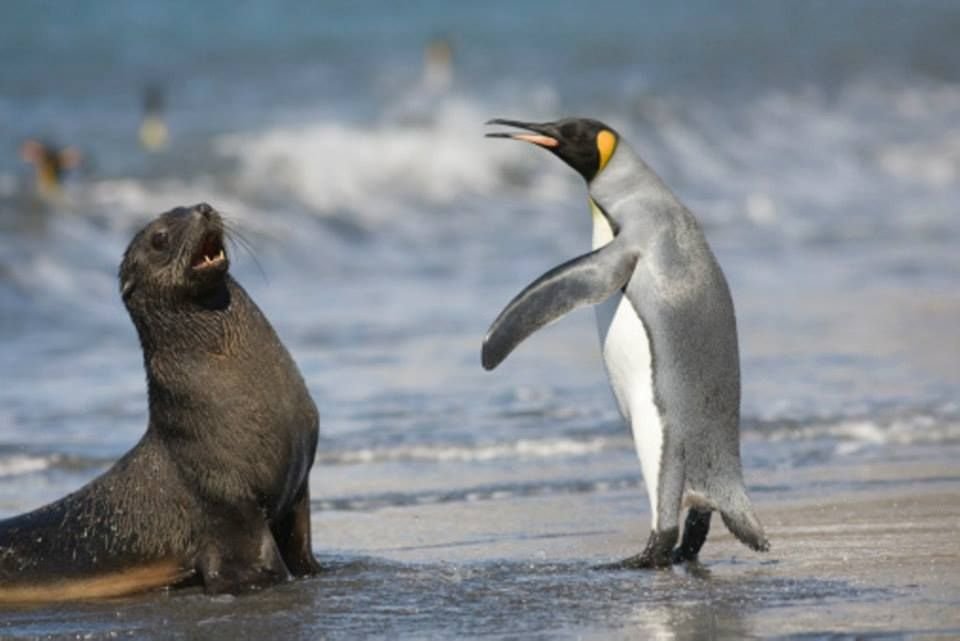
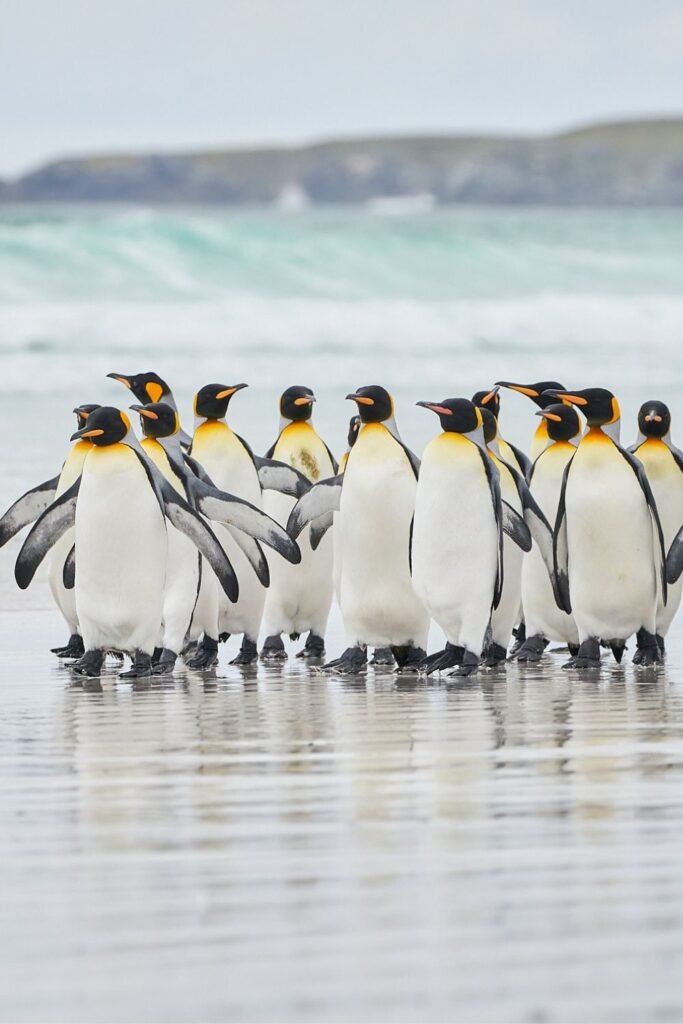
- King Penguin Colonies: Tens of thousands of penguins congregate on the beaches, creating a cacophony of sound and movement that contrasts sharply with the island’s desolate geography.
- Elephant Seals: Giant southern elephant seals haul themselves onto the rocky shores to molt and breed, often ignoring researchers who walk within a few meters of them.
- Albatross Breeding Grounds: High on the windswept cliffs, wandering albatrosses—birds with the largest wingspans in the world—nest in the open, protected by the sheer remoteness of the terrain.
Why Visit the “Desolation Islands”?
You cannot simply book a flight to Kerguelen. Tourism is virtually non-existent; the only way to arrive is as a paying passenger on the Marion Dufresne, the supply ship that rotates scientific staff and delivers cargo to the base a few times a year.
Spaces are extremely limited and require booking years in advance. Even then, the “tour” is less of a vacation and more of a rugged expedition. You’ll spend your time on land dodging unpredictable weather and assisting with basic research tasks while the ship offloads supplies.
For those who do make the journey, Kerguelen offers something increasingly rare in our over-connected world: a place where you are genuinely small. It is a humbling reminder that there are still corners of this planet that don’t belong to us—places that are raw, wild, and perfectly content existing without an audience.