




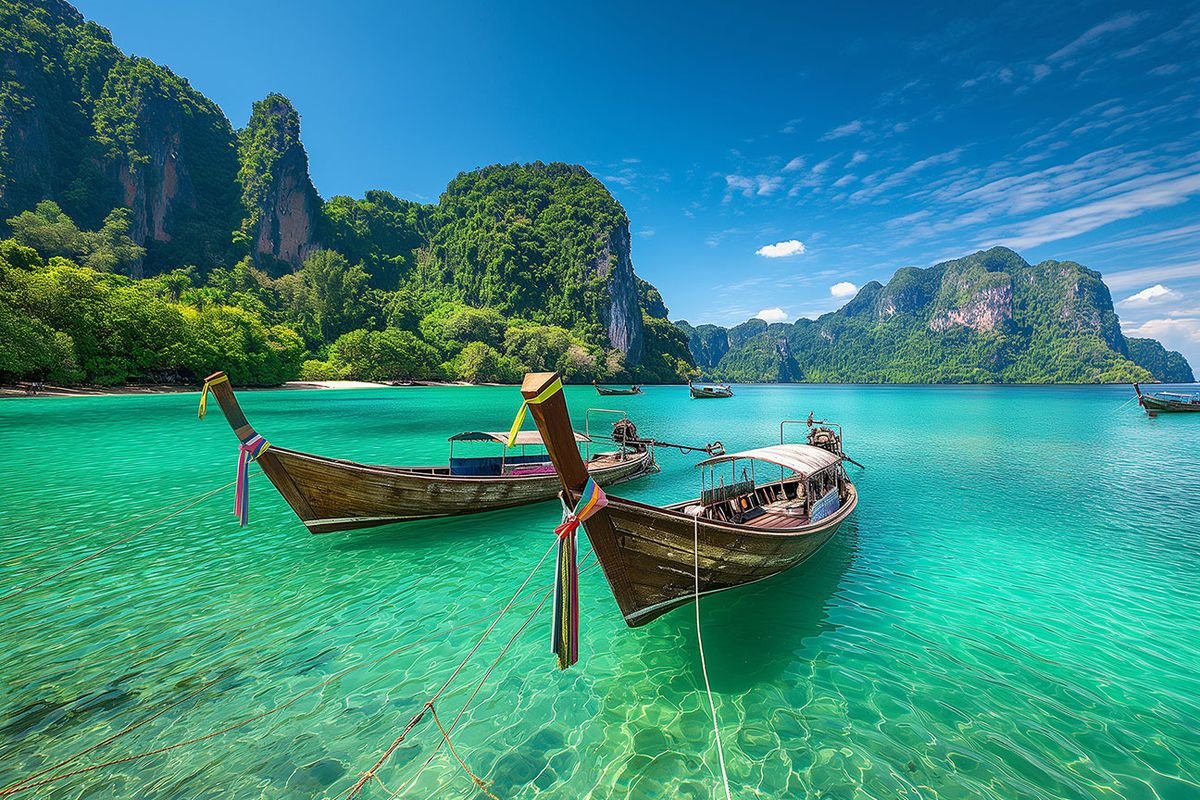

The claim appears regularly across travel blogs and social media: travel the world on $1,000 a month. Most people read it with equal parts intrigue and scepticism. The intrigue is obvious — $1,000 a month is less than most people spend on rent alone. The scepticism is equally reasonable — surely it means camping, eating instant noodles, and spending every evening calculating whether you can afford a second beer.
The truth is more nuanced and considerably more encouraging than either reaction suggests.
$1,000 a month is not enough to travel everywhere. It is enough to travel well in a specific set of destinations — countries where a modest daily budget produces a comfortable, genuinely enjoyable life rather than a spartan endurance exercise. In several of those destinations, $1,000 a month produces a standard of living that would cost three to four times more in Western Europe or North America.
Here is the honest, country-by-country breakdown.
The Daily Budget Mathematics
$1,000 a month equals approximately $33 per day — covering accommodation, food, local transport, activities, and a contingency for the unexpected costs every traveller encounters. In Western Europe, $33 covers breakfast and little else. In Southeast Asia, it covers a private guesthouse room, three meals, local transport, and still leaves change. The geography of $1,000 a month is the geography of purchasing power — and purchasing power varies across the world by factors of three, four, and sometimes five to one.
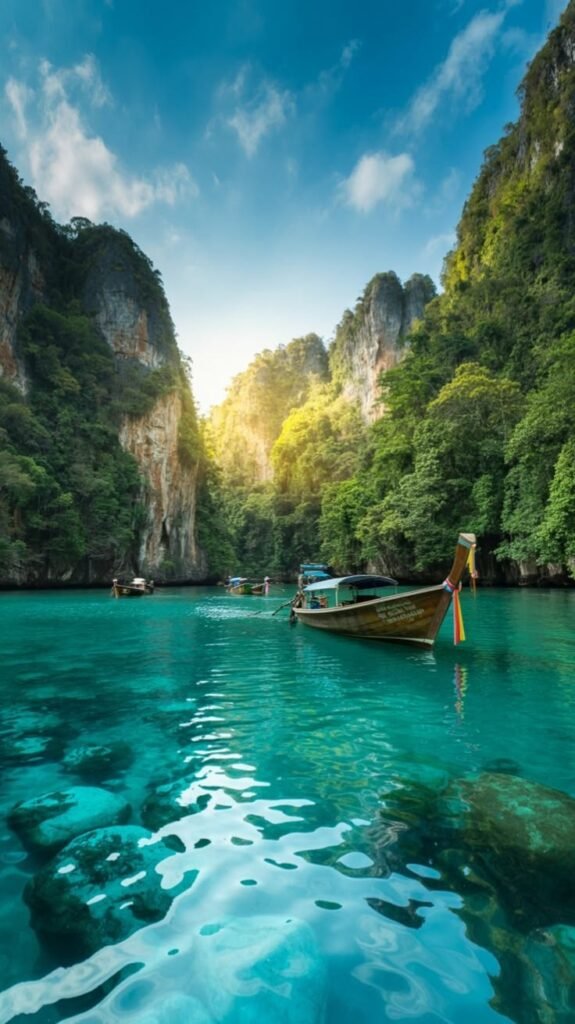
Southeast Asia — Where $1,000 a Month Lives Best
Thailand — $700 to $900 per month
Chiang Mai is where the $1,000 a month lifestyle was effectively invented. A private guesthouse room costs $200 to $350 monthly. Street food — pad thai, khao man gai, mango sticky rice — runs $1 to $2 per meal. Scooter rental adds $60, co-working space $70. Total monthly spend sits comfortably around $800, leaving $200 for day trips, cooking classes, and weekend island escapes.
Vietnam — $600 to $900 per month
Vietnam offers arguably the finest value in Southeast Asia. Hoi An and Da Nang provide private apartments for $200 to $300 monthly and a café culture that supports productive remote work at minimal cost. The Vietnamese diet — pho, banh mi, bun cha — is not merely affordable but genuinely excellent, eliminating the food quality compromise that budget travel elsewhere often demands.
Cambodia — $600 to $800 per month
Cambodia offers the lowest cost of comfortable living in the region. Siem Reap provides private accommodation for $150 to $250 monthly and meals for $2 to $4. The trade-off is infrastructure — internet reliability and healthcare access require contingency planning for longer stays.
South and Central America
Colombia — $800 to $1,000 per month
Medellín combines a genuinely pleasant urban environment, reliable infrastructure, and a cost of living within the $1,000 boundary. A private room in El Poblado costs $250 to $400 monthly. The eternal spring climate — 22 degrees year-round — eliminates seasonal cost variations, making it uniquely consistent as a budget base.
Guatemala — $600 to $800 per month
Lake Atitlán — surrounded by three volcanoes — provides one of the world’s most spectacular living environments at remarkable prices. Private rooms run $150 to $250 monthly. Spanish school adds $100 to $150 for intensive lessons that justify the destination on their own terms.
Eastern Europe
Georgia — $700 to $900 per month
Tbilisi combines European-adjacent infrastructure, extraordinary food and wine culture, and costs well within the $1,000 boundary. A private apartment costs $300 to $450 monthly. The flat 20 percent income tax and one-year visa-free stay for 95 nationalities make it uniquely attractive for longer-term stays.
Albania — $600 to $800 per month
Tirana offers private apartments for $200 to $350 monthly and Mediterranean food at prices that feel implausibly low for a European capital. The Albanian Riviera delivers coastline that Greece and Croatia charge three to four times more for.
South Asia
India — $400 to $700 per month
In the right cities — Mysore, Pondicherry, McLeod Ganj — $700 monthly provides comfortable accommodation and a richness of cultural experience no other destination at this price approaches. The trade-off is the higher cognitive load of navigating a country of extraordinary complexity.
Nepal — $500 to $700 per month
Kathmandu and Pokhara provide guesthouse rooms for $100 to $200 monthly. Dal bhat costs $2 to $3 and is refilled indefinitely by custom. The proximity to world-class trekking means activities available from a $700 monthly base include experiences costing multiples of that elsewhere.
What the Budget Does Not Cover
Honesty requires acknowledging the gaps. International flights add $2,000 to $4,000 annually. Visa costs add $300 to $500 per year. Travel insurance adds $50 to $150 monthly. Occasional splurges — a guided trek, a diving course, a nicer hotel — add $100 to $200 monthly.
A realistic total budget including flights, insurance, visas, and splurges is $1,300 to $1,600 per month. The $1,000 figure covers the destination itself. The honest annual number is higher.
What $1,000 a Month Actually Buys
In Chiang Mai — a private room with air conditioning and a pool, three excellent meals daily, a scooter, yoga classes, co-working, and a weekend island trip monthly.
In Medellín — a neighbourhood apartment, good restaurant dinners several times weekly, weekend trips to the coffee region, and Spanish lessons.
In Tbilisi — an old town apartment, wine at prices that make every evening affordable, day trips into the Caucasus, and a quality of daily life that significantly exceeds what the budget number suggests.
$1,000 a month is not a poverty line. In the right destinations, with the right preparation, it is a genuinely good life — often better than the same person was living at home on a salary three times higher.
That is the truth of the $1,000 a month travel lifestyle. Not the Instagram version. The actual one.
Explore our Travel Guides section for more smart travel strategies, budget breakdowns, and everything you need to travel more for less in 2026.