







A decade ago, Ha Giang was a name that barely registered outside Vietnam’s own backpacker circuit, a remote northern province close enough to the Chinese border that few tour operators bothered building routes there. Today it’s widely considered the country’s single best motorbike journey, a 350-kilometre loop through limestone peaks, terraced valleys, and ethnic minority villages that most visitors to Vietnam never see. The transformation happened fast, and it’s brought both the crowds and the infrastructure to match.
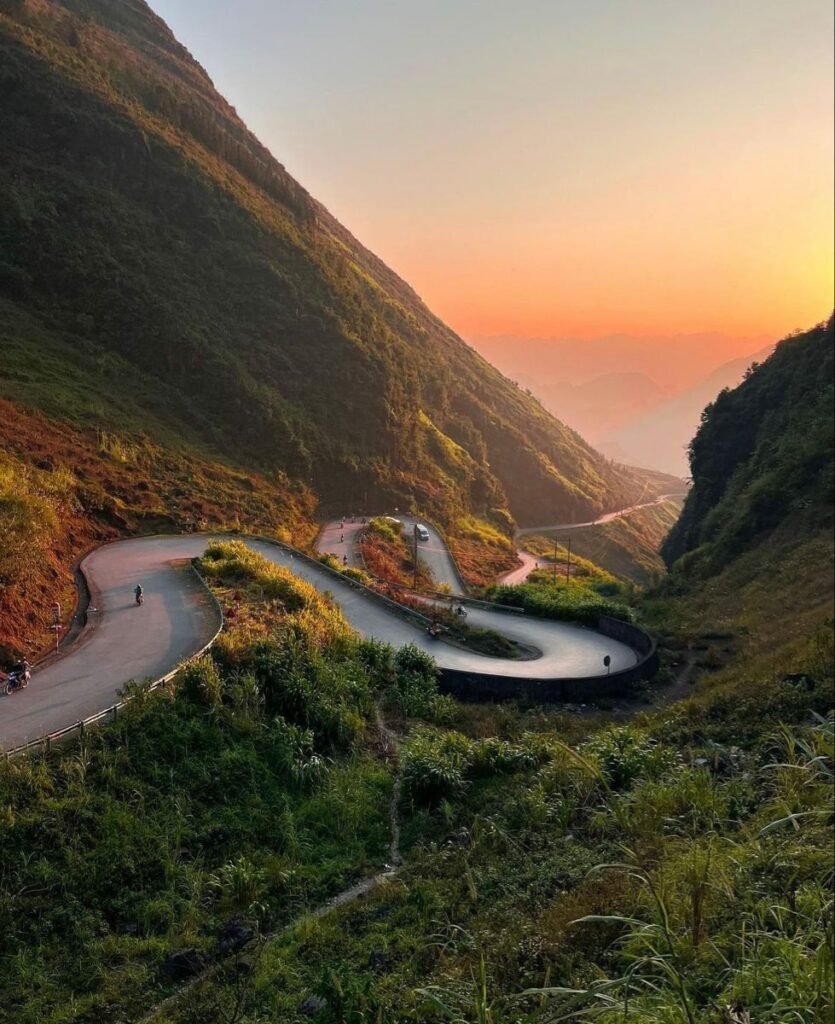
What the Loop Actually Covers
The classic route runs counter-clockwise from Ha Giang City through Yen Minh, Dong Van, Meo Vac, and Du Gia before looping back, typically covered over three or four days. Most of the journey sits inside the UNESCO-recognized Dong Van Karst Plateau Global Geopark, a landscape of dramatic limestone formations found almost nowhere else in Vietnam, home to Hmong, Tay, Dao, Lo Lo, Pu Peo, and Giay communities, many still living in traditional rammed-earth or stilt houses along the route. The riding itself varies considerably by day: gentler pine-forested roads and manageable curves out of Ha Giang City give way to increasingly dramatic mountain passes as the loop pushes deeper into the province.
Ma Pi Leng: The Pass That Defines the Trip
If one stretch of road has made Ha Giang’s reputation, it’s Ma Pi Leng Pass between Dong Van and Meo Vac, a narrow route carved directly into the cliff face above the Nho Que River, roughly twenty kilometres of the most exposed riding in Vietnam. The road surface itself has genuinely improved over the past decade, Highway 4C is now paved along the full pass and, for most of the year, in reasonably good condition. What makes it demanding isn’t poor pavement, it’s the combination of narrow lane width, blind hairpin bends, largely absent crash barriers, and drops steep enough that the psychological weight of the exposure catches even confident riders off guard. Most visitors budget at least ninety minutes to two hours for this stretch alone, factoring in the viewpoint stops that are, by every account, worth the time.
Riding It Yourself vs. Going Pillion
This is the decision that matters most before booking anything. Self-riding the loop should be reserved for travellers who are genuinely licensed, experienced, and insured for motorbike riding, guides and tour operators are consistent and unambiguous on this point: Ha Giang is not the place to learn. For everyone else, the increasingly standard option is riding pillion behind a licensed local driver, commonly called an “easy rider,” which lets first-timers experience the same roads and scenery without needing to manage steep descents, gravel corners, or sudden fog on a bike they’ve never handled outside a rental lot. Most operators running easy rider tours travel in small groups, provide proper helmets, and run pre-departure safety briefings, a meaningfully different experience from arranging an independent rental and setting off alone.
Where the Real Risk Actually Lives
It’s worth correcting a common misconception here: incident data and guide experience consistently point to less dramatic sections of the loop, not Ma Pi Leng itself, as where most accidents actually happen. Riders tend to stay cautious on the famous cliff-edge pass precisely because it looks dangerous, then relax on ordinary curves and straightaways where loose gravel, sudden braking, or overconfidence cause the majority of falls. Rainy season adds genuine complications across the whole route, slippery mud, falling rocks on passes like Bac Sum, and water crossing the road after storms, all reasons most guides point toward the September-to-November autumn window as the most reliable time to ride.

Planning the Trip
Ha Giang City serves as the practical starting and ending point, reachable by overnight bus or private transfer from Hanoi. Sunday morning in Dong Van is worth building the itinerary around specifically, the town’s weekly market draws surrounding ethnic minority communities and remains one of the loop’s genuine cultural highlights rather than a staged tourist event. Helmets are a legal requirement for every rider in Vietnam, and given how remote parts of the route run, particularly around Meo Vac and Du Gia, serious injuries typically require transfer to Ha Giang Hospital for initial stabilisation before a five-to-six-hour road transfer to proper trauma facilities in Hanoi, a detail worth knowing before deciding how much risk feels acceptable on any given stretch of road.
Why It’s Worth the Effort
Ha Giang delivers something increasingly hard to find on Vietnam’s more established tourist circuit: genuine, unmanufactured remoteness, paired with landscapes dramatic enough to justify the province’s fast-growing reputation. Whether ridden solo or from behind an experienced local driver, the loop rewards travellers willing to take its demands seriously rather than treat it as a scenic backdrop for a highlight reel. For those who do, few road trips anywhere in Southeast Asia deliver quite this much raw, unfiltered landscape in three or four days.