





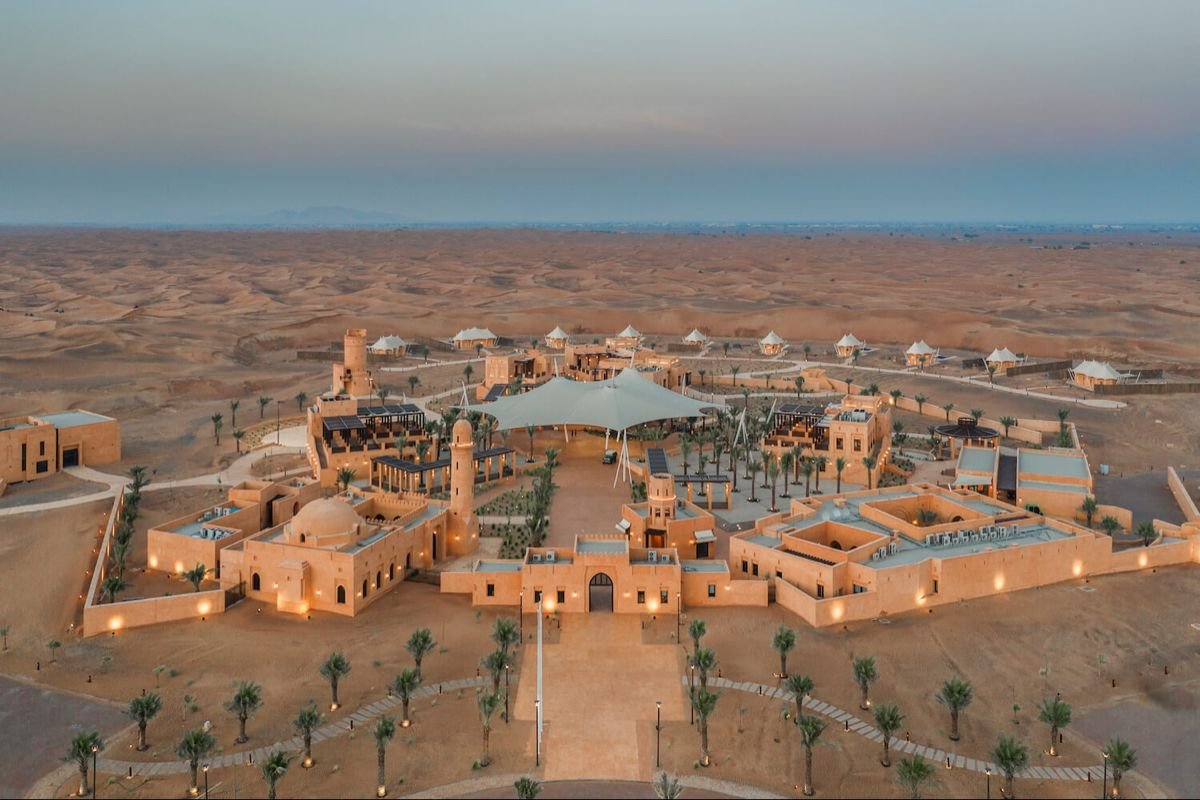

Saudi Arabia’s Vision 2030 giga-projects tend to get judged on ambition alone, NEOM’s radical desert city, Qiddiya’s entertainment complex, the Red Sea’s private-island resorts. Diriyah Gate is different, and deliberately so. Rather than building a future from empty desert, the $63 billion development on Riyadh’s northwestern edge is being constructed around something Saudi Arabia’s other megaprojects simply can’t claim: an actual UNESCO World Heritage Site and the literal birthplace of the Saudi state.
Building Around History Instead of Around It
Diriyah was the original seat of the House of Saud, founded in 1727 as the capital of the first Saudi state, and its historic core, At-Turaif, a mud-brick citadel built in traditional Najdi architectural style, still stands as the district’s anchor and namesake UNESCO listing. The Diriyah Gate Development Authority’s master plan spans roughly 14 square kilometres, encompassing the restoration of At-Turaif itself alongside new commercial, cultural, and hospitality zones layered carefully around it rather than competing with it. Bujairi Terrace, a dining and retail promenade overlooking the historic district, opened back in 2022 and has already become one of Riyadh’s most visited destinations, an early proof point that the broader concept, heritage as the draw rather than the backdrop, actually works commercially.
Thirty-Eight Hotels, One Unified Architectural Language
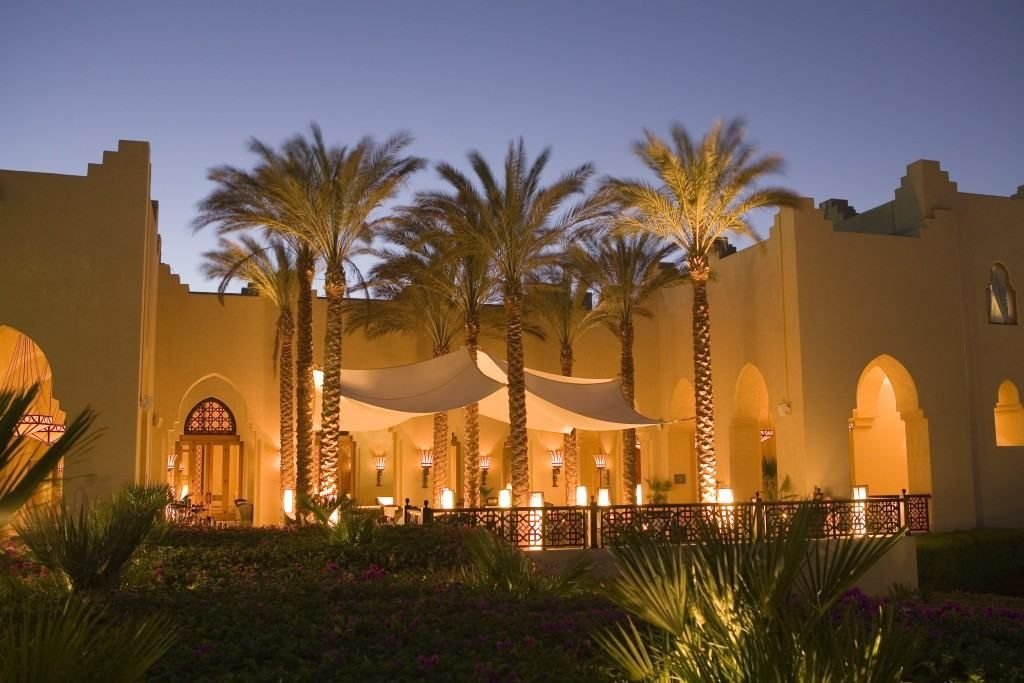
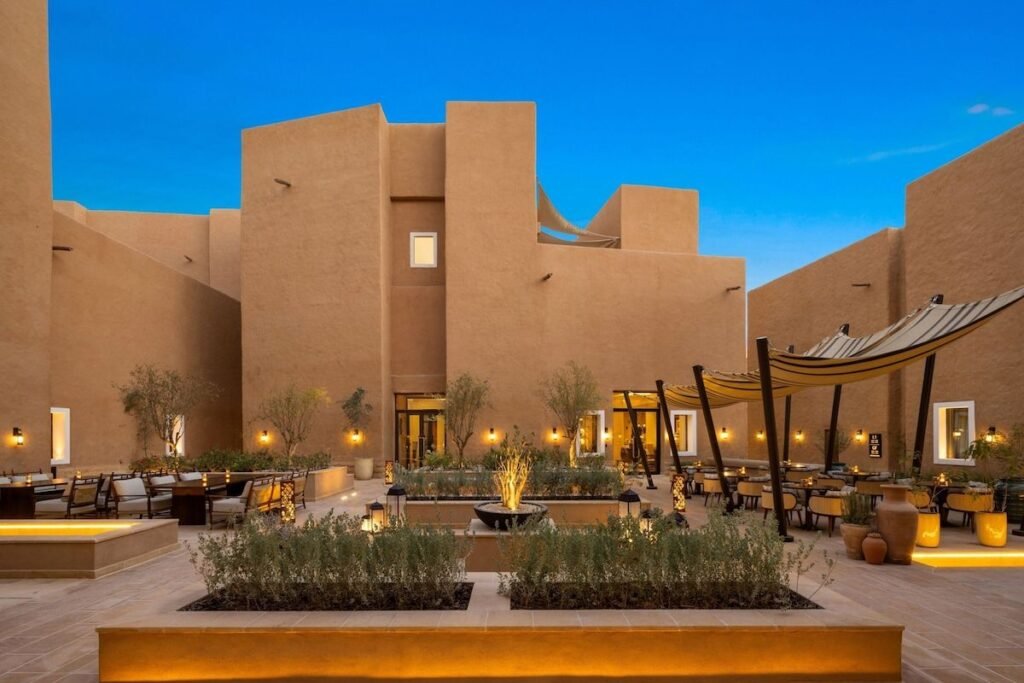
The hospitality component is where Diriyah Gate’s ambitions become concrete, literally. The plan calls for 38 hotels holding a combined inventory of roughly 3,100 rooms, spanning more than a dozen international luxury brands making their Saudi or regional debut. The Langham Diriyah, bringing one of the world’s oldest luxury hotel brands, dating to 1865 London, incorporates mudbrick-inspired facades and internal courtyards drawn directly from At-Turaif’s historic architecture, while The Chedi Wadi Safar leans into General Hotel Management’s signature minimalist style set against a Greg Norman-designed golf course. Aman Diriyah is positioned as a marquee benchmark property for the district’s overall quality ambitions, with Rosewood Diriyah and the Orient Express’s first Middle East property following in 2027. Every brand involved is working under the same broader constraint: new construction has to read as an extension of Najdi heritage rather than an imported luxury template dropped into the desert.
A Genuine Bright Spot Among Saudi Arabia’s Giga-Projects
Diriyah Gate’s progress stands out specifically because several of Saudi Arabia’s other headline megaprojects haven’t moved as smoothly. Industry analysts tracking the kingdom’s giga-project portfolio through 2026 note that NEOM’s construction has faced significant slowdowns and Red Sea Global’s second phase carries real timeline uncertainty, while Diriyah continues advancing steadily, backed by a daily construction workforce of roughly 20,000 people. Analysts attribute Diriyah’s comparative momentum to two structural advantages: proximity to existing Riyadh demand rather than a remote desert location, and a heritage-anchored concept that’s inherently easier to deliver and market than an entirely speculative new city built from nothing.
Worth Noting Honestly
Saudi Arabia’s giga-project labour model has drawn sustained international scrutiny, and it’s fair context for any account of a construction effort at this scale, tens of thousands of workers, many from South and Southeast Asia, building under the kingdom’s kafala-adjacent labour framework, which international labour and human rights organisations have long criticised over worker protections, contract terms, and reporting transparency. Diriyah’s own promotional material cites a workplace safety record of 50 million work hours without recorded injury, a notable claim worth treating as one data point among the broader, still-contested picture of labour conditions across Saudi Arabia’s construction sector more generally.
What This Means for Global Travel
If Diriyah Gate delivers on its stated 2030 ambitions, roughly 50 million annual visitors, 40-plus hotels, and a fully realised cultural district, it would represent a genuinely distinct model within Gulf tourism development, one built on historical authenticity rather than manufactured spectacle alone. The first real test comes this year, with The Langham Diriyah and The Chedi Wadi Safar both scheduled to welcome guests, giving the wider hospitality industry its first direct look at whether Diriyah’s heritage-first pitch translates into the kind of five-star experience that can genuinely compete with Riyadh’s other luxury offerings, and whether Saudi Arabia’s bet on its own history proves more durable than its more speculative giga-project ventures.