





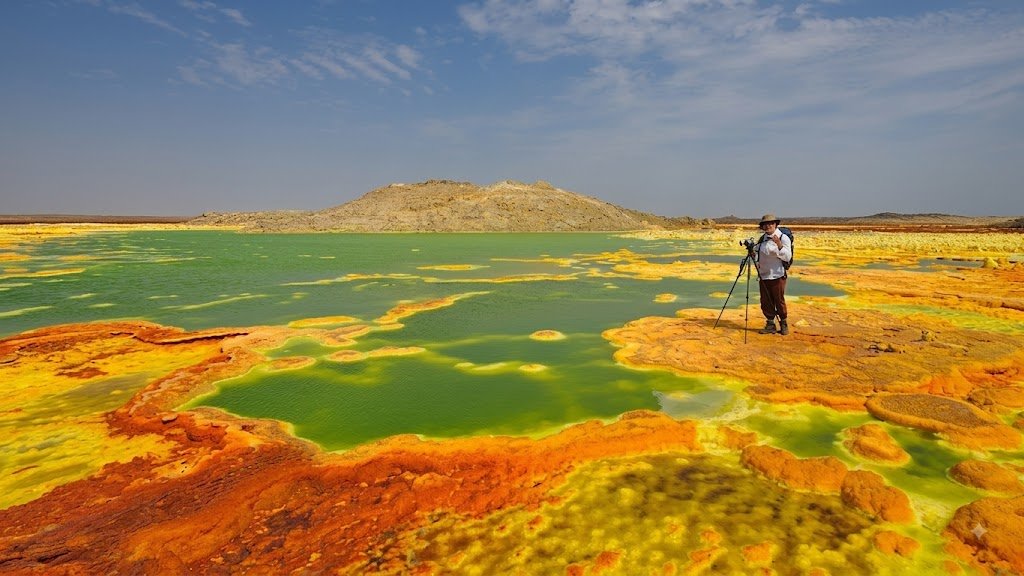

Some landscapes look like nowhere else on the planet. The Danakil Depression, sitting roughly 125 metres below sea level in Ethiopia’s Afar region, looks like it isn’t on the planet at all. Neon-yellow sulfur springs bubble beside acid pools in colours that shouldn’t occur in nature. Vast white salt flats stretch to a shimmering horizon. And at Erta Ale, a churning lake of molten lava has stayed continuously active since at least the early 1900s, one of only five permanent lava lakes left on Earth. It’s frequently described, without much exaggeration, as the cruelest place on Earth, and also one of the most genuinely extraordinary.
The Hottest Inhabited Place on the Planet
Danakil’s reputation for heat isn’t marketing exaggeration. Average year-round temperatures hover around 34 degrees Celsius, and summer daytime highs regularly surge past 45 degrees, occasionally exceeding 50. That combination of extreme heat and one of the lowest elevations on Earth’s land surface makes it a genuine contender for the hottest permanently inhabited place anywhere, a distinction that shapes literally every aspect of visiting: when you travel, what you wear, and how much water your guide packs.
Dallol: A Landscape That Shouldn’t Exist
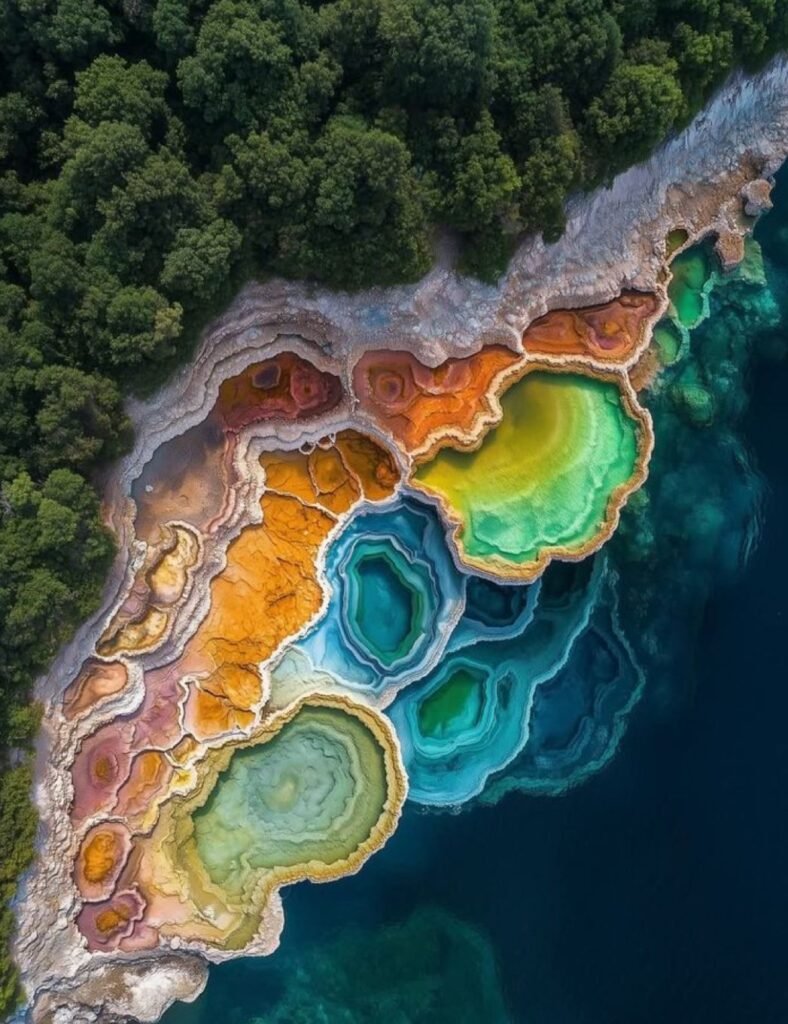
The Dallol hydrothermal field is Danakil’s most photographed feature, and it’s easy to see why. Geothermal activity beneath the salt crust forces up mineral-rich brine that crystallizes into surreal formations in shades of sulfur yellow, acid green, and rust orange, all sitting atop a crust thin enough in places that guides warn visitors specifically against stepping off marked paths or letting children near the edges. Sitting at roughly 116 metres below sea level, Dallol formed through an unusual combination of volcanic activity, ancient salt deposits, and active hydrothermal springs, a geological cocktail found in only a handful of places worldwide, none of which look quite like this.
Erta Ale: Standing at the Edge of Molten Earth
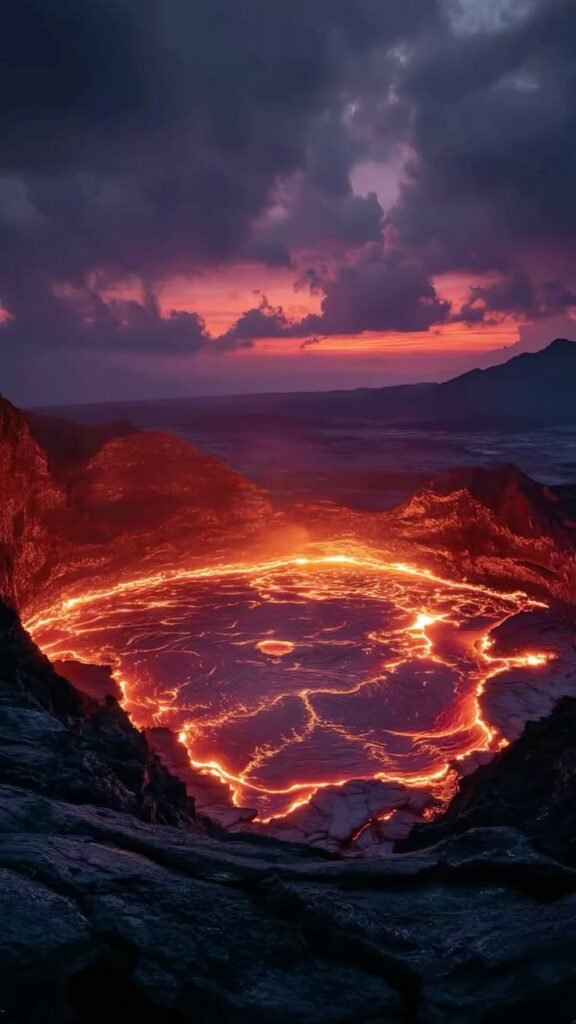
The depression’s other headline attraction requires more effort and delivers arguably more spectacle. Erta Ale, a shield volcano rising from the desert floor, hosts a lava lake that visitors typically reach via an evening hike timed to arrive after dark, when the glowing orange churn at the crater rim becomes genuinely difficult to look away from. Closed-toe shoes are non-negotiable here, the surrounding lava rock is sharp enough to cut through anything less, and sulfur fumes near the rim are strong enough that guides recommend a scarf or buff to cover the nose and mouth during the visit.
The Safety Situation, Addressed Honestly
Danakil sits close to Ethiopia’s border with Eritrea, a proximity with real consequences: in January 2012, an attack near Erta Ale killed five tourists and resulted in two kidnappings, an incident directly tied to the decades-long tension between the two countries. In the years since, security measures have changed substantially. Ethiopian authorities now require armed Afar escorts and, at times, military presence for anyone travelling through this section of the depression, and reputable tour operators build police coordination and daily security monitoring directly into their itineraries. Travellers researching a trip in 2026 will find operators discussing this openly rather than glossing over it, a reasonable sign that the industry treats it as a real, managed risk rather than a solved problem. Anyone considering the trip should book through an established operator, check current government travel advisories specifically for the Afar region, and treat the mandatory security escort as a condition of the trip rather than an inconvenience to work around.
What a Trip Actually Involves
Most visitors base a Danakil expedition out of Mekelle or Semera, travelling by 4WD with a permit-holding operator who handles logistics, camping equipment, meals, and the required security escort. Accommodation stays basic throughout, tents or simple desert camps near Afar villages or the Erta Ale base camp, with limited sanitation and no real amenities once you’re deep in the depression. October through February offers the most survivable window, daytime temperatures sitting closer to 30 to 38 degrees rather than the brutal summer peaks, and it’s also when most tour operators run their regular expedition schedule.
Why It Belongs on a Serious Traveller’s List
Few places on Earth combine this much genuine geological extremity with this much visual strangeness in one relatively compact region: an active lava lake, a hydrothermal field that looks digitally altered until you’re standing in front of it, and salt flats worked by Afar communities using methods that have barely changed in generations. Danakil demands real preparation, real heat tolerance, and a clear-eyed acceptance of the security realities that come with the region. For travellers willing to meet those demands, it offers something increasingly rare: a landscape that genuinely earns every superlative used to describe it.