





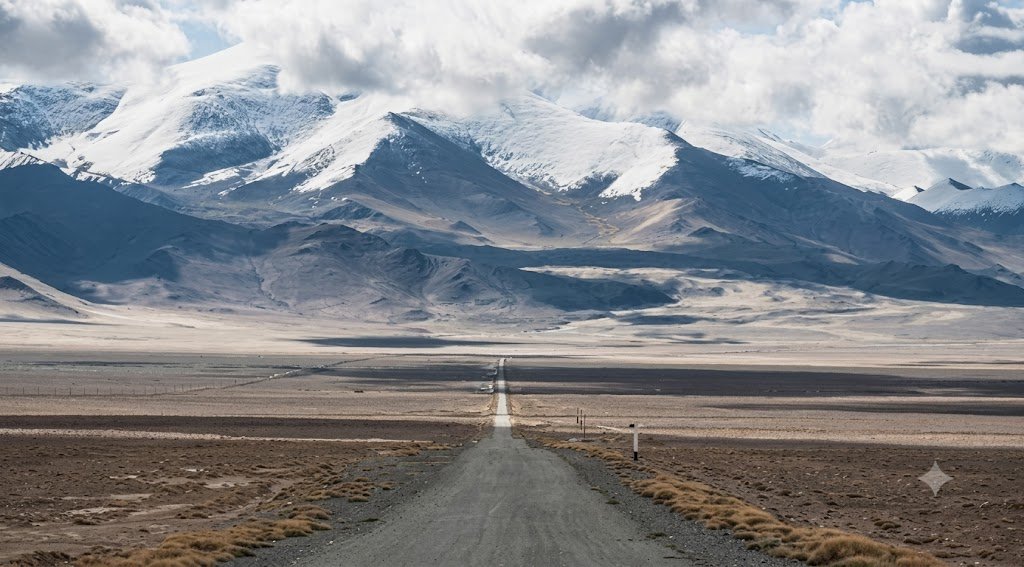

Some journeys are about reaching a beautiful place. Others make you forget where you were going in the first place. The Pamir Highway belongs firmly in the second category.
Stretching through the rugged mountains of Central Asia, this legendary route follows the M41 through Kyrgyzstan and Tajikistan, crossing vast plateaus, high mountain passes and settlements separated by enormous distances. The scenery is spectacular, but the real experience lies in everything that happens between destinations: a roadside tea break, a conversation with a local family, or a sudden view of snow-covered peaks appearing beyond an empty stretch of road.
Here, travelling slowly is not a lifestyle choice. It is simply how the journey unfolds.
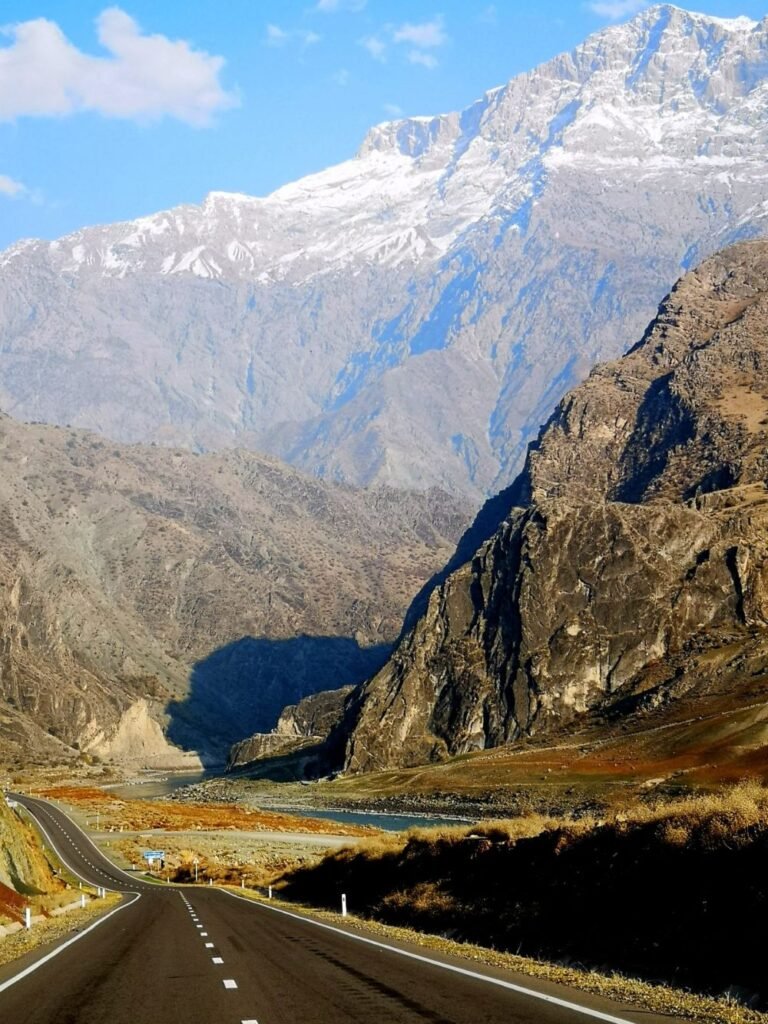
A Road Through the Roof of the World
The Pamir Highway is among the world’s highest international roads, with sections climbing above 4,000 metres. Its highest major pass, Ak-Baital, reaches approximately 4,655 metres above sea level. At these elevations, the landscape feels enormous and strangely quiet, with rocky mountains, open valleys and distant glaciers stretching towards the horizon.
Many travellers begin in Osh, southern Kyrgyzstan, before heading towards the Alay Valley and crossing into Tajikistan. From there, the road continues through the Pamirs towards Murghab and Khorog, although itineraries vary depending on road conditions, border access and the time available.
The scenery changes constantly. One moment, you might be crossing a broad, windswept plateau; the next, you are following a river through a narrow mountain valley. Some sections feel almost lunar, while others reveal green pastures where livestock graze beneath enormous peaks.
Calling it a highway can be misleading. Parts of the route are rough, damaged or unpaved, and driving times are often longer than the distances suggest. That unpredictability is part of what makes the journey so memorable.
When the Landscape Becomes the Main Attraction
On the Pamir Highway, the most memorable moments are not always marked on a map.
You might ask your driver to stop because sunlight has suddenly illuminated a mountain ridge. You might spend twenty minutes watching clouds drift across an otherwise empty valley. Sometimes, the most remarkable view appears around a bend when you least expect it.
There are no endless rows of cafés or carefully arranged tourist stops along much of the route. Instead, travellers encounter small villages, isolated homestays and long stretches where the road seems to belong entirely to the mountains.
This is also why photography here feels different. The scale of the landscape is difficult to capture, and a picture rarely communicates the wind, the silence or the feeling of standing in a place where the nearest settlement may be many kilometres away.
Rather than rushing from one landmark to another, leave room in your itinerary for unplanned stops. On this road, an extra hour beside a mountain lake may become the highlight of the entire trip.
Life Along the Road
Despite the dramatic surroundings, the Pamir region is not an empty wilderness. Communities have lived here for generations, adapting to difficult weather, limited resources and long distances between settlements.
Staying in a family-run guesthouse offers a glimpse into everyday life. Accommodation is often simple, meals are home-cooked, and hospitality can be one of the most rewarding parts of the journey. You may find yourself sharing tea, eating freshly prepared bread or listening to stories about life in the mountains.
In the eastern Pamirs, particularly around Murghab, the landscape is high, dry and sparsely populated. Farther west, the valleys around Khorog offer a different atmosphere, with settlements following the river and small cultivated plots appearing along the slopes.
These encounters deserve the same respect as the landscape itself. Ask before photographing people, follow local guidance and remember that villages are homes, not simply attractions along an adventurous route.
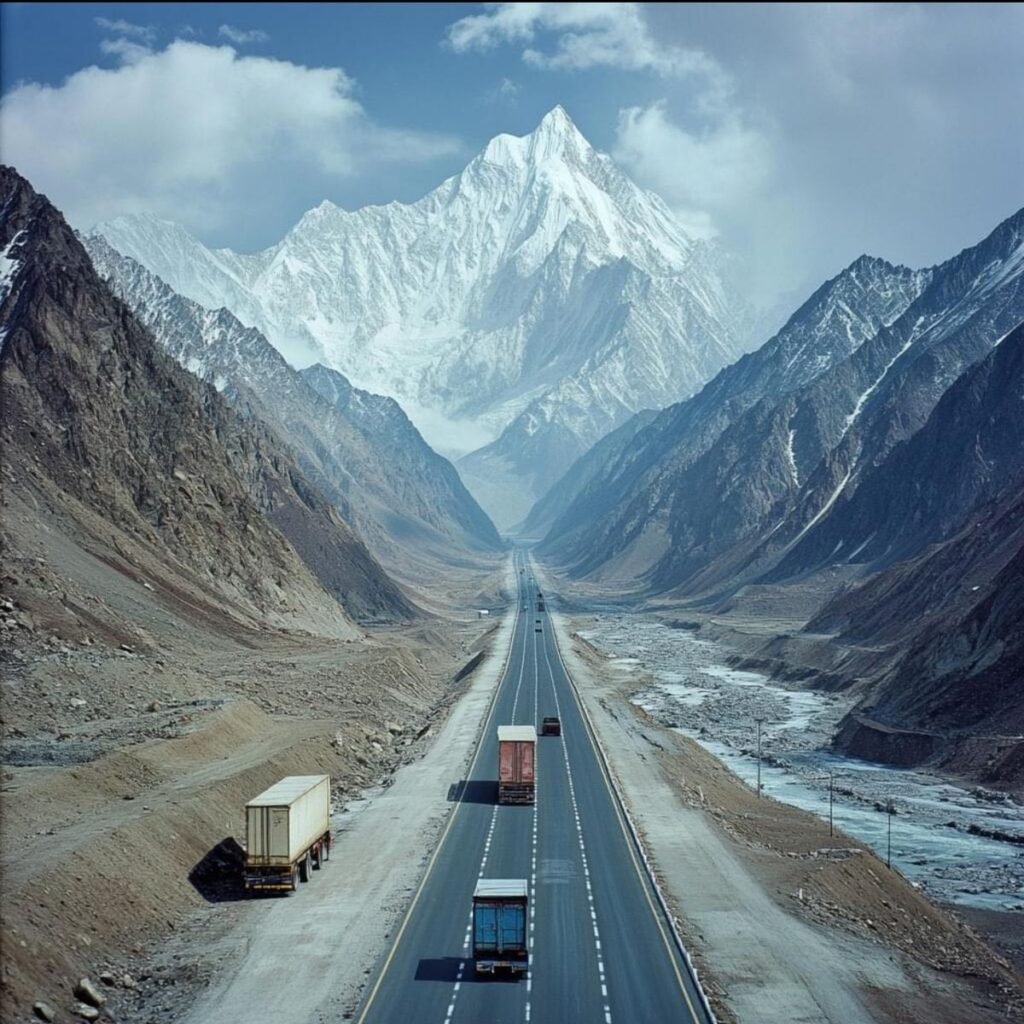
When to Travel and How to Prepare
The main travel season is generally summer, particularly from June to September, when mountain roads are more accessible. Conditions can still change quickly, and snow, landslides or road damage may disrupt plans.
A sturdy four-wheel-drive vehicle with an experienced local driver is a sensible option for travellers unfamiliar with high-altitude mountain roads. Allow several days for the journey rather than trying to cover everything in a hurry.
Altitude is another important consideration. Some overnight stops are above 3,000 metres, and the highest passes rise considerably beyond that. Build in time to acclimatise, recognise symptoms of altitude sickness and seek medical advice before travelling if you have concerns about high elevations.
Travellers entering Tajikistan’s Gorno-Badakhshan Autonomous Region generally need a special permit. More importantly, security conditions in the region can change. Check current government travel advisories, border arrangements and local road conditions before committing to an itinerary.
Why the Journey Stays With You
The Pamir Highway is not a comfortable road trip in the conventional sense. There may be long driving days, basic accommodation and stretches where the scenery is more dramatic than the facilities.
Yet these are often the details that make the experience unforgettable. You begin to measure a day not by how far you have travelled, but by what you have noticed along the way.
Perhaps it is the changing colour of the mountains at sunset. Perhaps it is a warm meal after hours on a dusty road. Or perhaps it is simply the realisation that, for once, there is nowhere else you need to be.
On the Pamir Highway, the destination is never just a place at the end of the road. It is the road itself, unfolding slowly through one of Central Asia’s most extraordinary landscapes.