







There are few places on Earth that look as if they’ve been sculpted by dreams rather than time — and Cappadocia, in central Turkey, is one of them. A land of fairy chimneys, sunrises painted with floating hot air balloons, and ancient cave dwellings carved into soft volcanic rock, it’s the kind of destination that leaves you wondering whether you’ve stepped into a fantasy world.
My journey began in Göreme, a quaint town that serves as the heart of Cappadocia. Winding cobblestone streets, boutique cave hotels, and cozy rooftop terraces set the tone for an experience that blends history, adventure, and serenity. At dawn, the sky transformed into a living canvas of color. More than a hundred hot air balloons floated gracefully above the valley — a sight so surreal that it’s hard to describe without goosebumps. Watching the sun rise over the honey-colored cliffs while sipping Turkish tea is a moment etched forever in my memory.

Beyond the famous balloon rides, Cappadocia’s terrain is a treasure chest for explorers. The region’s volcanic landscape, shaped over millions of years, hides a labyrinth of valleys and canyons, each with its own character. I hiked through the Rose Valley, where the rocks blush pink and gold under the afternoon sun. The trail meandered past small chapels adorned with faded frescoes, remnants of early Christian settlements. Every turn revealed a story written in stone.
The underground cities were next — a hidden world beneath the earth. Derinkuyu and Kaymakli are astonishing feats of ancient engineering, once used as shelters by early Christians escaping persecution. Descending into the cool, narrow tunnels, I felt both awe and claustrophobia. The city stretched several levels deep, complete with kitchens, wineries, and ventilation shafts — an entire civilization concealed from the surface. It’s impossible not to marvel at the resilience and creativity of the people who built it.
Food, of course, played its own role in the adventure. Turkish cuisine in Cappadocia is hearty and full of flavor — perfectly suited for refueling after long days of exploring. I fell in love with testi kebab, a local specialty cooked in a sealed clay pot that’s cracked open at your table with a dramatic flourish. Add to that fresh bread, tangy yogurt, and local wines from the nearby Ürgüp vineyards, and you’ve got a feast to remember.
As night fell, Cappadocia unveiled another layer of its magic. Away from city lights, the region becomes a stargazer’s paradise. I lay back on a terrace carved into the rock, wrapped in a blanket, watching the Milky Way stretch across the sky. The silence was deep and ancient — the kind that humbles you, reminding you how small you are in the vastness of time.
What makes Cappadocia so unforgettable isn’t just its unusual landscape or rich history — it’s the way it feels like a bridge between worlds. Ancient and modern, earth and sky, history and imagination. Locals welcome travelers with genuine warmth, eager to share stories passed down through generations. Whether it’s a potter demonstrating his craft in Avanos or a villager offering tea with a smile, there’s a sense of connection that lingers long after you’ve left.
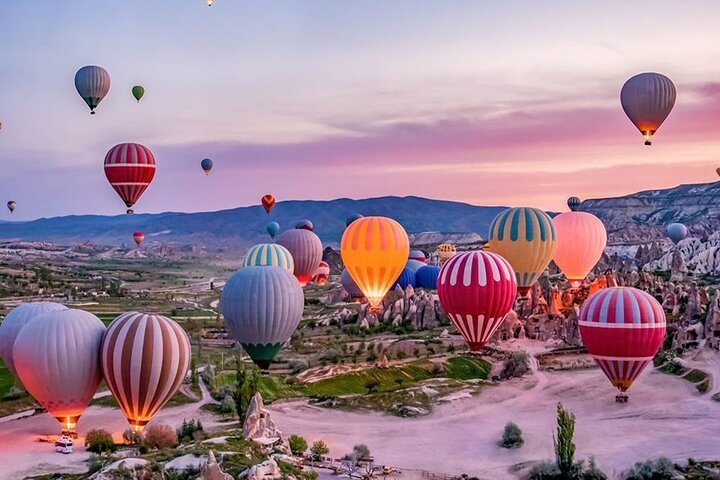
On my final morning, I woke before dawn once more. The air was crisp, and the horizon glowed faintly pink. The balloons began to rise again, silent and majestic, drifting over the valleys. As I watched them disappear into the light, I realized that Cappadocia isn’t a place you simply visit — it’s a place you feel. It stirs something ancient inside you, whispering tales of the earth’s wild beauty and humanity’s enduring wonder.
If travel is about discovery, Cappadocia is the kind of discovery that stays with you forever — not as a destination, but as a dream you can revisit anytime you close your eyes.