







In the center of Iran, far from the bustling cities and the green slopes of the north, lies a world that feels timeless—a land of sand, salt, silence, and stars. Central Iran’s deserts, primarily the Dasht-e Kavir and Dasht-e Lut, form one of the most hauntingly beautiful landscapes on Earth. Here, nature strips life down to its essence, revealing the pure poetry of emptiness. A journey across this vast region is more than a trip; it is a meditation on endurance, history, and the delicate balance between humans and the harshest environments.
The Dasht-e Kavir: The Great Salt Desert
The Dasht-e Kavir, or the Great Salt Desert, stretches across the provinces of Semnan, Isfahan, Yazd, and Khorasan, covering nearly 80,000 square kilometers. At first glance, it seems lifeless—a shimmering expanse of white salt flats and cracked clay. Yet, the closer you look, the more you discover the subtle textures that make this landscape extraordinary.
Once a vast inland sea, the Dasht-e Kavir dried up thousands of years ago, leaving behind salt crusts and shallow seasonal lakes that glisten under the desert sun. The terrain changes constantly—from rolling sand dunes to barren plateaus and marshy salt pans. The heat can soar above 50°C in summer, but the winter months bring crisp air and surreal clarity, when the stars above seem close enough to touch.
Ancient caravans once crossed this desert along the Silk Road, connecting Persia with Central Asia and beyond. Traces of their routes remain, as do old caravanserais—stone inns built centuries ago by Persian kings to offer travelers shelter from the sun and wind. The most famous among them, such as Deh Namak Caravanserai and Maranjab Caravanserai, have been restored and now serve as desert lodges where visitors can sleep under the same endless sky as the traders of old.
The Dasht-e Lut: The Desert of Extremes
Further southeast lies the Dasht-e Lut, or Lut Desert, a UNESCO World Heritage Site and one of the hottest places on Earth. Satellite measurements have recorded ground temperatures exceeding 70°C (158°F)—the highest ever observed on the planet. Yet despite its extreme conditions, the Lut is a landscape of breathtaking artistry.
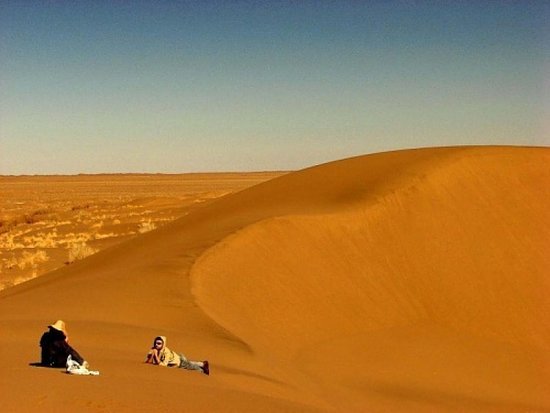
Its most iconic feature is the Kaluts, towering sand and rock formations sculpted by centuries of wind erosion. Stretching across hundreds of kilometers, these natural monuments resemble an alien city—spires, ridges, and valleys carved by invisible hands. At sunrise and sunset, the Kaluts shift colors from ochre to crimson to deep purple, creating one of the most surreal light shows on Earth.
The Shahdad Desert Camp, near the city of Kerman, serves as a gateway to this extraordinary terrain. Visitors can hike, drive, or take camel rides through the Kaluts, experiencing the stark silence that defines the Lut. Nightfall brings a spectacle of stars unmatched anywhere else—the desert sky is among the clearest in the world, untouched by urban light pollution.
Life in the Harshness
Though the central Iranian deserts seem inhospitable, they have long sustained life. Oases and small settlements appear like mirages, supported by ancient qanat systems—underground channels that transport water from distant mountains. Towns such as Kashan, Nain, and Yazd flourish at the desert’s edge, blending architectural ingenuity with spiritual calm.
In Yazd, windcatchers rise above earthen rooftops, cooling homes with natural ventilation. Narrow alleys, adobe walls, and blue-tiled mosques create a serene harmony with the surrounding sand. The people here have learned not to conquer the desert, but to live in balance with it—a lesson in sustainability and respect for nature’s limits.
A Journey of Silence and Stars
Traveling through Central Iran’s deserts is less about sightseeing and more about sensing. The silence is so complete it amplifies your thoughts; the horizon seems endless, inviting reflection and humility. As night falls, the desert transforms into a celestial theater. The Milky Way stretches from one horizon to the other, and meteors streak across the velvet sky. Many travelers describe the experience as spiritual—an encounter with eternity.
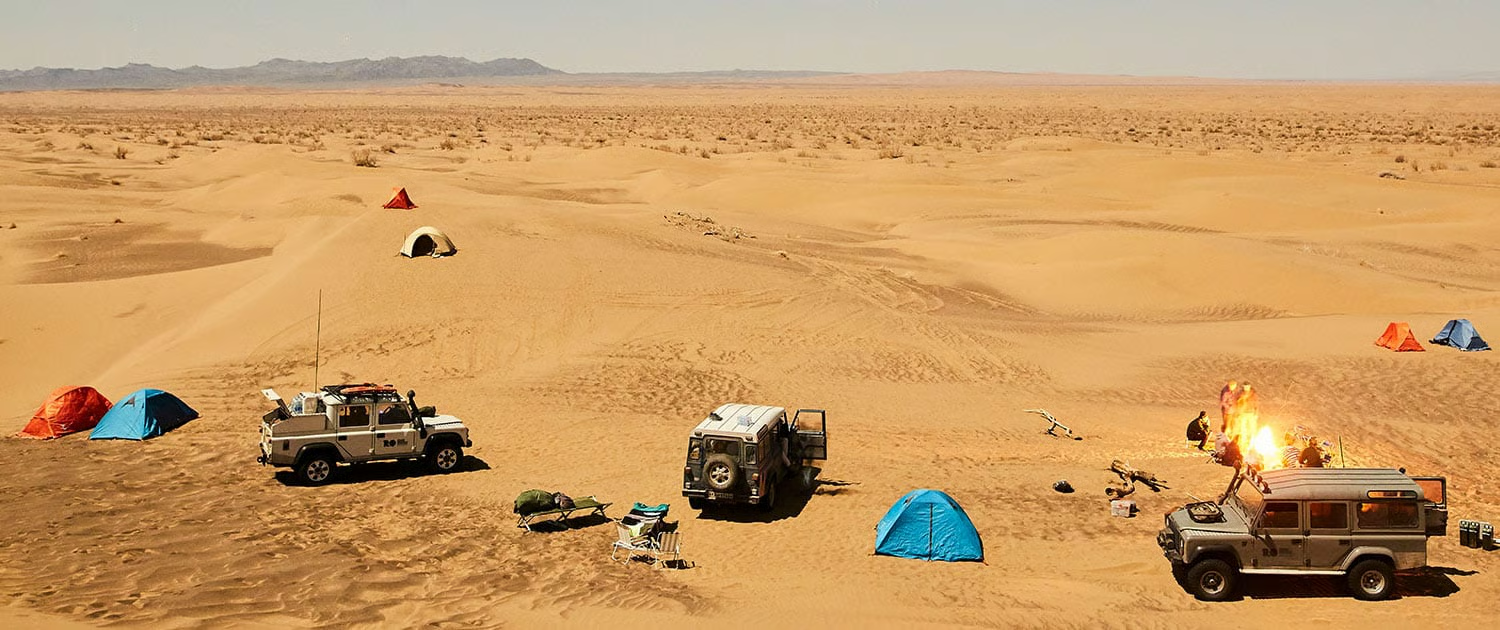
Camping in the desert brings a simplicity that feels ancient: a fire crackling under the stars, warm tea brewed over the embers, and the cool wind whispering through the dunes. Local guides, many descended from desert nomads, share stories of old caravans, hidden wells, and sacred sands.
The Timeless Heart of Iran
To cross the heart of Central Iran is to step into the rhythm of deep time. The desert’s beauty is not immediate or lush—it reveals itself slowly, through its stillness, textures, and vastness. It is a place that humbles and heals, reminding visitors of nature’s grandeur and fragility.
In a world of constant motion, the deserts of Iran offer a rare kind of stillness. They ask nothing and give everything—space, silence, and a profound sense of connection to the Earth. For those who venture into this golden expanse, the journey is not just across sand and salt, but through the very essence of existence itself.