





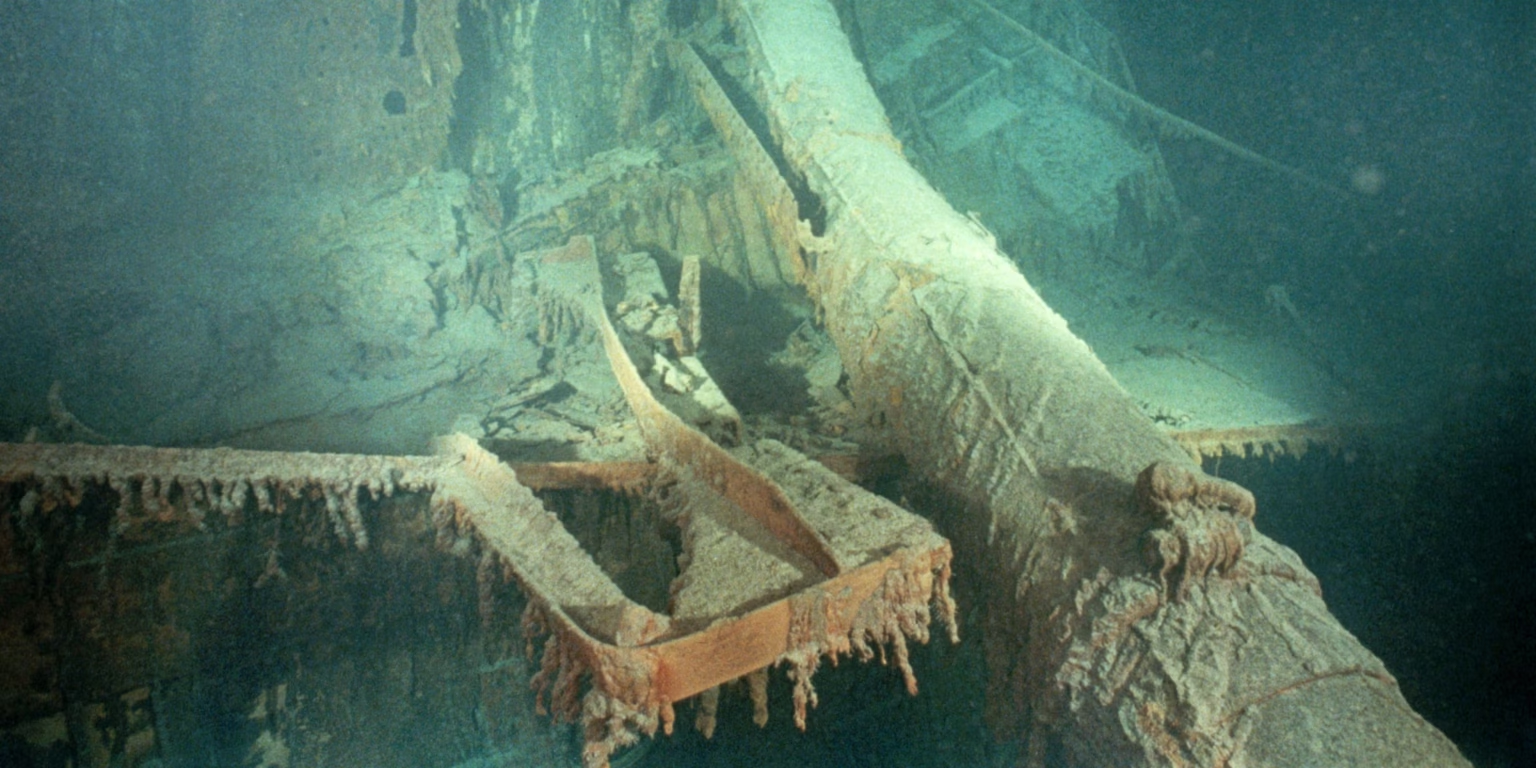

When people think of tragic shipwrecks, one name almost always comes to mind — the RMS Titanic. The “unsinkable” ship that struck an iceberg and sank in the icy North Atlantic on April 15, 1912, remains etched in public memory as a symbol of human ambition, technological pride, and devastating loss. More than 1,500 lives were lost that night, and the story has inspired countless books, films, and legends. Yet, as haunting as the Titanic’s disaster was, it was not the worst shipwreck in history. In terms of death toll and scale, several maritime catastrophes far exceeded it — though few captured the world’s imagination the way Titanic did.
One of the deadliest maritime tragedies ever recorded occurred during the final days of World War II: the sinking of the MV Wilhelm Gustloff. On January 30, 1945, the German military transport ship was carrying over 10,000 people, mostly civilians and wounded soldiers, fleeing from advancing Soviet forces in East Prussia. The Baltic Sea was freezing, and the war was nearing its end, yet chaos and desperation reigned. That night, a Soviet submarine fired torpedoes that struck the Wilhelm Gustloff, causing catastrophic damage. Within less than an hour, the ship went under. Estimates suggest that over 9,000 people perished — making it the single deadliest maritime disaster in recorded history.

Unlike the Titanic, the Wilhelm Gustloff’s story received little global attention, largely because it took place during wartime, when countless other tragedies were unfolding. There were no luxury passengers or millionaires aboard, no wireless distress signals that the press could follow. Instead, it was a vessel of refugees, mothers, and children — victims of a war that had already consumed millions. For decades, the story was overshadowed, buried under the enormity of World War II’s destruction.
Another lesser-known but equally devastating disaster was the sinking of the SS Kiangya off the coast of China in December 1948. The ship, which was carrying thousands of refugees escaping civil war between the Nationalists and Communists, reportedly struck a mine in the Huangpu River estuary. The explosion ripped the vessel apart, killing an estimated 3,000 to 4,000 people. Much like the Wilhelm Gustloff, the Kiangya’s tragedy was eclipsed by the political turmoil of its time.
In the Philippines, the MV Doña Paz tragedy of December 1987 stands as the deadliest peacetime maritime disaster of the 20th century. The passenger ferry collided with an oil tanker, the MT Vector, in the Tablas Strait. The Vector was carrying thousands of gallons of petroleum products, and when the collision occurred, it caused an inferno that engulfed both ships. Most passengers aboard the Doña Paz were trapped as the fire spread rapidly. With an estimated 4,300 deaths, the disaster remains one of the most horrifying examples of human error, poor safety standards, and negligence at sea.
Even the SS Sultana disaster in 1865, often forgotten outside the United States, surpassed Titanic’s death toll. The steamboat was carrying Union soldiers returning home after the Civil War when its boilers exploded on the Mississippi River near Memphis, Tennessee. Over 1,800 people died in the fiery wreck — more than the number lost on the Titanic — but the tragedy was quickly overshadowed by the assassination of President Abraham Lincoln, which occurred just weeks earlier.
So why, then, does the Titanic remain the most famous shipwreck in history? The answer lies not only in its human toll but in its symbolism. The Titanic represented the pinnacle of early 20th-century engineering — a floating palace of luxury and pride. Its sinking was a shocking blow to the belief that technology could conquer nature. The human stories aboard — of love, heroism, and class division — resonated deeply with the public and have been immortalized in art, film, and literature. The ship became more than a tragedy; it became a myth about human vulnerability and the limits of progress.
In contrast, disasters like the Wilhelm Gustloff or Doña Paz lacked that same narrative appeal. They occurred during chaotic times, often involving refugees or soldiers rather than society’s elite. Their stories were tragic, but they did not fit the cultural image of grandeur and downfall that surrounded the Titanic.

Yet, history reminds us that the Titanic was not the worst shipwreck — only the most remembered. Many ships sank with far greater loss of life, but their stories faded amid wars, politics, and forgotten coastlines. Remembering them honors the countless unnamed souls who perished at sea, reminding us that behind every wreck lies not just statistics, but human stories of fear, courage, and loss.
The Titanic may forever dominate popular memory, but it represents just one chapter in a vast ocean of maritime tragedy. Beneath the waves lie countless others — ships that carried hopes, dreams, and thousands of lives that never reached their destination.