





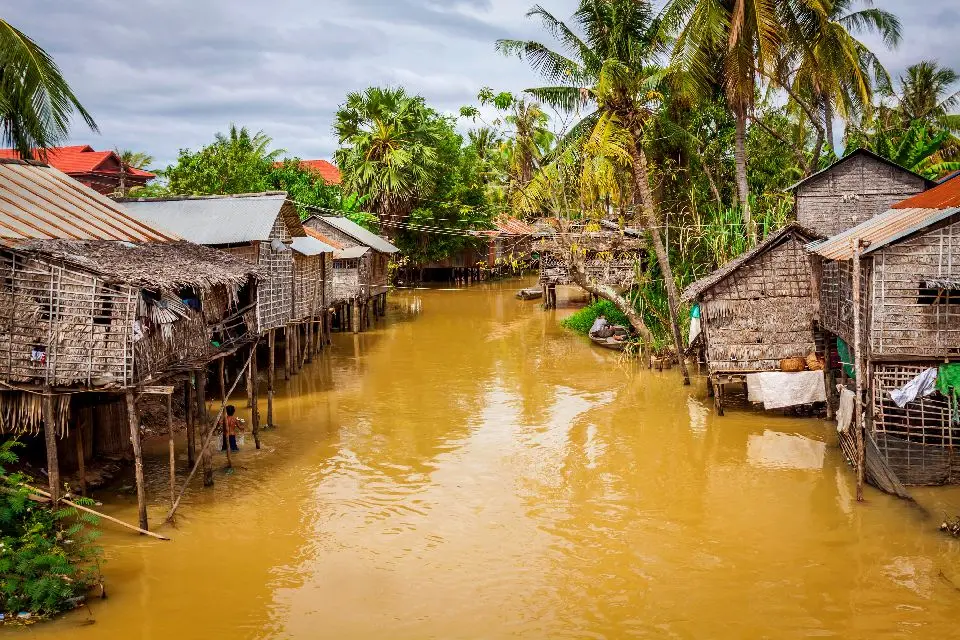

Some places are defined by their landmarks, others by their landscapes—but Tonle Sap in Cambodia is defined by something far more fluid: rhythm. The rhythm of rising and falling waters, of drifting homes, of families who live not beside a lake but on it. Visiting the floating villages of Tonle Sap feels like stepping into a world where the water decides everything—how people travel, how they work, and even how their houses breathe.
My journey began at the edge of Chong Khneas, a bustling lakeside community whose wooden docks creaked under the morning sun. Boats of all shapes and sizes rocked gently in the water—some painted bright turquoise, others weathered into soft grays by years of sun and storms. The air smelled of river reeds and fresh fish, and the sounds of life on the lake echoed everywhere: splashing paddles, sputtering motors, and laughter drifting from homes that floated like tiny islands.
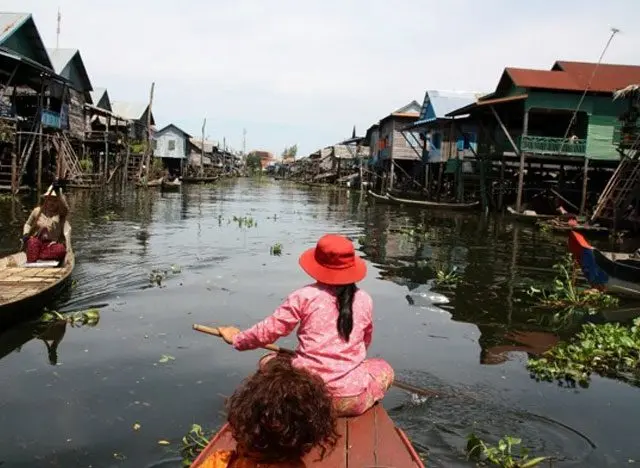
As we pushed off from shore, the transformation was immediate. Within minutes, land vanished, replaced by endless glittering water and a horizon dotted with drifting houses. Some floated on bundles of bamboo, others on blue plastic drums tied together with ropes. Schools, shops, police posts—even small temples—rested atop the water, gently rising and falling with the lake’s breath.
Life here moves at a slower, more deliberate pace. Nothing is rushed because nothing can be. If someone wants to visit a neighbor, they paddle. If a child wants to attend school, they paddle. Even grocery shopping happens by boat, with vendors navigating door to door, selling fruit, rice, and vegetables from long, narrow skiffs. It’s a world that feels improvisational yet deeply resilient.
My guide, Dara, grew up in one of these floating villages. “The lake teaches us everything—patience, respect, balance,” he said, gesturing toward the shimmering water. “When the water rises, we rise. When it falls, we adapt.” His voice carried the calm steadiness of someone shaped by the rhythms of nature, not the rush of modern life.
We steered next toward a floating school painted in joyful yellows and blues. Children waved from open windows, their voices bright and echoing across the water. Some arrived in tiny canoes barely bigger than bathtubs—balancing effortlessly, paddles in hand. It struck me how natural this life was to them, how their comfort on the water felt similar to how city kids navigate crowded streets or subway platforms.
Nearby, a floating fish farm provided another glimpse into the community’s ingenuity. Beneath the wooden floorboards, nets descended into the lake, holding swarms of tilapia and catfish. The farmer, a wiry man with a sun-faded hat, lifted a corner of the floor to show us. “The lake gives us food, but it takes work,” he said, smiling as the fish shimmered below. “Every day, we feed them. Every day, we wait.”
But Tonle Sap is not just a place of daily routine—it’s also a place of breathtaking natural beauty. As our boat drifted farther from the village, the lake widened into a vast, glistening plain. Birds skimmed the surface—herons, kingfishers, and even the rare painted stork. The water rippled like silk beneath the afternoon breeze. In the distance, the flooded forest emerged: trees rising from the lake like silent guardians, their roots submerged, their branches hosting birds and small animals seeking refuge.
We steered gently through the forest, branches arching above us like a cathedral made of water and wood. Sunlight filtered through the leaves in soft, golden beams. The silence was immense—broken only by the dip of a paddle or the chirp of unseen birds. It felt sacred, like walking through a world nature had built for itself.
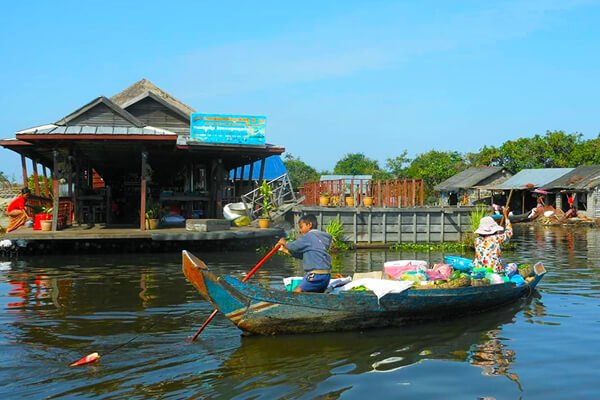
As the sun began to descend, the floating village transformed again. Houses turned golden, their reflections dancing in the ripples. Boats glided homeward. Families gathered on their porches to cook dinner over small open flames. The air filled with the scent of grilled fish and woodsmoke drifting over the water. A soft hush settled over the lake as the sky turned from rose to purple.
Tonle Sap is not luxurious or glamorous. It doesn’t need to be. Its beauty lies in its authenticity—in the resilience of its people, in the harmony between life and water, and in the gentle reminder that not all worlds are built on land. Some float, some drift, and some—like the floating villages of Cambodia—teach us what it means to live with nature, not against it.
For travelers seeking a place that humbles, surprises, and lingers long after you leave, Tonle Sap’s living water world is a journey unlike any other.