





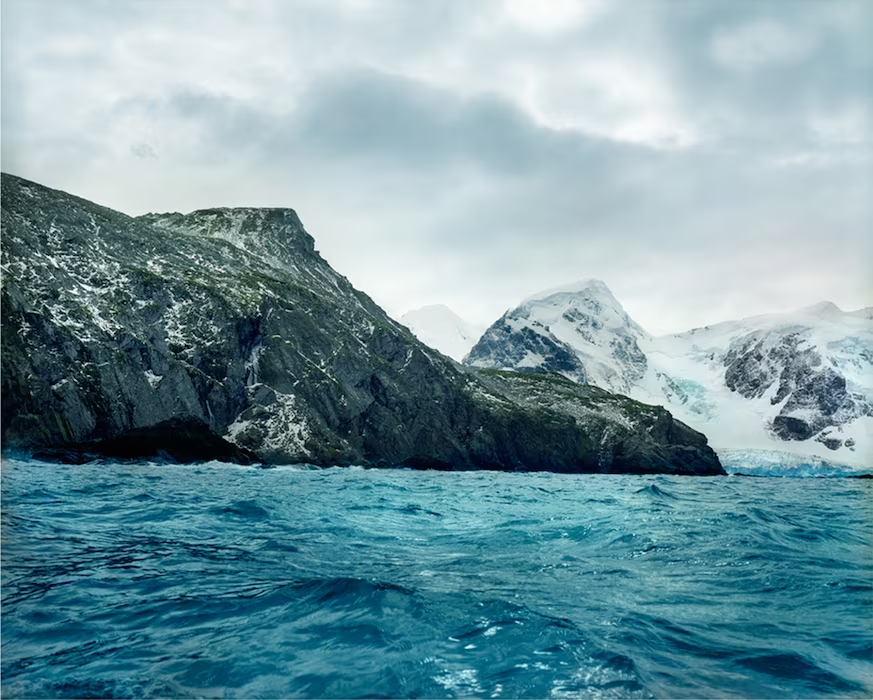

Far from crowded cities and modern skylines lies a remote island where time seems to move differently — slower, deeper, and in rhythm with the land. Surviving here is not about conquering nature, but understanding it. On this isolated stretch off the northern coast of Australia, life unfolds under the guardianship of the world’s oldest continuing living culture: the Arnhem Land Indigenous communities.
For more than 60,000 years, Aboriginal Australians have lived in harmony with this landscape. Their survival has never depended on domination, but on balance — a balance between land, sea, spirit, and story. To step into this world is to enter a living archive of ancient knowledge.
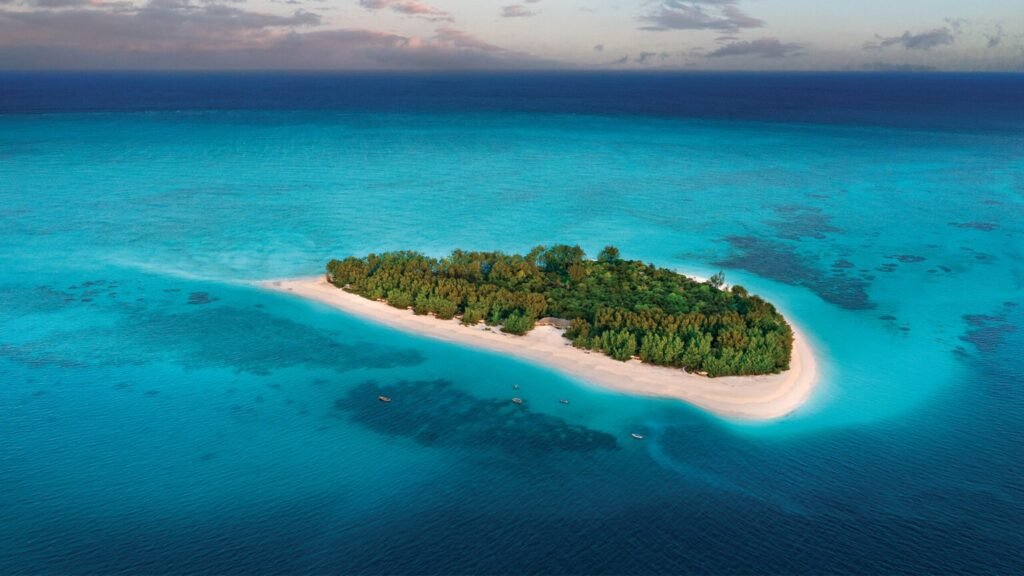
The island’s terrain is both beautiful and demanding. Mangrove-lined shores give way to dense bushland. The sun can be relentless, and the seasons swing between monsoonal rains and dry heat. Fresh water is precious. Food must be sourced with skill. Here, survival is inseparable from understanding the environment.
Local elders speak of “Country” not simply as land, but as a living entity — a teacher and ancestor. Every rock formation, river bend, and stretch of coastline carries meaning. The knowledge of where to fish, when certain fruits ripen, and how to read the stars has been passed down orally through generations. Stories are maps. Songs are survival guides.
Fishing is central to life on the island. Tides dictate daily routines, and knowing when barramundi move through the estuaries can mean the difference between scarcity and abundance. Traditional hunting methods are still practiced, using spears crafted with care and techniques refined over millennia. Nothing is wasted. Respect for each catch is woven into ritual and gratitude.
Equally vital is bush knowledge — understanding edible plants, medicinal leaves, and seasonal cycles. What appears to an outsider as wild and impenetrable bushland is, in fact, a carefully understood pantry and pharmacy. Survival here is less about technology and more about attentiveness.
Perhaps the most profound aspect of living alongside this ancient culture is the sense of time. Modern life measures time in minutes and deadlines. On the island, time is cyclical. The arrival of certain birds signals seasonal change. The blooming of specific flowers indicates when certain fish are ready to harvest. Life follows nature’s clock, not the other way around.
Art also plays a powerful role in survival — not in the physical sense, but spiritually. Ancient rock art galleries across northern Australia, including those in nearby Kakadu National Park, preserve thousands of years of storytelling. These artworks are not relics of the past; they are part of an ongoing cultural dialogue. They remind each generation of their responsibilities to land and law.
Community bonds are strong. Knowledge is shared collectively, and decisions are often guided by elders. Survival is not an individual pursuit, but a communal effort. Children grow up learning both traditional ways and aspects of modern education, bridging two worlds while keeping culture alive.
However, remoteness brings challenges. Access to healthcare, infrastructure, and economic opportunities can be limited. Balancing cultural preservation with modern realities requires resilience. Yet, the strength of identity and connection to Country remains unshaken.
Living on this island reshapes your understanding of survival. It becomes clear that thriving is not about accumulation, but connection — to land, to ancestry, to community. The simplicity of daily routines — gathering food, sharing stories by firelight, watching the tides roll in — reveals a richness often missing in fast-paced societies.
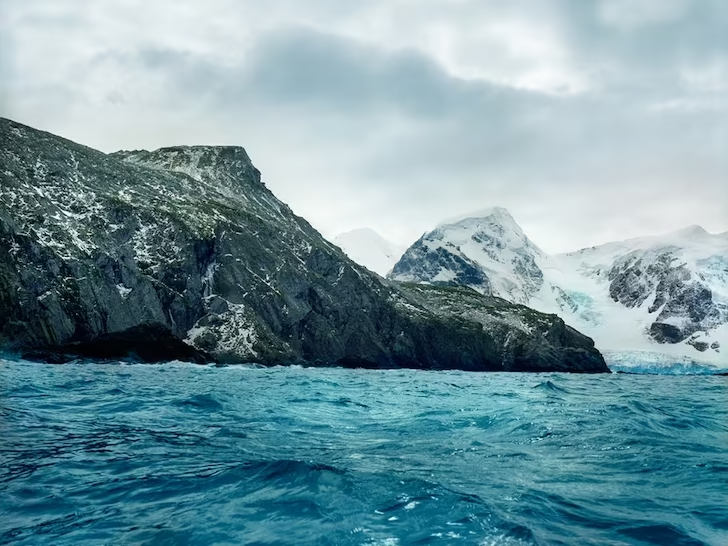
There is humility in recognizing that the world’s oldest continuing culture has endured climate shifts, external pressures, and centuries of change. Its survival is not accidental. It is rooted in respect, adaptability, and profound environmental knowledge.
To spend time here is to learn that survival is not merely about staying alive. It is about sustaining identity, honoring tradition, and listening to the wisdom carried by wind, water, and stone. On this remote island, where mountains of history rise unseen beneath the soil, life continues as it has for tens of thousands of years — steady, resilient, and deeply connected to the earth itself.