






Some travel destinations are vibrant, loud, and overflowing with activity. And then there’s Arashiyama—a quiet pocket on Kyoto’s western edge where bamboo rustles like soft applause, moss grows in shades of green you didn’t know existed, and the world seems to exhale. Visiting Arashiyama feels less like a trip and more like stepping into a gentle pause—one that lingers long after you’ve left.
I arrived just after sunrise, when the streets were still sleepy and the mountains traced a misty silhouette behind the town. Arashiyama is famous for its iconic bamboo grove, but its soul stretches far beyond that single forest path. Here, temples, gardens, rivers, and wildlife coexist with an ease that feels ancient. Life moves at a slower pace, and travelers quickly learn to do the same.

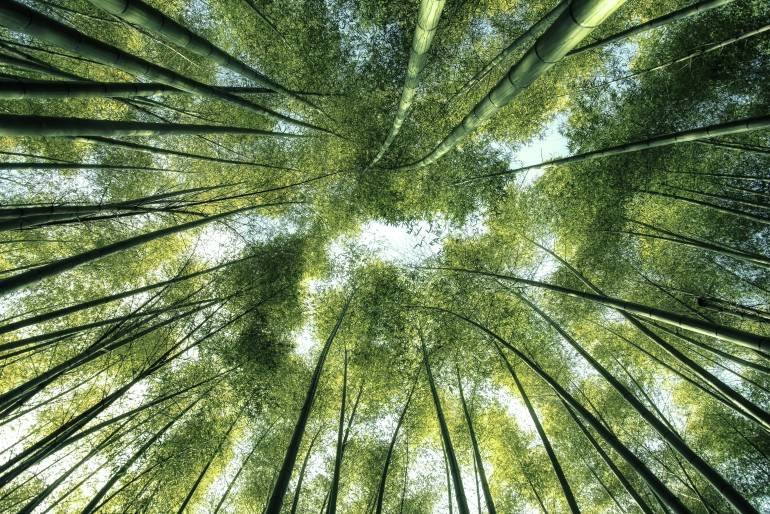
My first stop was the Bamboo Grove, because there’s no resisting its early-morning magnetism. The path begins modestly, lined with traditional wooden fences. Then, within steps, the world changes. Bamboo shoots rise like emerald pillars, stretching impossibly tall, swaying gently even when the air feels still. As the sun filters through the leaves, the light becomes soft and diffused—almost dreamlike. The grove isn’t silent, but its sound is subtle: a whisper of leaves rubbing together, a distant crow, footsteps softened by earth. It’s the kind of place where you instinctively lower your voice, not out of politeness but reverence.
Once I’d wandered through the bamboo canopy, I walked toward Tenryu-ji Temple, a UNESCO World Heritage Site that has anchored this area for centuries. Its garden is a masterpiece of harmony—ponds reflecting the sky, stones arranged with intentional beauty, and trees pruned as though painted by hand. The Arashiyama mountains rise behind it like a natural backdrop, a reminder that human craftsmanship here has always worked alongside nature rather than against it.
At the edge of the temple grounds, I spotted a narrow path leading into the Arashiyama foothills. It twisted quietly upward, continuing the bamboo forest far beyond the tourist trail. The higher I climbed, the quieter it became. Eventually the path opened onto a viewpoint overlooking the Katsura River, smooth as jade beneath the morning sun. Boats glided slowly across the water, each movement sending ripples across the reflection of the mountains. It felt like watching nature paint in real time.
By midday, Arashiyama had awakened. Restaurants clinked with dishes, schoolchildren crossed small bridges in neat lines, and the scent of freshly grilled mochi drifted through the air. I followed my nose to a traditional sweet shop, where I tried yaki-dango, warm rice dumplings glazed with a smoky-sweet soy sauce. Simple, comforting, and exactly right for the moment.
From there, I strolled to Iwatayama Monkey Park, crossing the iconic Togetsukyo Bridge—the “Moon Crossing Bridge.” It spans the Katsura River with calm elegance, perfectly framing the mountains beyond. The climb to the monkey park is steep, but the reward is worth every step: panoramic views of Kyoto and a troop of Japanese macaques lounging freely on the mountaintop. They bask in the sun, groom each other, and occasionally eye visitors with mischievous curiosity. Something about watching monkeys relax against such a majestic backdrop feels both amusing and strangely grounding.
Later in the afternoon, I wandered through Sagano, a rural area dotted with small farms, narrow lanes, and wooden homes that seem untouched by hurried modern life. Here, time drips like honey—slow, smooth, unhurried. I stumbled upon an old teahouse with paper lanterns swaying in the breeze. Inside, the owner served matcha with a gentle smile, whisking it to a frothy green perfection. There was no rush, no pressure—just the warmth of tea and the soft creak of tatami mats beneath us.
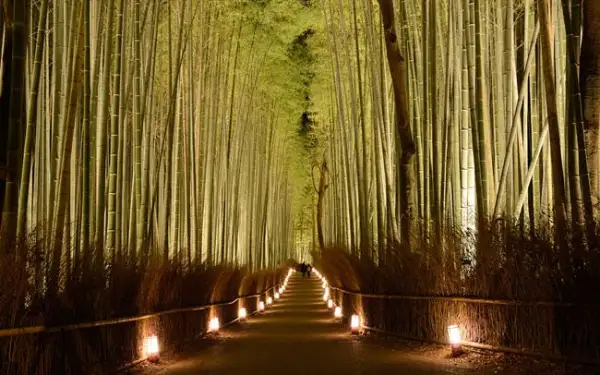
As sunset approached, Arashiyama transformed again. The bamboo glowed faintly gold, the river took on deeper blues, and the lanterns along the streets flickered to life. I returned to the bridge, watching boats drift across the water as birds circled the mountains before settling in for the night.
Arashiyama isn’t a place you “see.” It’s a place you feel. A place that teaches you to slow down, breathe fully, and let nature lead the way. In a world that often pulls us forward too fast, Arashiyama reminds us that stillness can be its own kind of journey—and sometimes, the most beautiful one.