







Few places on Earth capture the wild, unspoiled beauty of nature like Botswana. Known for its vast wilderness, rich biodiversity, and pioneering conservation efforts, this southern African nation offers some of the most breathtaking aerial and wildlife experiences imaginable. From soaring above the Okavango Delta in a small plane to watching elephants march across sunlit plains, Botswana reveals its grandeur best when seen from both the sky and the ground.
The Magic of Aerial Views
Flying over Botswana is like gliding through a living painting. The country’s landscapes — from shimmering wetlands to endless savannas — tell the story of a land shaped by water, wind, and wildlife.
The highlight of any aerial adventure is undoubtedly the Okavango Delta, one of the world’s largest inland deltas and a UNESCO World Heritage Site. From above, the delta appears as a patchwork of emerald islands, winding channels, and silvery lagoons that shift with the seasons. Small charter flights departing from Maun or Kasane provide spectacular panoramic views of elephants wading through the reeds, hippos submerged in pools, and herds of buffalo moving in coordinated patterns across the floodplains.
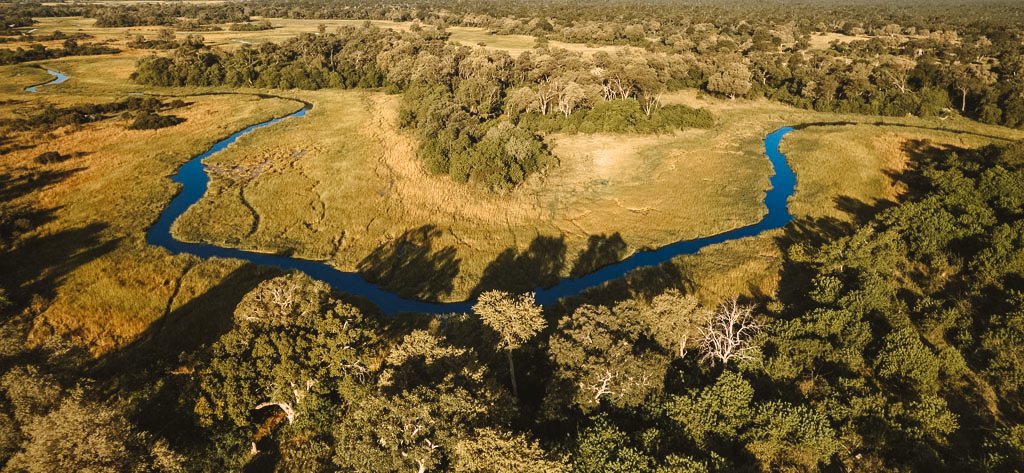
During the annual floods, the Okavango transforms into a maze of waterways — a natural wonder best appreciated from the air. Pilots often circle over the most active wildlife zones, allowing passengers to witness unforgettable scenes: giraffes casting long shadows on the grasslands, crocodiles sunbathing on sandy banks, or antelope leaping gracefully between islands. The aerial perspective reveals not only the sheer scale of Botswana’s wilderness but also the delicate balance that sustains its ecosystems.
A Land of Iconic Wildlife
Back on the ground, Botswana’s wildlife experiences are among the finest in Africa. The country’s commitment to low-impact tourism ensures that its national parks and reserves remain largely unspoiled and uncrowded, offering travelers an authentic sense of the wild.
Chobe National Park, in the north, is home to one of the largest elephant populations in the world, with an estimated 120,000 elephants roaming freely. Here, herds gather along the Chobe River at sunset, creating scenes of serene majesty as they bathe and drink together. Lions, leopards, and hyenas can often be spotted nearby, waiting for their moment to hunt.
In contrast, the Makgadikgadi Pans, once a vast ancient lake, present an otherworldly landscape of blinding white salt flats. After seasonal rains, this barren expanse transforms into a temporary oasis that attracts thousands of flamingos and migratory birds — a spectacular sight from both air and ground. The eerie beauty of this region, dotted with baobab trees and framed by infinite horizons, leaves an indelible impression on all who visit.
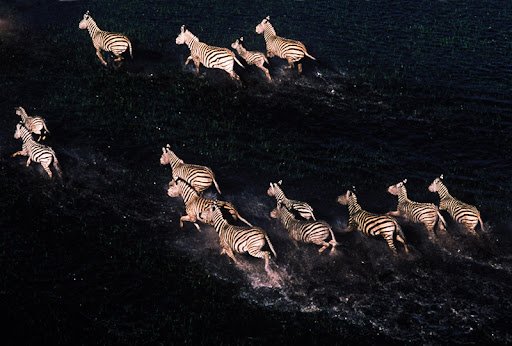
Meanwhile, the Moremi Game Reserve, located within the Okavango Delta, offers one of Africa’s richest concentrations of wildlife. Visitors can spot everything from wild dogs and cheetahs to hippos, zebras, and over 400 bird species. Morning and evening game drives, mokoro (canoe) excursions, and walking safaris reveal the intricate harmony of this thriving ecosystem.
A Photographer’s Dream
For photographers, Botswana is paradise. The play of light across water and sand, the patterns of wildlife migrations, and the colors of dawn and dusk create endless opportunities for stunning shots. Aerial photography, in particular, captures the delta’s intricate geometry — meandering rivers that resemble veins, herds that look like moving brushstrokes, and contrasts between lush green wetlands and arid desert.
Professional guides and photographers often accompany guests on specialized safaris designed to capture both aerial and ground-level perspectives. These experiences combine the thrill of adventure with the artistry of storytelling — every image reflecting the soul of Africa in motion.
Sustainability and Conservation
Botswana stands as a model for sustainable tourism and wildlife protection. Roughly 40% of the country’s land is devoted to national parks and wildlife reserves, and visitor numbers are carefully limited to prevent overcrowding and environmental damage. The government’s “high-value, low-volume” tourism policy ensures that revenue from safaris supports both conservation efforts and local communities.
This approach has made Botswana a haven for endangered species, including black rhinos and African wild dogs, which have found refuge here thanks to careful management and anti-poaching measures. Every flight, every safari, and every encounter contributes to preserving this balance between humans and nature.
An Experience Beyond Words
To experience Botswana from above and within is to witness two dimensions of the wild — one that celebrates scale, and another that celebrates intimacy. The aerial views reveal the grandeur of the landscape, while ground safaris connect you with the heartbeat of life that thrives within it.
Whether drifting over the Okavango’s emerald waterways or watching elephants graze beneath acacia trees, Botswana reminds us that true wilderness still exists — vast, vibrant, and beautifully untamed.