





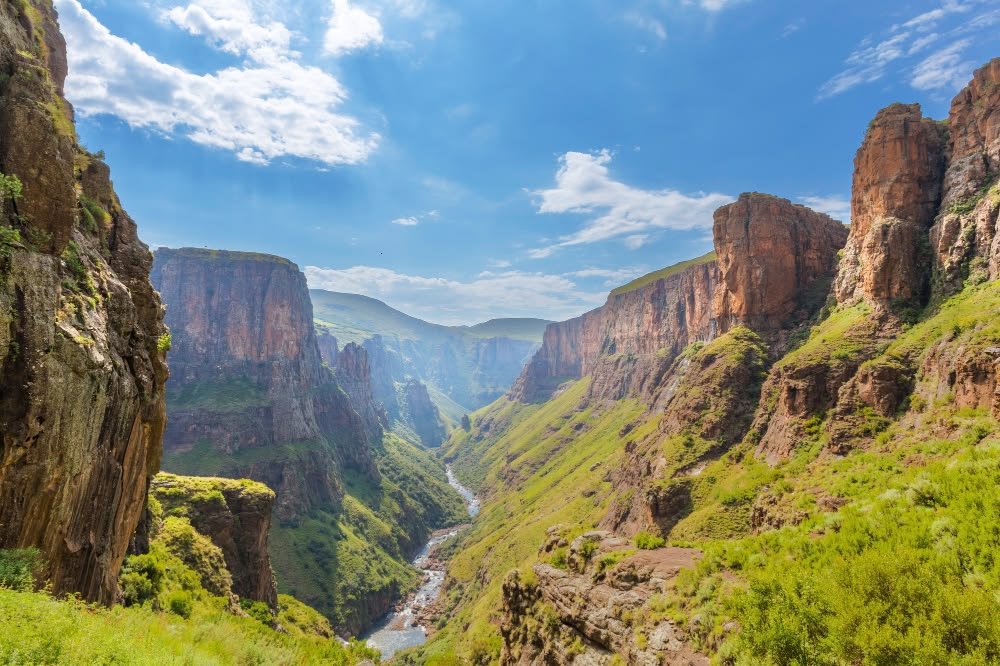

Lesotho doesn’t appear on many travel wish lists, which is part of why it’s worth the trip. This small kingdom is completely surrounded by South Africa, and every part of it sits above 1,000 metres. Locals call it the “Kingdom in the Sky.” The landscape is a mix of high plateaus, deep valleys and rock-walled gorges, and one of the best ways to see it is the way many Basotho (the people of Lesotho) have always moved around: on a pony.
The Basotho Pony
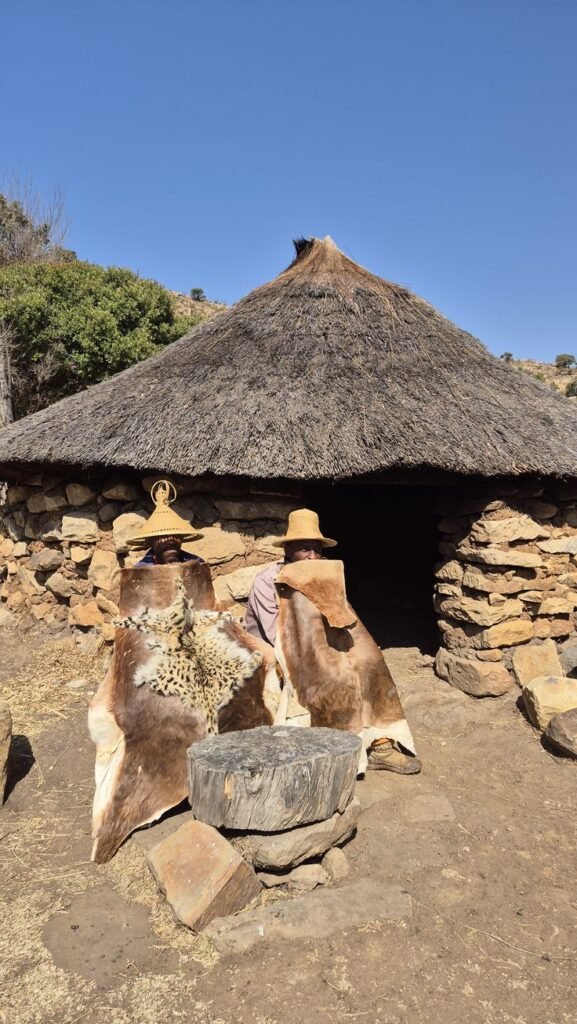
The Basotho pony is a small, sturdy breed developed in these mountains over generations. It’s known for sure-footedness on steep, rocky ground, and shepherds and villagers still rely on it for transport. You’ll often see riders wrapped in colourful Basotho blankets and wearing the traditional cone-shaped straw hat, called a mokorotlo, which also appears on the national flag.
What Pony Trekking Is Like
Treks range from a couple of hours to several days. Short rides start from lodges and villages, while longer routes link remote settlements, waterfalls and mountain passes. You don’t need to be an expert rider, but you should be comfortable sitting on a horse for several hours, and fitness matters more than most people expect.
Typical highlights include:
- Semonkong and Maletsunyane Falls, one of southern Africa’s tallest single-drop waterfalls, set in a dramatic gorge
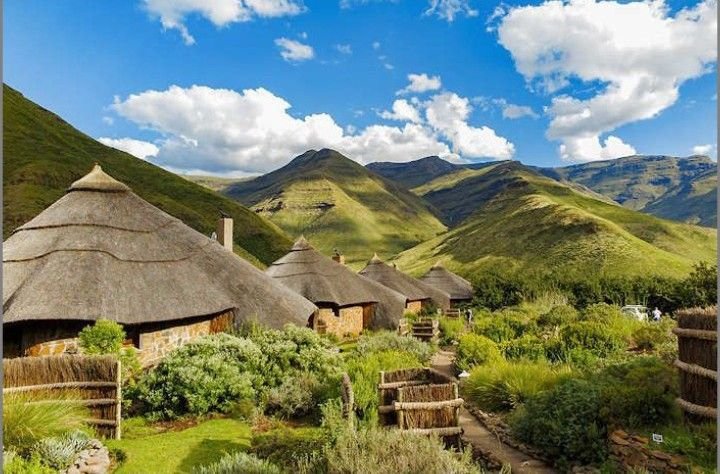
- Malealea, a village area known for community-run treks and lodges
- Thaba-Bosiu, the flat-topped mountain that was the stronghold of King Moshoeshoe I, founder of the Basotho nation
- Sani Pass region, a high-altitude route toward the Drakensberg, with sweeping views
A few honest notes:
- Weather changes fast. Mountain conditions can shift within an hour, and winter brings real cold, even snow.
- Trails are rough. Expect narrow paths, loose rock and river crossings. Listen to your guide.
- Basic comfort levels. Overnight stays are often simple village lodges or stone huts, so pack accordingly.
Staying With Local Communities
Many of the better-known trekking operations are run in partnership with villages, so your money goes directly to the people who live along the route. Ask how a lodge or tour operator involves the community, who owns it and how the guides are paid. Small tourism businesses in remote areas often need the income, and a trip that supports them is more meaningful than a generic package.
When to Go
Lesotho’s seasons are the reverse of the northern hemisphere. Summer (roughly November to March) is green and warm, with afternoon thunderstorms. Autumn and spring often offer the most comfortable trekking weather. Winter (June to August) can bring snow, ice and very cold nights, and some routes may be closed or difficult. Check conditions with your operator before you book.
Getting There
Most visitors arrive overland from South Africa. The capital, Maseru, is close to the border and reachable from Johannesburg by road in several hours, depending on the route and border queues. Some travellers fly to Bloemfontein and drive. Roads in the highlands can be steep and rough, so a 4×4 or a transfer arranged by your lodge is often wise. Check current border requirements and travel advice before you go, as rules change.
What to Pack
Layers, whatever the season. A waterproof jacket, a warm hat, sun protection, sturdy boots and a small daypack are the basics. Bring cash in local currency or South African rand for small purchases, since cards aren’t accepted everywhere.
Responsible Travel Tips
- Ask before photographing people, and respect their answer.
- Support local guides and craft sellers rather than bringing everything with you.
- Respect the animals. Check that ponies are well fed and well cared for, and avoid operators who overload or rush them.
The Verdict
Lesotho isn’t polished or packaged, and that’s the appeal. You’ll ride slowly through big, quiet country, stop in villages where visitors are still a surprise and sleep under a very large sky. If you want a trip that feels like a discovery, this is it.