





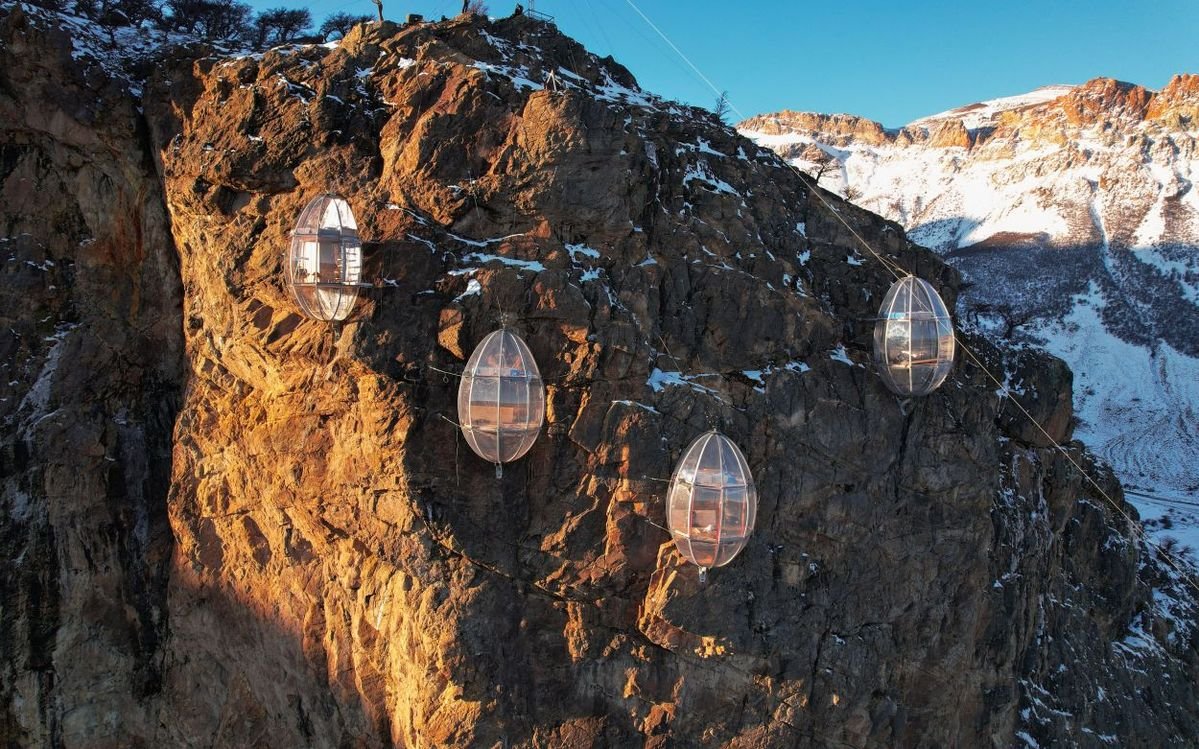

For a long time, a hotel with a view meant a balcony. Now the room itself is the viewpoint. Across mountains, forests and coastlines, architects are replacing the wall with glass and perching small structures where the land drops away. The trend is photogenic, a little terrifying and impossible to scroll past.
What a Glass Pod Actually Is
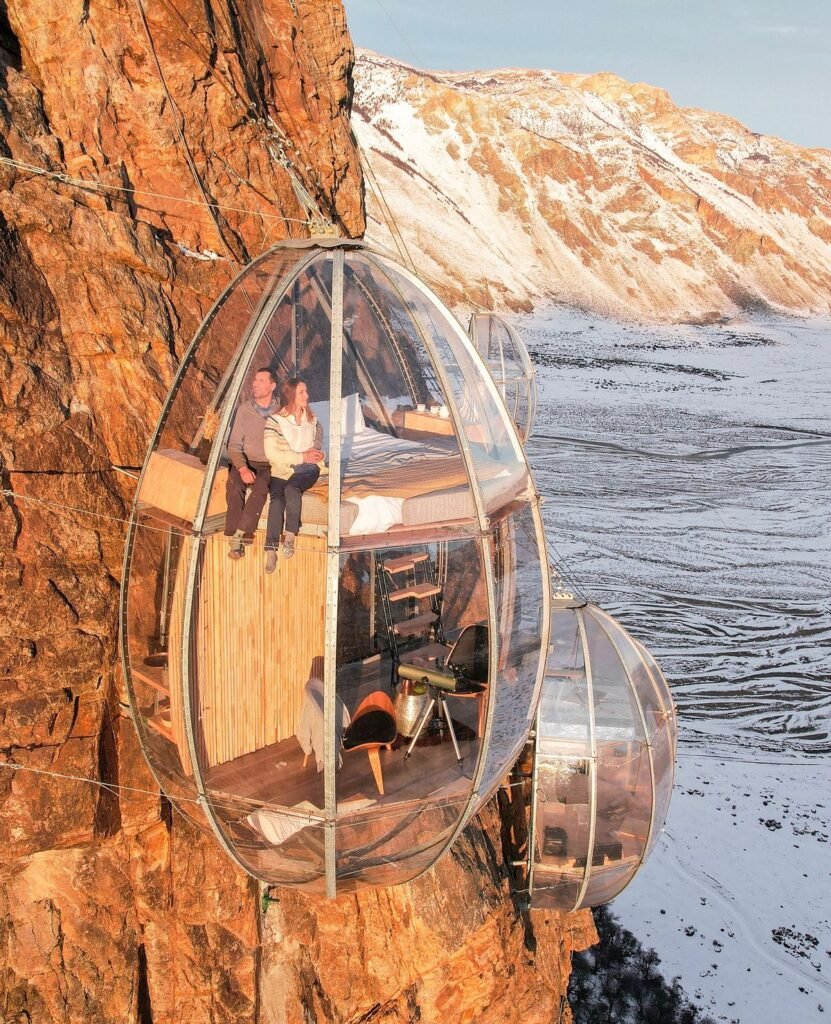
A glass pod is a compact, usually one-room structure with large panels of glazing, placed on a cliff edge, slope or ridge. The best examples are small on purpose. They don’t compete with the landscape, they frame it, and the bed, bath and window are all arranged around a single panorama.
Where the Idea Comes From
A few well-known properties helped build the look:
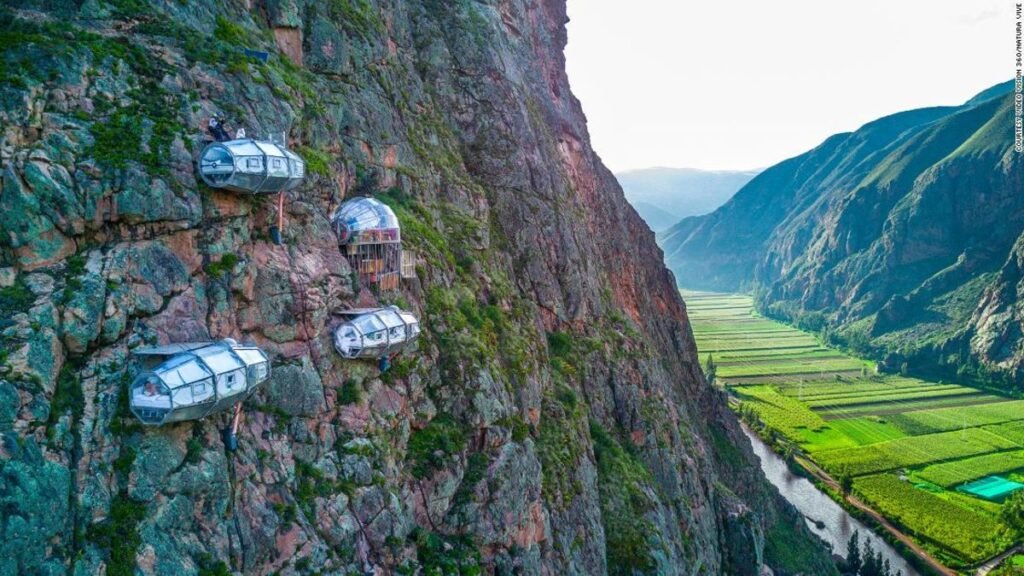
- Skylodge Adventure Suites in Peru’s Sacred Valley are transparent capsules fixed to a rock face high above the valley. Guests reach them by climbing a via ferrata route or hiking, which is part of the appeal and part of the risk.
- Juvet Landscape Hotel in Norway uses glass-fronted cabins set among boulders and trees beside a river, designed to blend in.
- Treehotel in Swedish Lapland and various bubble and dome stays in France, Iceland and Finland have pushed the same idea: sleeping under open sky.
Each takes a different approach, but the principle is the same. The building steps back so the view can take over.
Why the Trend Is Growing
Three forces are behind it. Social media rewards striking images, and a glass pod over a canyon is almost guaranteed to get shared. Travelers also want experiences over amenities, and a memorable room can matter more than a spa. Finally, building methods have improved. Prefabricated modules, stronger glazing and lighter structural frames make it possible to build in places that once were too difficult.
The Trade-Offs Nobody Puts in the Caption
Glass pods have real downsides, and an honest guide should mention them.
- Privacy. Glass walls work best when there’s no one nearby. Ask how the pod is positioned and whether there are blinds or tinted panels.
- Temperature. Large windows can overheat in sun and lose warmth at night. Check heating, cooling and insulation, especially in extreme climates.
- Vertigo. A glass floor or cliff-edge bed looks wonderful in photos and feels different at 2 a.m. when you wake up and look down.
- Access. Some pods require a hike, a climb or a steep drive. Ask about luggage, mobility and emergency procedures.
- Weather. Fog can erase the view you paid for. Read the cancellation terms before you book.
- Cost. Small rooms often come with high prices because of the location, the engineering and the demand.
The Environmental Question
Placing buildings in fragile landscapes raises a fair question. The better projects use modular construction to limit ground disturbance, source materials carefully and manage waste and water responsibly. Others lean more on the look than the ecology. Check how a property describes its environmental practices, and be cautious about vague “eco” claims with no detail behind them.
How to Choose a Good One
Before you book, check a few things:
- Look at recent guest photos, not just the official gallery.
- Confirm the view is what the listing shows, in all seasons.
- Ask about safety, including railings, access routes and guide support.
- Read the cancellation policy, since weather matters here.
- Check what’s nearby. A pod is a night’s experience, so make sure the surrounding area gives you something to do in the daytime.
The Verdict
Glass pods are at their best when the design serves the setting rather than the other way around. They won’t suit everyone, and the most spectacular ones can be expensive, exposed and impractical. But for the right traveler, waking up with nothing between you and the landscape is hard to beat.