





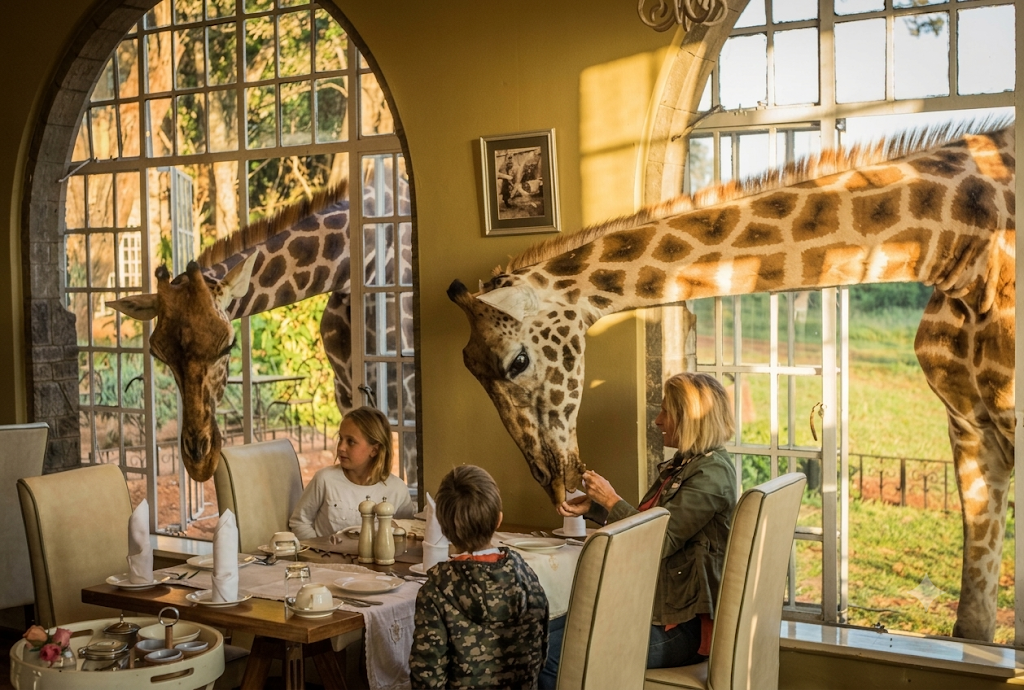

Most hotels promise a view. Giraffe Manor promises a face. You’re halfway through your eggs when a long neck lowers past the window, a dark tongue curls around a pellet, and a pair of enormous eyelashes blinks at you from about thirty centimetres away. Nobody at the table finishes their sentence.
What Giraffe Manor Is
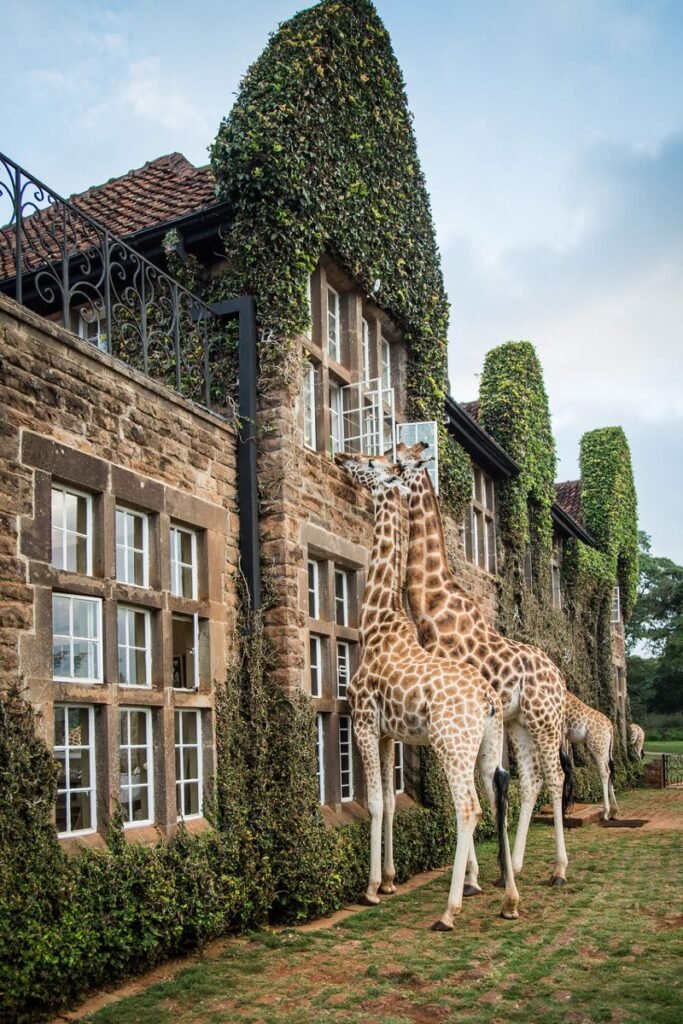
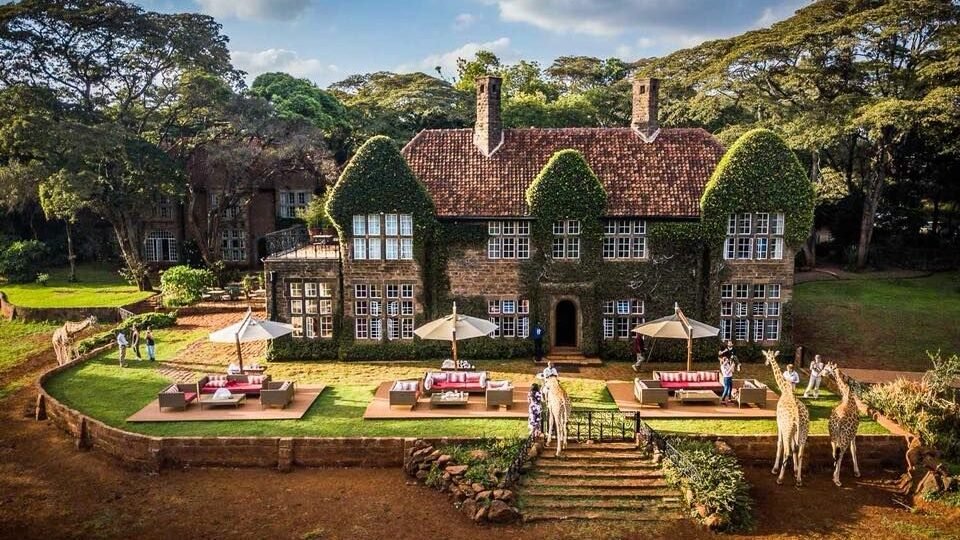
The manor is a small boutique hotel in the Langata area of Nairobi, a short drive from the city centre. The main house dates back to the 1930s and has a classic, ivy-covered, old-English look that seems out of place in East Africa, which is part of the charm. It sits inside a private sanctuary of grassland and forest where a herd of giraffes roams freely.
The Giraffes Behind the Story
These are Rothschild’s giraffes, also known as Baringo giraffes, one of the rarest giraffe subspecies, with conservation groups listing them as threatened. The manor’s link to their survival goes back to the 1970s, when the owners at the time took in a young giraffe as part of efforts to protect the species from habitat loss in western Kenya. That effort grew into a breeding program and what is now the nearby Giraffe Centre, which supports education and conservation.
Today the herd has several named giraffes with distinct personalities, and staff can tell you which one is greedy, which one is shy and which one is most likely to steal your toast.
What Breakfast Is Actually Like
Breakfast is served in the dining room, where windows and doors open onto the grounds. Staff leave small bowls of giraffe pellets on the tables, and when the animals wander over you can feed them by hand or from your lips if you’re brave. Their tongues are long, dark and rough, and surprisingly gentle.
A few honest notes:
- Visits aren’t guaranteed. The giraffes are free-roaming, and their routines depend on weather, food and mood. Most guests get plenty of encounters, but treat it as a wild-animal experience rather than a show.
- Follow the staff’s guidance. Giraffes are large animals, so keep movements calm and don’t grab at them or pull their heads in.
- Early mornings tend to be best, so set an alarm and bring a camera with a quick shutter.
Beyond the Window
The grounds offer walks, lawns and plenty of quiet corners. Warthogs sometimes turn up, too. Nairobi also has a lot to see within easy reach:
- Giraffe Centre, for a feeding platform and conservation education
- David Sheldrick Wildlife Trust, known for its orphaned elephant rescue work
- Karen Blixen Museum, set in the house linked to Out of Africa
- Nairobi National Park, a wildlife reserve just outside the skyline
Booking and Costs
Be realistic here: Giraffe Manor is one of the most in-demand small hotels in Africa. Rooms are limited, rates are high and the best dates often sell out many months ahead. Check the official website for current prices, what’s included and cancellation terms, and be wary of third-party listings that look too good to be true.
If it doesn’t fit your budget or the dates don’t work, the Giraffe Centre and several nearby places offer giraffe encounters at a far lower cost. You can also look into other Nairobi stays that have giraffes on their grounds.
When to Go
Kenya’s dry seasons, roughly June to October and January to February, are often the most comfortable and the easiest for travelling around. The rainy seasons bring green landscapes and often lower prices, but expect muddier roads and unpredictable weather. Giraffes live here year-round, so the experience doesn’t depend on the season.
The Verdict
Giraffe Manor is a splurge, and it knows it. But it works because it keeps things simple: good food, a beautiful old house and animals that come to say hello. Book early, wake up early and keep a pellet in your pocket.