





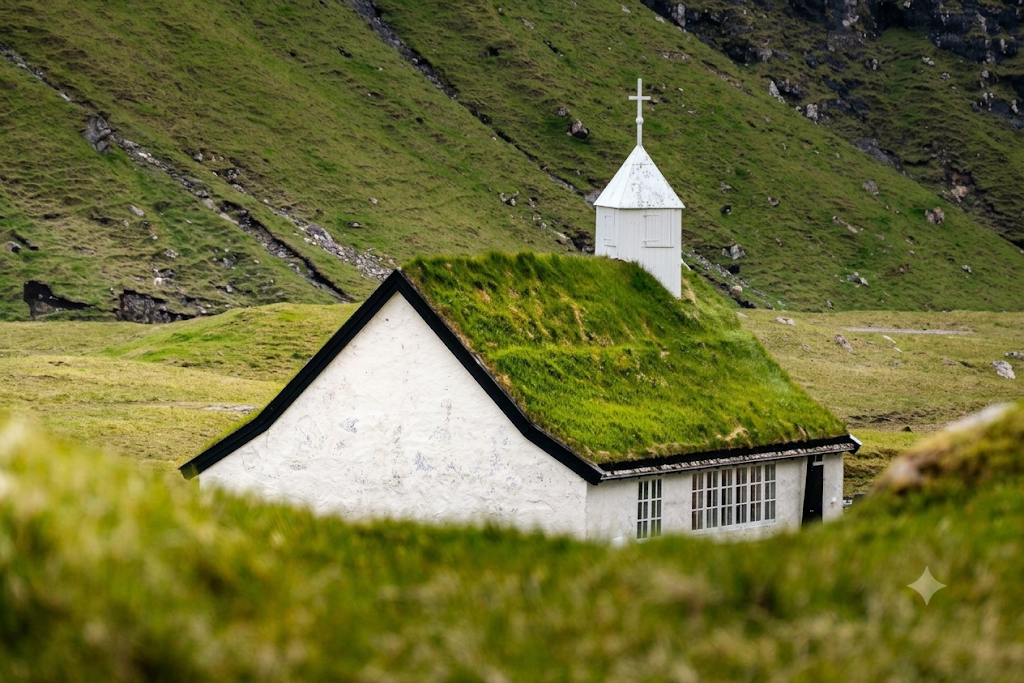

The road to Saksun is one lane wide, and sheep don’t care that you’re in a hurry. It winds down from the hills on Streymoy, and then the valley opens and you see a handful of houses, a small white church and a sea inlet cut off from the ocean by a ridge of black sand. The village has fewer than a dozen residents, and it feels like a place that stopped keeping up on purpose.
A Village That Fits in One Glance
Saksun doesn’t have attractions in the usual sense. It has a church, a lagoon, a waterfall and a farm museum, and all of them sit within a few minutes’ walk of each other.
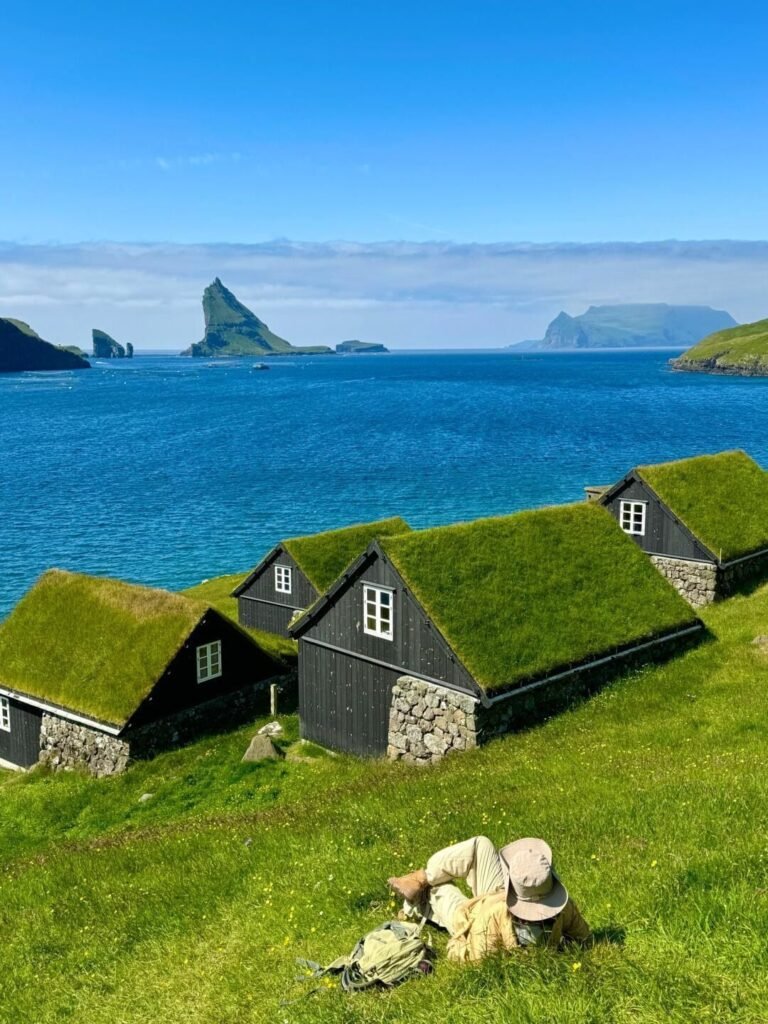
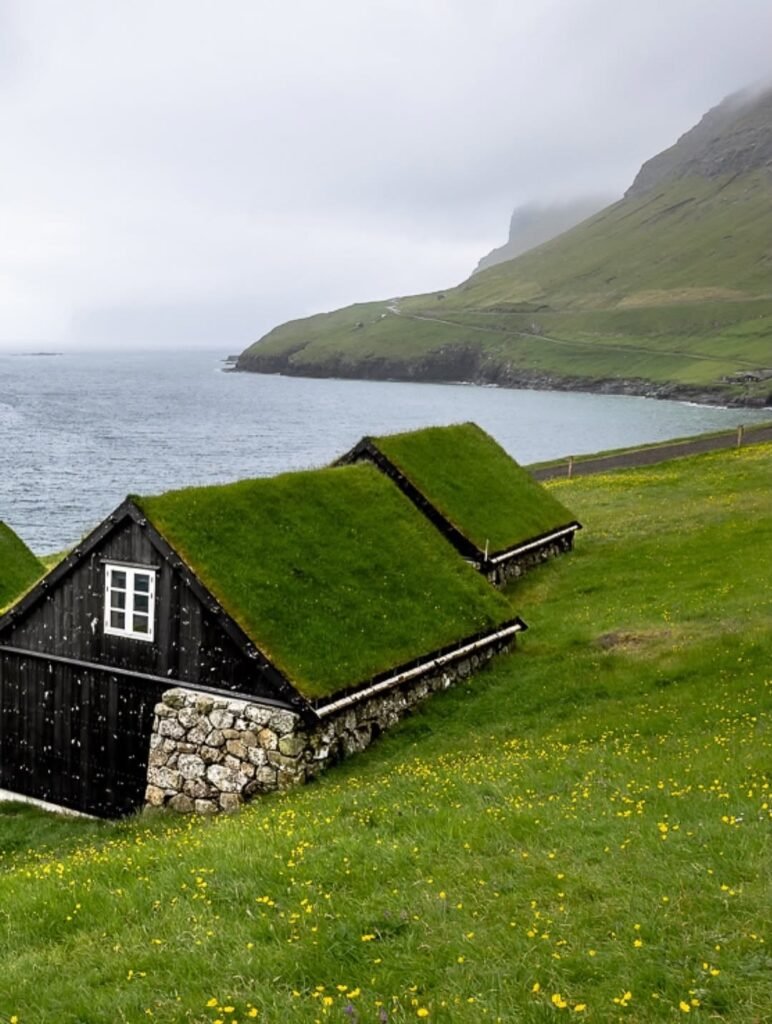
The church is white with a black base and a grass roof, built in the mid-1800s and sitting on a slope above the water. It looks small against the surrounding hills, which is part of the charm. Most of the older houses nearby have turf roofs too. The tradition of covering roofs with grass and birch bark kept homes insulated through long, wet winters, and it still shapes how the Faroes look today.
The Lagoon and the Tide
The lagoon is the main draw. It’s a tidal basin, and the sea reaches it through a narrow channel. When the tide goes out, the water drains and the sand opens up. When it comes back in, the shoreline changes within hours. A short walk takes you down to the beach, and you can watch the water move.
Be careful here. Check the tide times before you go, and don’t wander far into the channel, since conditions can change quickly. Access to the lagoon walk has in the past involved a small fee paid to the landowners, so bring a few coins and check current details locally.
The Farm and the Waterfall
Dúvugarðar is a farm dating back several hundred years, and it has been kept as a small museum of Faroese rural life. You can see the old rooms, tools and the way people lived here. It’s usually open only in the main summer season, so check the opening dates before you plan around it.
A waterfall drops toward the lagoon from the hillside above. In wet weather it’s strong and loud, and in dry spells it softens. Either way, it adds to the picture.
Walking to Tjørnuvík
If you have a few hours and decent shoes, hike the trail from Saksun over the hills toward Tjørnuvík, a small coastal village on the northern tip of Streymoy. The path is open and exposed, with big views, and the weather can turn fast. Bring a waterproof layer, a map or offline route, and tell your guesthouse where you’re going. If you’re not confident in poor visibility, stick to the valley.
Getting There and When to Go
Saksun is about an hour’s drive from Tórshavn, depending on your route and stops. A rental car gives you the most freedom, and you’ll need to be comfortable on narrow roads with passing places. Give way properly, park only in marked areas and don’t block the road for photos.
The best months for most visitors are June to August, with longer daylight and easier access. The Faroese weather is famously changeable, so treat sun and fog as part of the experience. Pack layers whatever the season.
Visiting Respectfully
Saksun is a living place, even if only a few people live here. Stay on paths, close gates, keep noise low and respect private land and signs. Don’t fly a drone near the farm or church without checking local rules and permissions. Small communities like this survive on goodwill from visitors.
The Verdict
You won’t spend a full day in Saksun, and that’s fine. Give it a morning or an afternoon, walk slowly, check the tide and sit for a while. The village does the rest.