





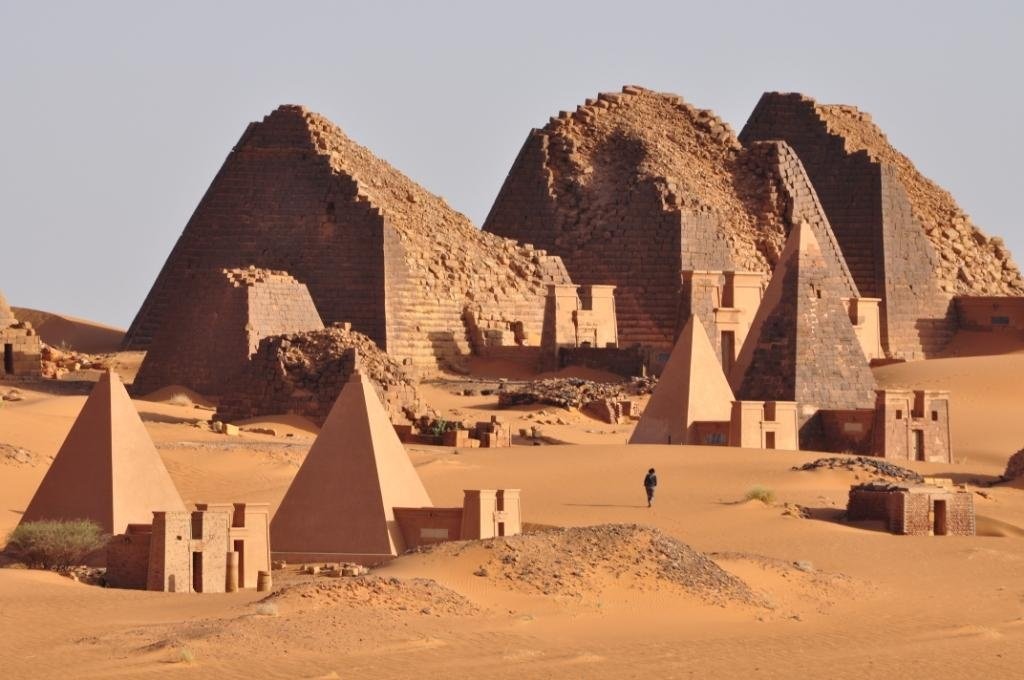

Two hundred kilometres north of Khartoum, more than two hundred steep-sided pyramids rise out of the Sahara, built between 800 BC and 350 AD as royal tombs for the rulers of the Kingdom of Kush. Sudan holds more pyramids than Egypt does, a fact that surprises most people who assume Egypt has a monopoly on the form. For years, Meroe was Sudan’s most visited heritage site, drawing archaeological missions and a steady, if modest, trickle of international travellers. Since April 2023, that has changed almost entirely, and it’s essential to understand why before treating this as a straightforward travel recommendation.
An Empire That Predates and Outlasted Egyptian Influence
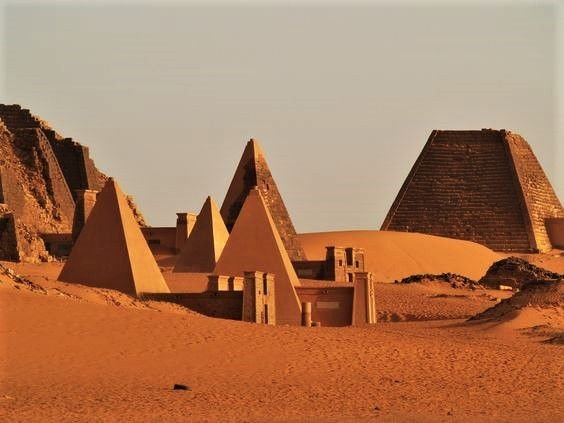
Meroe served as a royal capital of the Kushite Empire, a civilisation that controlled trade routes along the Nile and deep into the African interior for centuries, developing its own distinct architectural style, narrower, steeper pyramids than their Egyptian counterparts, along with its own writing system and religious traditions that blended Egyptian influence with genuinely indigenous Nubian culture. The pyramids here functioned as royal tombs, and the site’s continued excavation has offered archaeologists insight into a kingdom that, for a period, actually ruled over Egypt itself during the twenty-fifth dynasty, a detail that complicates any simple framing of Egypt as ancient Africa’s singular pyramid-building civilisation.
A Site Already Damaged Long Before the War
Meroe’s pyramids arrived at the current crisis already carrying serious scars. In the 1830s, Italian treasure hunter Giuseppe Ferlini dynamited the tops off dozens of pyramids searching for gold and jewellery, and none of the site’s structures remain fully intact today as a direct result. Two centuries of sand and rain compounded that damage gradually, a slow deterioration that ongoing preservation missions had worked to manage and monitor for decades.
What the War Has Done Since 2023
That management effectively stopped in April 2023, when war broke out between Sudan’s army and the paramilitary Rapid Support Forces. More than three years later, site guards describe the pyramids as standing largely abandoned, visitor numbers and archaeological missions having ceased almost entirely once the conflict began. Archaeologist Mahmoud Suleiman has warned plainly that the site may face genuine disaster, with structural collapses possible, citing a combination of adverse factors, climate change, war, and the complete halt of international preservation efforts, working together to accelerate the pyramids’ decline. Site inspectors report finding fallen stones on a regular basis, and with maintenance work suspended indefinitely, windblown sand and encroaching vegetation continue advancing on structures nobody has the security or resources to actively protect right now.
The Safety Situation, Addressed Directly
Sudan’s civil war has displaced millions of people and destabilised large parts of the country, and any honest account of Meroe has to lead with that context rather than treat the pyramids as a stable, bookable destination. Independent travel risk assessments through 2026 describe Sudan’s overall safety index as low, reflecting genuine, ongoing instability, while noting that the archaeological zone in northern Sudan, between Khartoum and the Egyptian border, has historically remained comparatively more stable than Khartoum itself or the western regions directly affected by fighting. That distinction matters, but it isn’t a substitute for current, verified information. Darfur and the border regions with South Sudan, Chad, and Eritrea remain areas most advisories flag for avoiding all but essential travel, and conditions in Sudan are explicitly described as capable of shifting rapidly. Anyone even considering this trip needs to check their government’s current advisory in full, verify conditions with trusted local contacts immediately before and during any visit, and accept that this is fundamentally a different risk category than a typical archaeological tourism destination.
Why the Story Still Matters
Even set against this genuinely difficult context, Meroe’s significance hasn’t diminished, if anything, the war has made its preservation more urgent, not less. This is a site holding more pyramids than the country most associated with the form, built by a civilisation sophisticated enough to have once ruled Egypt itself, now sitting exposed and unprotected while a war neither the pyramids nor the people caring for them chose continues around them. For now, Meroe belongs on a list of places worth knowing about and worth supporting through legitimate heritage preservation organisations tracking the site’s condition, rather than a list of places to actively plan a visit to until Sudan’s security situation genuinely stabilises and credible, current guidance says otherwise.