






When travelers talk about going to the ends of the Earth, Antarctica usually tops the bucket list. But if you ask seasoned polar explorers, naturalists, or wildlife photographers to name the single most spectacular spot in the Southern Ocean, their answer almost always points somewhere else: a crescent-shaped wedge of snow-capped mountains floating in isolation thousands of miles off the coast of South America.
Welcome to South Georgia Island.
Often described as the “Serengeti of the Southern Ocean,” this remote British Overseas Territory is arguably the most dramatic sub-Antarctic wilderness on the planet. There are no permanent human residents, no airstrips, and no luxury resorts. What you will find instead are soaring mountain peaks, ancient glaciers tumbling into icy bays, and wildlife concentrations so massive they defy belief.
Standing Amidst Half a Million King Penguins
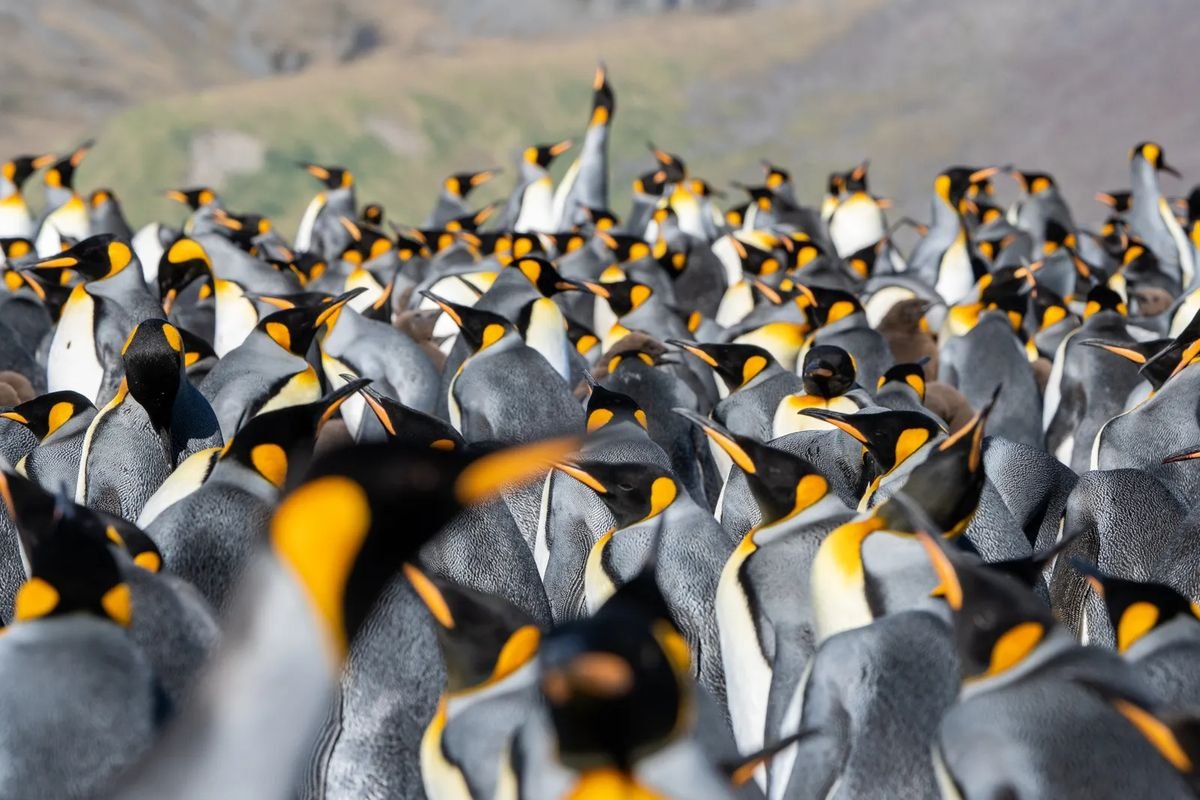
Nothing quite prepares you for the sheer scale of life on South Georgia’s shores. At spots like St. Andrews Bay and Salisbury Plain, the coastlines aren’t just inhabited—they are completely blanketed by life.
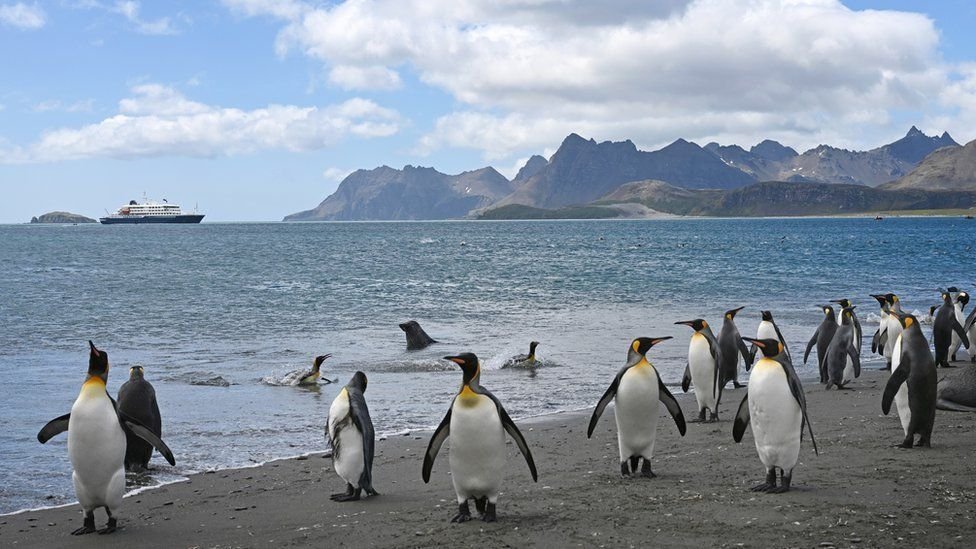
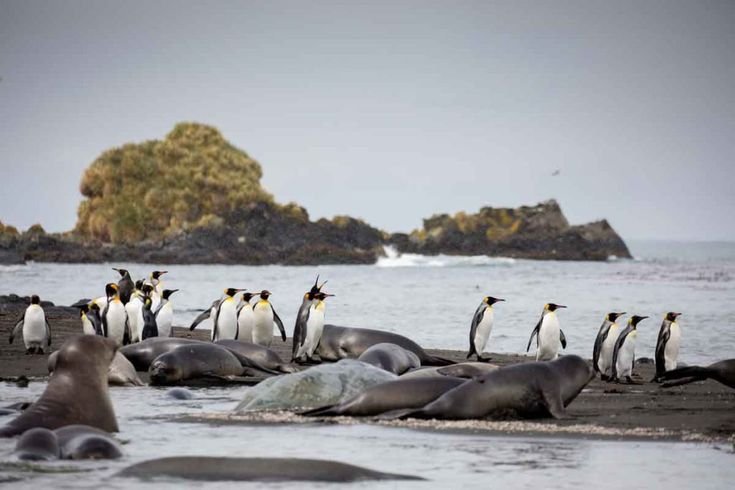
St. Andrews Bay alone is home to a single colony of over 150,000 pairs of King Penguins. Walking off a Zodiac boat onto the dark volcanic sand, you are instantly wrapped in a sensory sensory overload unlike anywhere else on Earth. The air fills with the trumpet-like calls of adult penguins, the soft whistling of brown fuzzy chicks, and the booming roars of four-ton southern elephant seal bulls defending their territories along the surf line.
Because animals here grew up without historical land predators, they display virtually no fear of humans. Keep a respectful distance, sit quietly on the pebbles, and curious adult penguins will routinely waddle right up to inspect your boots.
Where History and Glaciers Collide
South Georgia isn’t just a haven for polar wildlife; it holds a legendary place in maritime and exploration history.
In 1916, Sir Ernest Shackleton completed his heroic, desperate crossing of the island on foot after his ship, the Endurance, was crushed by Antarctic pack ice. After navigating rough seas in a tiny lifeboat, Shackleton trekked across South Georgia’s uncharted glaciers and razor-sharp mountain passes to reach the whaling station at Grytviken, ultimately saving every single member of his crew.
Today, visitors can walk the final leg of the historic “Shackleton Walk” down into Grytviken. There, among the quiet, rusting remains of the early 20th-century whaling station, you can visit the small Norwegian cemetery and raise a glass of whisky to Shackleton at his final resting place.
The Landscape: Himalayas in the Ocean
Geologically, South Georgia feels like a slice of the Alps dropped into the middle of the stormy ocean. The Allardyce Range spine rises sharply from the sea, with Mount Paget reaching over 9,000 feet into the clouds.
Carved out by shifting ice over millennia, the island features dramatic fjords like Gold Harbour and Drygalski Fjord, where massive blue-ice glaciers calve directly into dark ocean waters with thunderous booms. Waterfalls cascade down green tussock grass slopes, while wandering albatrosses with 11-foot wingspans glide effortlessly on the gale-force winds above.
How to Experience South Georgia
Getting here is part of the adventure. Because there are no airports on the island, the only way to visit is aboard an expedition cruise vessel, usually departing from Ushuaia, Argentina, or the Falkland Islands. Crossing the famous Drake Passage or the open waters of the Scotia Sea takes two to three days of sailing before the island’s snow-covered peaks break through the sea mist.
Visits are strictly regulated to protect fragile ecosystems. International guidelines enforce bio-security measures—like scrubbing your boots and vacuuming outer gear before every landing—to prevent invasive species from hitching a ride ashore.
The takeaway? South Georgia isn’t an easy trip to take, nor is it cheap. But for those who make the voyage, it offers a raw, humbling glimpse of a world where nature reigns supreme and human presence is merely a fleeting shadow.