





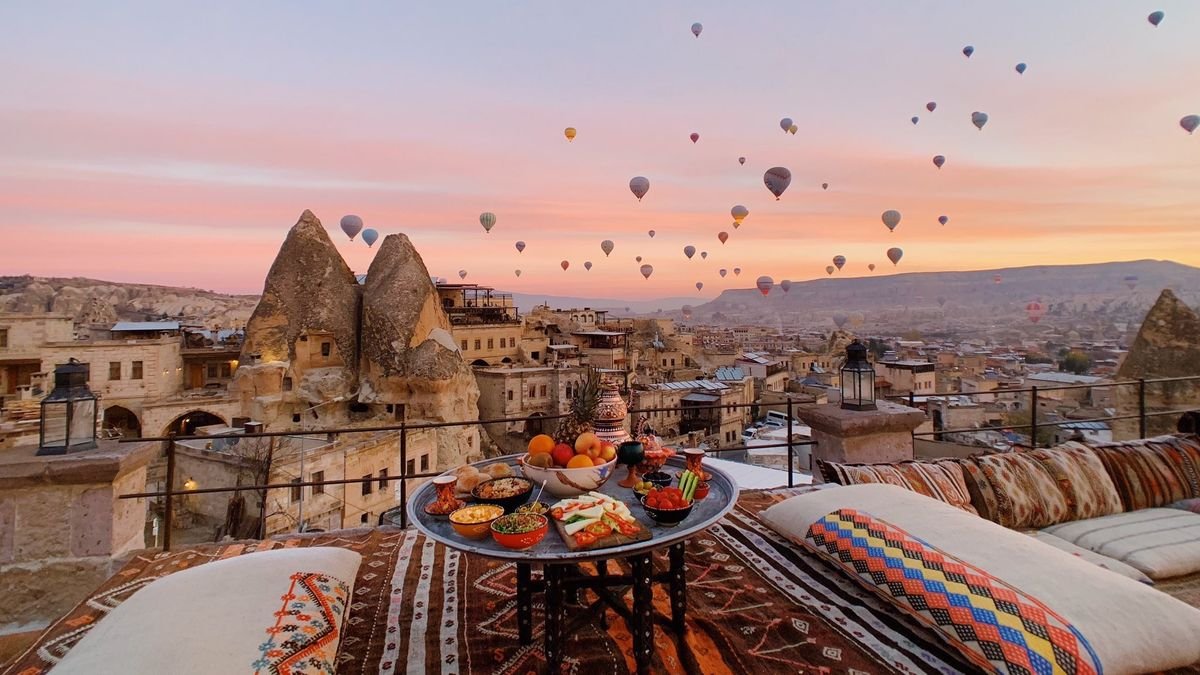

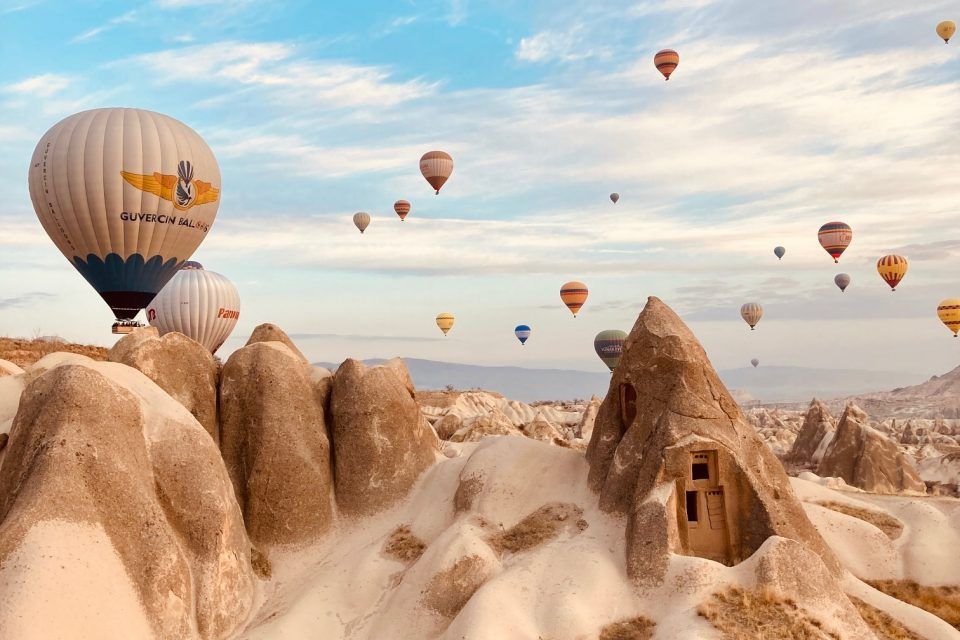
When people talk about Cappadocia, the conversation almost always starts with the sky. You’ve probably seen the photos a hundred times: dozens of vibrant hot air balloons drifting at sunrise over strange, pastel-colored volcanic spires.
It’s an incredible view, no doubt about it. But the real magic of this central Turkish landscape isn’t up in the clouds—it’s hidden deep inside the rock beneath your feet.
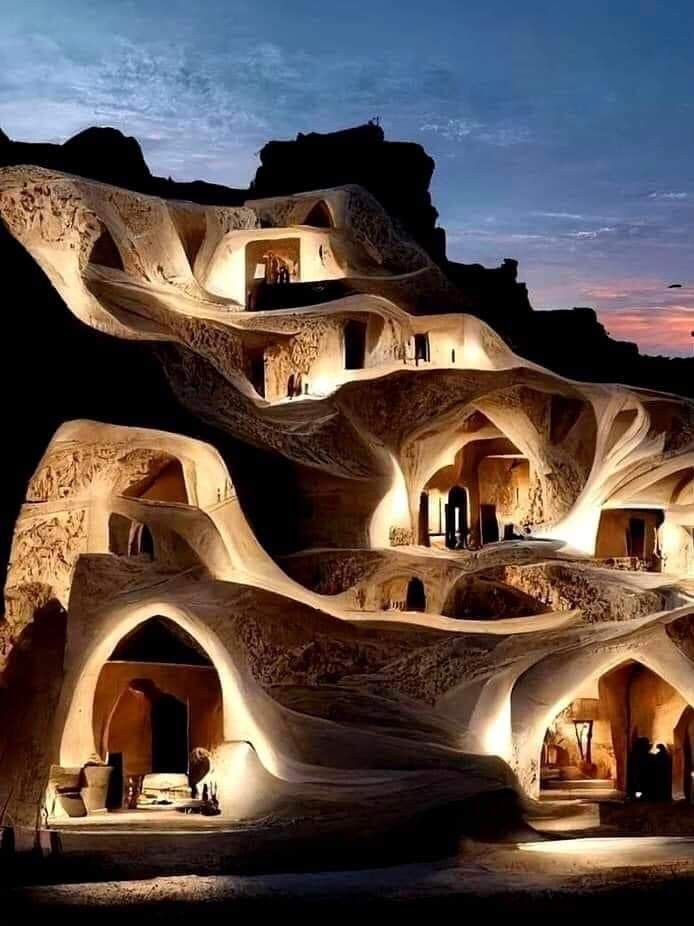
For thousands of years, people carved an entire world out of Cappadocia’s soft volcanic stone. Early Christian communities expanded these natural rock formations into hidden subterranean cities, secret chapels, and sprawling monastic complexes to escape persecution. Fast forward to today, and those exact same 1,000-year-old stone sanctuaries have been lovingly turned into some of the most extraordinary boutique hotels you’ll ever step foot in.
If you’re looking for a trip that blends deep history with serious comfort, sleeping in a restored luxury cave monastery should be right at the top of your bucket list.
What It Feels Like to Sleep Inside Living History
Staying in a real Cappadocian cave hotel isn’t just about cool rustic aesthetics—it’s about waking up inside a piece of human history.
Many of the boutique properties tucked into towns like Uçhisar and Urgup were originally Byzantine monasteries, ancient wine cellars, or historic family homes. Restoration teams spent years carefully clearing out these spaces by hand, honoring the original carved arches, cozy alcoves, and ancient ventilation shafts while discreetly adding modern comforts.
Stepping into your room for the first time is surreal. You’ll often find original wall niches where monks once set oil lamps, paired with deep soaking tubs or marble hamams carved right into the cavern walls. And thanks to the natural insulating power of volcanic stone, the rooms stay refreshingly cool during hot summer days and cozy and warm when winter snow covers the valleys outside.
The Beauty of “Slow Luxury”
What makes these stone retreats so special is the sheer quiet of it all. Thick volcanic walls naturally block out the outside world, giving your room a peaceful, sanctuary-like feel that almost forces you to slow down and relax.
Mornings here are an absolute ritual. Most guests gather on sweeping stone terraces for a traditional Turkish breakfast spread—fresh olives, local cheeses, thick honeycomb, and warm pastries—while watching the morning balloon fleet float quietly over the valley. In the evenings, old underground cellars become intimate candlelit dining spots, serving slow-cooked Anatolian dishes alongside rich regional wines aged right in the stone vaults.
Exploring Beyond the Cave Walls
As cozy as your room might be, the surrounding landscape begs for a wander.
Just a short walk or drive away is the Göreme Open Air Museum, a UNESCO site packed with ancient rock-cut churches featuring vivid, 10th-century Byzantine frescoes. If you’re up for a walk, trails wind straight through Love Valley and Pigeon Valley, taking you past towering stone “fairy chimneys.” You can also venture deep underground at Derinkuyu or Kaymakli, multi-story subterranean cities that once sheltered thousands of people.
A Quick Tip Before You Book
Because these hotels are built straight into natural rock formations, no two rooms are ever identical. One suite might feature a private indoor plunge pool, while another offers a sunny private terrace or a deep, secluded reading nook.
Also, keep in mind that true historical cave hotels are small—many have only 10 to 15 rooms in total. If you’re planning a trip during the popular spring or autumn seasons, booking several months in advance is key.
The takeaway? Luxury doesn’t always mean glass towers and marble lobbies. By carving comfort into ancient volcanic rock, Cappadocia offers something far more memorable: a chance to sleep soundly right inside history.