





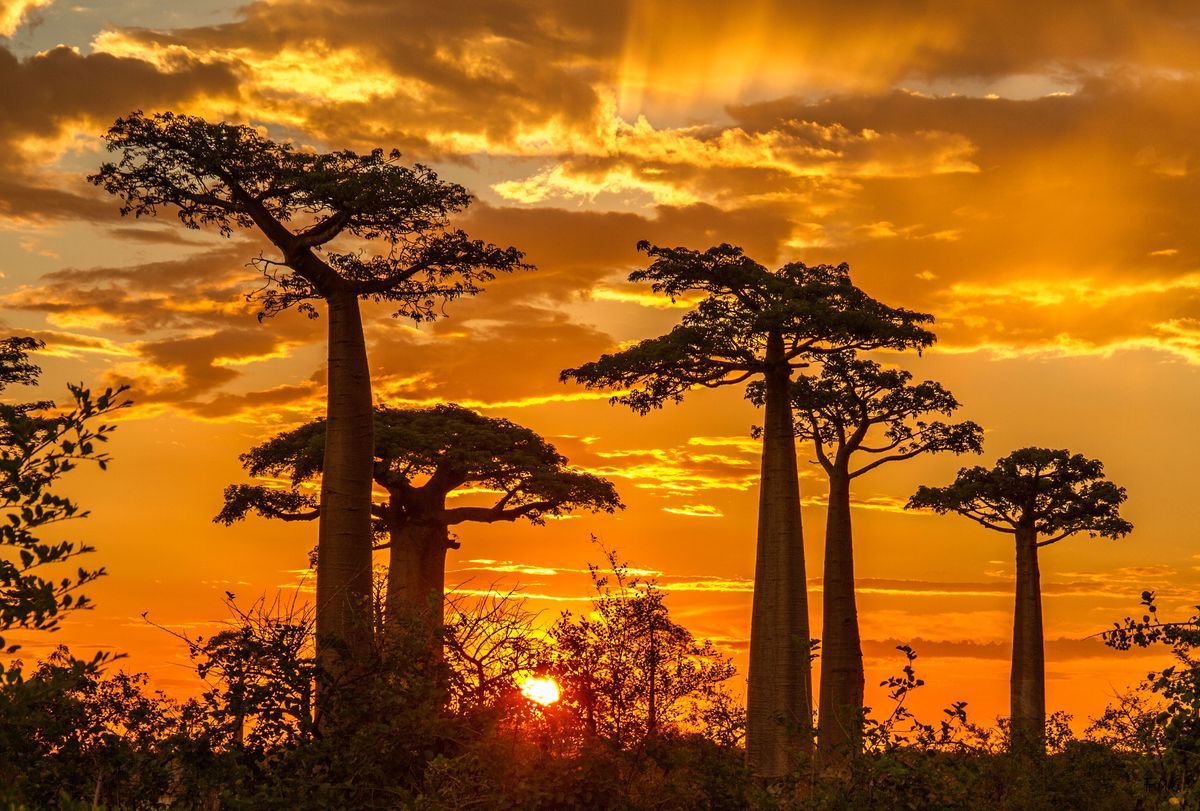

There’s no fence here. No visitor centre, no admission gate, no ranger checking tickets. Just a dirt road cutting through the Menabe region of western Madagascar, lined on either side by trees so improbably shaped that early European visitors reportedly assumed they’d been planted upside down, roots reaching for the sky instead of the ground. At sunset, when the low light turns their bark the colour of burnt copper, the Avenue of the Baobabs becomes one of the most photographed landscapes in Africa. It’s also, quietly, one of the most fragile.
What’s Actually Standing Here
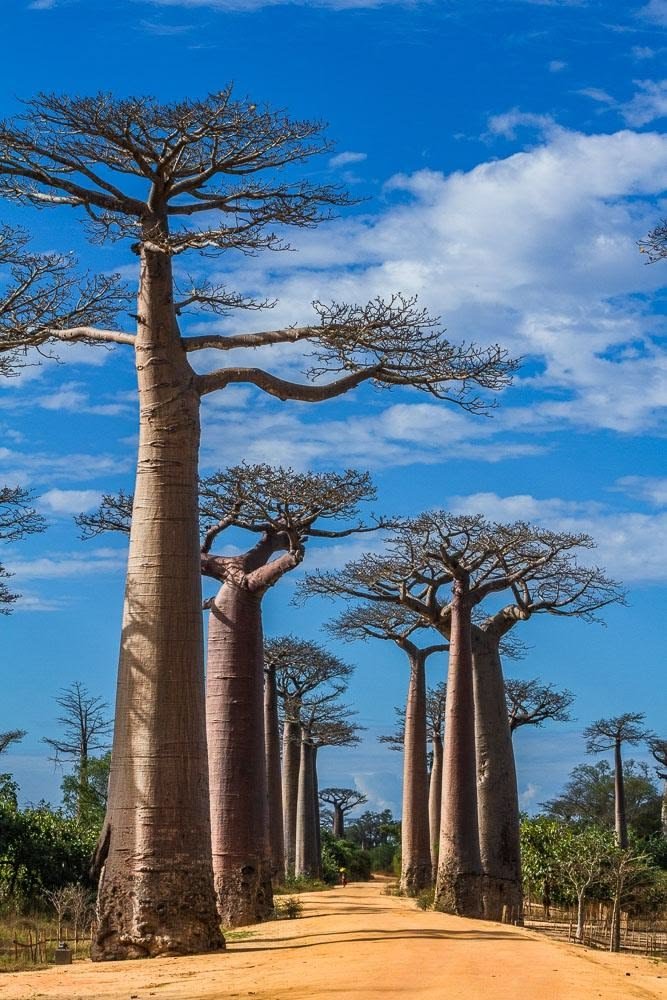
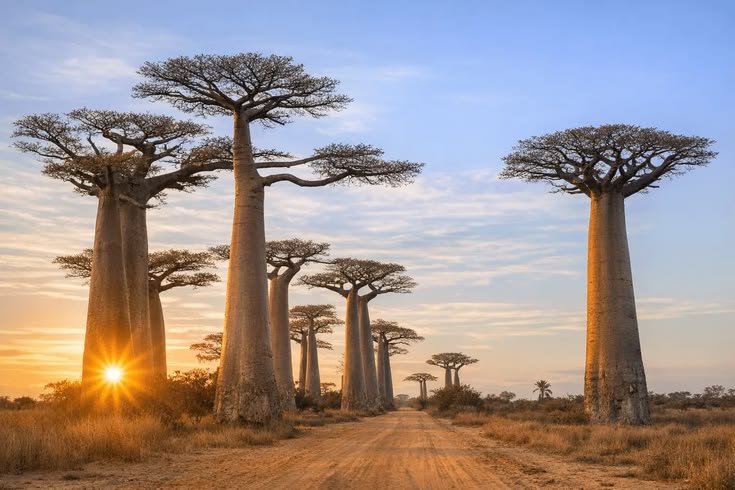
The avenue itself is a roughly 260-metre stretch of unpaved Road No. 8, running between the towns of Morondava and Belon’i Tsiribihina, lined with somewhere between twenty and twenty-five Grandidier’s baobabs, Adansonia grandidieri, a species found nowhere else on Earth. These aren’t young trees making a photogenic debut. Many are estimated to be 800 years old or more, some accounts push that figure considerably higher, with trunks wide enough that it takes several adults linking arms to circle one. A further cluster of baobabs stands scattered through the surrounding rice paddies and meadows, remnants of a forest that once covered this entire stretch of coast rather than the isolated roadside grove visitors see today.
A Forest That Used to Surround Them
The baobabs standing today are survivors, not originals in isolation. This land was once part of a dense tropical forest, and as Madagascar’s population grew, that forest was cleared steadily for agriculture and charcoal production, the country’s primary cooking fuel. The baobabs remained standing largely by accident of utility: their wood has never been used for construction or fuel, so unlike the forest around them, nobody had reason to cut them down. What’s left is essentially a photograph of what used to exist everywhere here, twenty-five ancient giants marking the edges of a landscape that has otherwise been entirely rewritten.
Protected on Paper, Vulnerable in Practice
Madagascar’s government first granted the site temporary protected status in 2007, and in July 2015 it became the country’s first officially designated natural monument. On paper, that sounds like durable protection. In practice, the avenue remains genuinely exposed: no visitor centre, no gate fees, and limited direct income flowing to the local community from the steady stream of tourists who arrive specifically to photograph it. Threats haven’t disappeared with the designation, continued deforestation nearby, effluent runoff from encroaching rice paddies, seasonal bushfires, and grazing pressure all continue to limit the baobabs’ ability to reproduce and spread naturally, even as the mature trees themselves have proven remarkably resilient. Climate change adds a longer-term concern, shifting rainfall patterns and rising sea levels could eventually narrow the range where these trees can thrive at all.
Why the Sunset Here Feels Different
Safari-park sunsets tend to come with a soundtrack, distant lions, chattering guides, engine noise from a dozen other jeeps angling for the same shot. The Avenue of the Baobabs offers something quieter and considerably stranger: a landscape emptied of almost everything except the trees themselves, silhouetted against a sky that, in this part of western Madagascar, tends toward genuinely spectacular color as the sun drops toward the horizon. For the Sakalava people who live in the surrounding region, these trees carry real cultural weight beyond their visual drama, featuring in origin myths and traditional beliefs about ancestral spirits, a significance that predates the arrival of any camera by centuries.
Getting There and Visiting Responsibly
Morondava serves as the practical gateway, reachable by domestic flight from Antananarivo or, for more determined travellers, a rough fifteen-hour overland journey. From town, the avenue sits a short drive away, easily combined with a visit to nearby Kirindy Forest Reserve for wildlife spotting, most itineraries stretch this into a three or four day loop covering sunset and sunrise at the avenue alongside Morondava’s own coastline. Given the site’s minimal formal infrastructure, choosing local guides and operators who reinvest in community and conservation efforts genuinely matters here, tourism revenue remains one of the few consistent funding sources supporting replanting and protection work for trees that, once lost, would take centuries to replace.
Why It Belongs on the List
The Avenue of the Baobabs works precisely because it isn’t curated. There’s no interpretive signage explaining what you’re looking at, no barrier keeping you at a respectful distance, just twenty-five ancient trees standing exactly where a vanished forest once stood around them. For travellers chasing landscapes that feel genuinely unrepeatable rather than staged, few sunsets anywhere in Africa deliver quite what this quiet stretch of Malagasy dirt road does.