





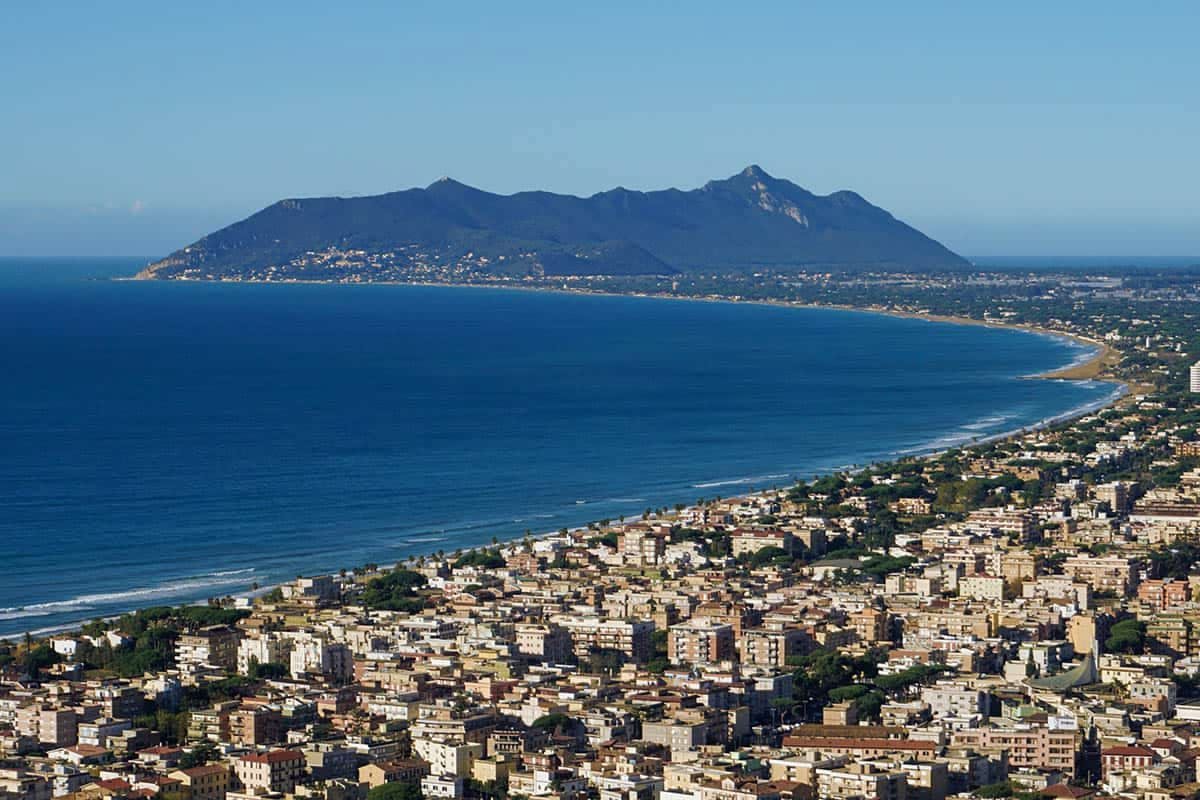

Rome gets all the attention, and the Amalfi Coast gets whatever’s left over. Somewhere between the two, along the southern edge of Lazio, sits a sixty-kilometre stretch of coastline that Homer supposedly wrote into the Odyssey and that most travellers driving straight from the capital to Naples never think to stop for. The Riviera di Ulisse, running roughly from San Felice Circeo down to Gaeta, offers Roman ruins, genuinely excellent beaches, and towns that still feel lived-in rather than curated for tour buses, all within striking distance of a city most visitors assume has nothing coastal to offer nearby.
A Coastline Named for a Myth
The riviera takes its name from Homer’s Odyssey, and the story is baked directly into the landscape. According to legend, it was on the promontory of Monte Circeo, still visible for miles along the coast, that Ulysses encountered the sorceress Circe, who famously turned his crew into pigs before he eventually talked his way free. When fog settles over the headland, locals still say it takes on the profile of a reclining figure, which the myth insists is Circe herself watching over the water she once ruled. Roman emperors clearly agreed the setting had something to it: Tiberius built one of his summer villas directly into the coastline near Sperlonga, and the ruins, along with the dramatic sea cave where he reportedly entertained guests, remain open to visit today.
Terracina: Ruins Above, Beach Town Below
Terracina anchors the southern end of the drive from Rome, and it’s built on a genuinely striking split: an ancient hilltop core stacked with Roman ruins overlooking a modern beach town stretching out toward the sea. At the summit sits the Temple of Jupiter Anxur, a monumental Roman platform temple with sweeping coastal views that rival anything in more famous corners of Italy, alongside a smaller temple believed dedicated to Feronia, protector of the surrounding forests. Walk down through the historic centre and you’ll pass the Piazza del Municipio, built on first-century-BC foundations, and sections of fifth-century-BC walls still traceable along the Via delle Mura Castellane. It’s the kind of layered, unpolished history that Rome charges an entrance fee for, here experienced largely on an open, uncrowded walk.
Sperlonga: The Coast’s Most Photogenic Village
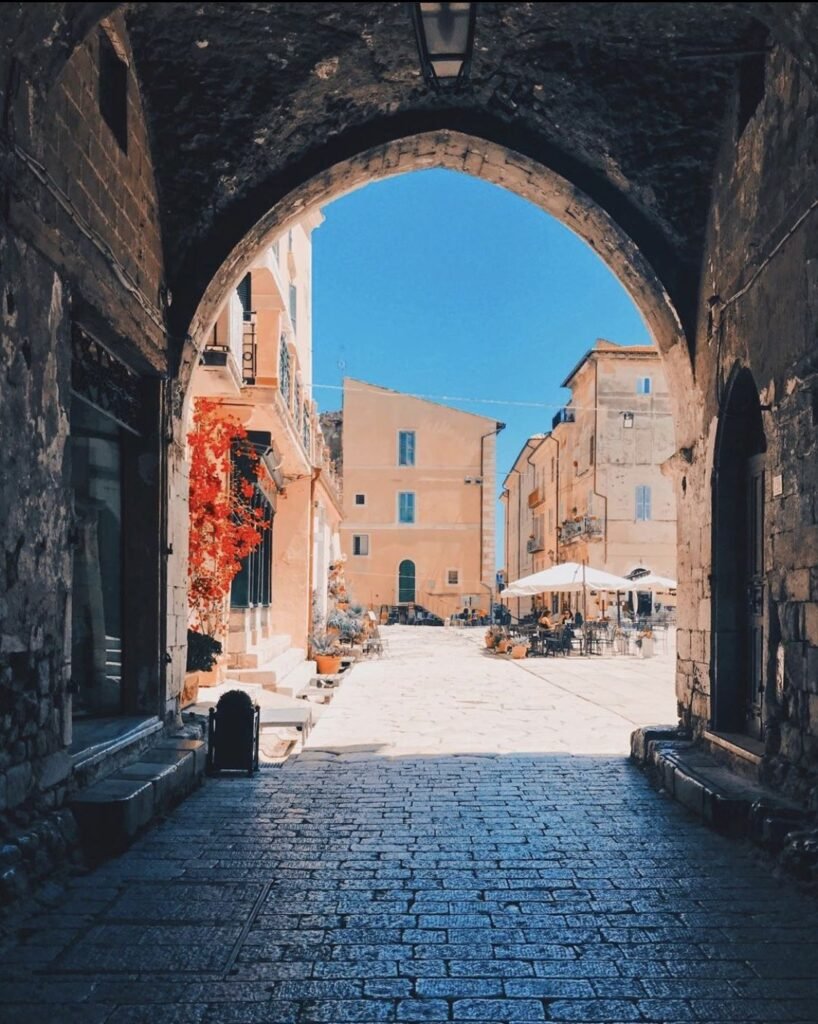
If one town on this stretch has started attracting a following of its own, it’s Sperlonga, a whitewashed medieval village perched more than sixty metres above the sea, its narrow lanes and bougainvillea-draped houses drawing comparisons to an Andalusian pueblo or a Greek island chora. Its two beaches, split on either side of the headland, have earned recognition from Italy’s Touring Club and Legambiente for water quality, and the town’s small piazzas, particularly the Piazzetta del Pozzetto, reward aimless wandering more than any single monument does. Local food culture runs through it too: tiella, a savoury stuffed pie made with escarole and Gaeta olives, is sold from bakery windows specifically meant to be eaten on the beach.
Gaeta and the Protected Coast Between
Between Sperlonga and Gaeta runs one of the most striking undeveloped stretches of coastline in this part of Italy, roughly ten kilometres of beaches and inlets largely protected within the Riviera di Ulisse Regional Park and its adjoining marine reserve. Gaeta itself juts out into the sea like the prow of a ship, its historic centre a genuine maze of medieval alleyways and stairways, many converted into small guesthouses and seafood taverns rather than souvenir shops. Above the old town, the eleventh-century Sanctuary of the Holy Trinity, built directly into a dramatically split mountainside, remains one of the region’s most striking pieces of religious architecture.
Planning the Trip
The riviera sits close enough to Rome for a day trip but rewards staying two or three nights, splitting time between Terracina, Sperlonga, and Gaeta rather than rushing all three. Trains run from Rome to Terracina and to Formia-Gaeta via the Rome-Naples line, though a car remains the more practical option for reaching smaller beaches and moving efficiently between towns. May and September offer the best balance, warm enough for swimming, with noticeably lighter crowds and lower prices than the July and August peak, when Sperlonga’s Serapo beach in particular fills fast.
Why It Deserves the Detour
The Riviera di Ulisse isn’t trying to be the Amalfi Coast, and that’s precisely its appeal. It offers genuine Roman history, a coastline still largely shaped by locals rather than tourism infrastructure, and a mythological backstory old enough to predate most of what draws crowds elsewhere in southern Italy. For travellers willing to look an hour south of Rome instead of three hours south toward Naples, it’s one of the more rewarding coastal detours the country still has to offer.