





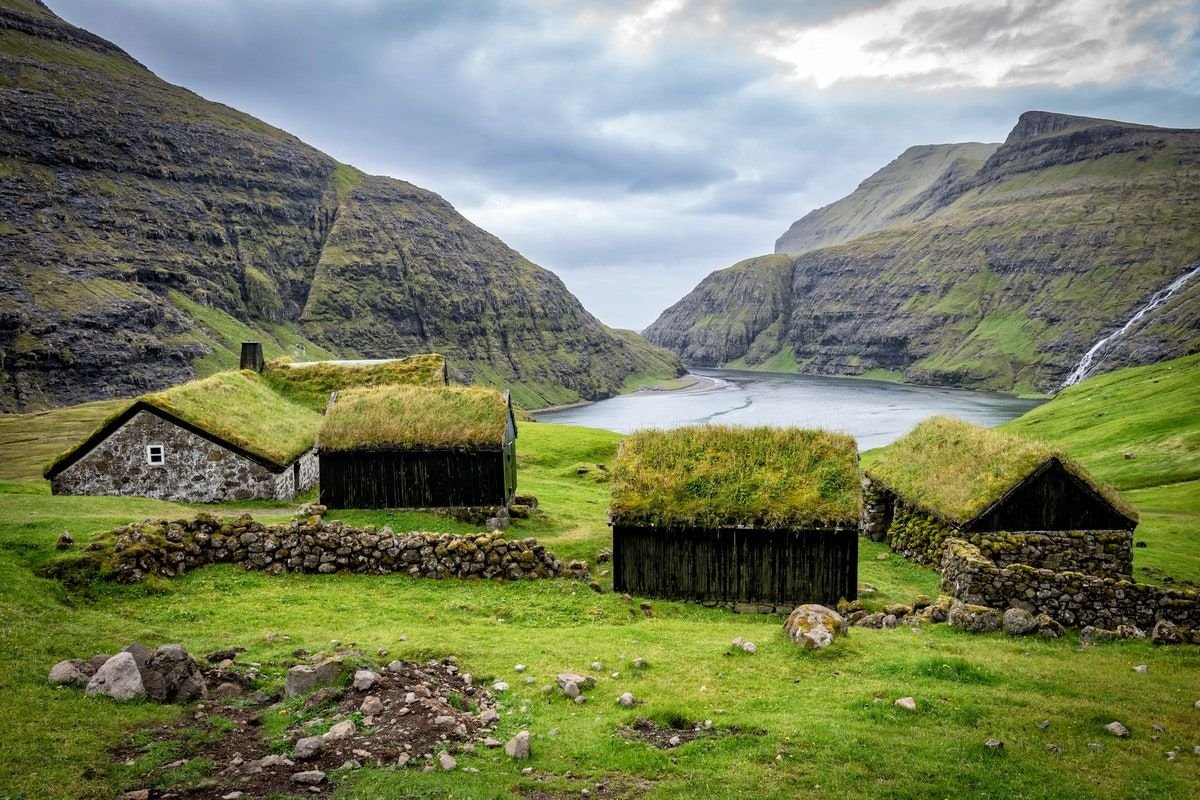

If you drive northwest across the island of Streymoy in the Faroe Islands, the road eventually narrows down to a single asphalt lane winding through a steep, emerald-green valley. Cell service drops off, towering waterfalls cascade down sheer basalt cliffs on either side, and the modern world simply fades away.
At the very end of that valley sits Saksun.
With a permanent population that barely reaches double digits, this tiny settlement looks less like a real 21st-century village and more like a set straight out of a folklore story. Turf-roofed wooden cottages cling to the hillsides, black sand beaches outline a quiet tidal lagoon, and sheep roam freely across pastures that haven’t changed much in hundreds of years.
For travelers looking to experience the quiet, untamed beauty of the North Atlantic, Saksun feels like a place time genuinely forgot.
A Village Reshaped by a Storm
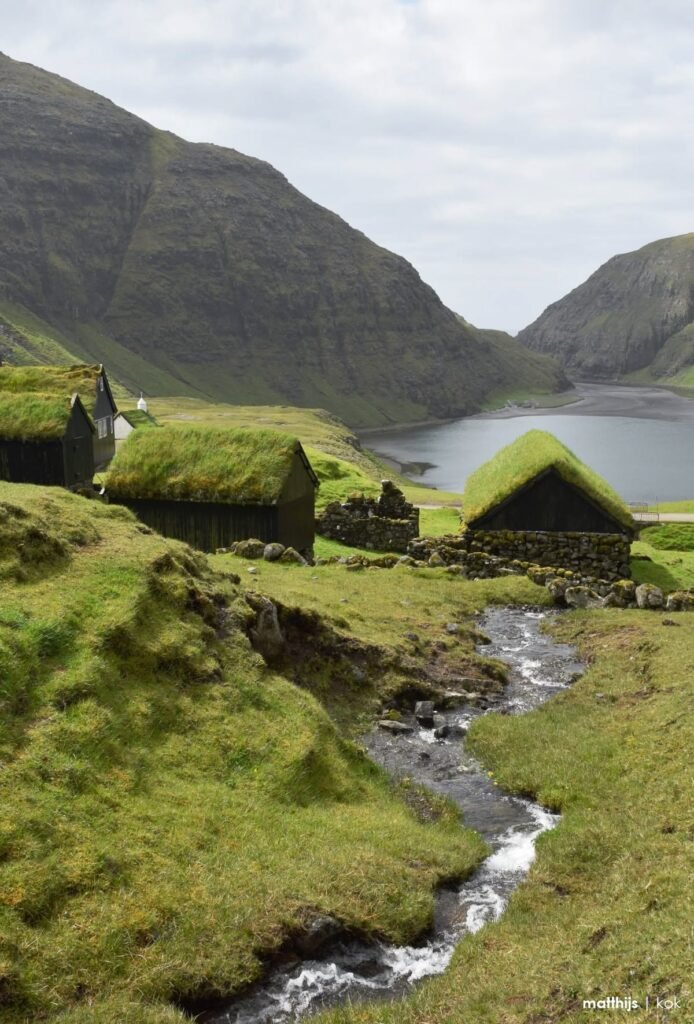
Saksun’s most striking feature is its dramatic natural harbor—or rather, what used to be one.
Centuries ago, Saksun was an active fjord-side settlement with a deep, open ocean bay. Fishing boats could sail directly from the wild Atlantic into the quiet inlet to dock safely near the village.
However, in the 1600s, a powerful storm swept through the region, dumping massive amounts of sand and gravel into the narrow mouth of the fjord. The outlet was completely blocked off, transforming the deep bay into a shallow, landlocked lagoon known today as Pollurin.
Today, that lagoon empties out during low tide, revealing a vast floor of dramatic black sand. Visitors can walk along the exposed bed of the old fjord all the way out to the ocean shoreline—a stark, quiet landscape surrounded by sheer vertical mountains.
The Turf Roofs and Dúvugarðar Farm
The architecture in Saksun is as much a part of the landscape as the mountains surrounding it.
Traditional Faroese houses feature thick stone foundations, pitch-black tarred timber walls, and bright green grass roofs. These living turf roofs aren’t just for aesthetics; for centuries, they’ve provided natural insulation against howling North Atlantic gales and driving rain.
At the heart of the village sits Dúvugarðar, a active sheep farm and heritage museum housed in a 17th-century homestead. Walking through Dúvugarðar gives visitors a rare, authentic glimpse into how Faroese villagers survived in complete isolation for generations—relying on turf fires, dried mutton, sheep farming, and local fishing.
Perched just above the lagoon stands the white stone Saksun Church. Built in 1851, the church originally stood in a neighboring village before being dismantled, carried piece by piece over the high mountain pass by hand, and reassembled in Saksun.
Navigating the Shift to Modern Tourism
As travel photography and social media brought global attention to the Faroe Islands, Saksun’s peaceful isolation faced a new kind of pressure.
In a village with under fifteen residents, thousands of annual visitors snapping photos on private lawns naturally created tension. To protect the fragile environment and preserve the locals’ quality of life, the village has introduced thoughtful guidelines for visitors:
- Respect Private Property: The turf-roofed cottages in Saksun are private homes, not museum displays. Visitors should stay strictly on marked paths and avoid walking onto private lawns or looking into windows.
- Tidal Path Fees: Walking across the black sand lagoon to the ocean now involves a modest access fee via an automated turnstile, which funds trail maintenance and protects local habitats.
- No Drones: Drones are banned in and around the village to protect local livestock and ensure peace for the residents.
Seeing Saksun the Right Way
Saksun is best experienced slowly. Rather than rushing in for a quick photo and leaving, take the time to hike the coastal trail, listen to the roar of distant waterfalls, and watch the tide slowly transform the lagoon floor.
In an age where true silence and open spaces are becoming increasingly rare, places like Saksun are precious. It’s a quiet, humbling reminder of what happens when human life adapts to the raw rhythm of nature, rather than trying to bend it.