





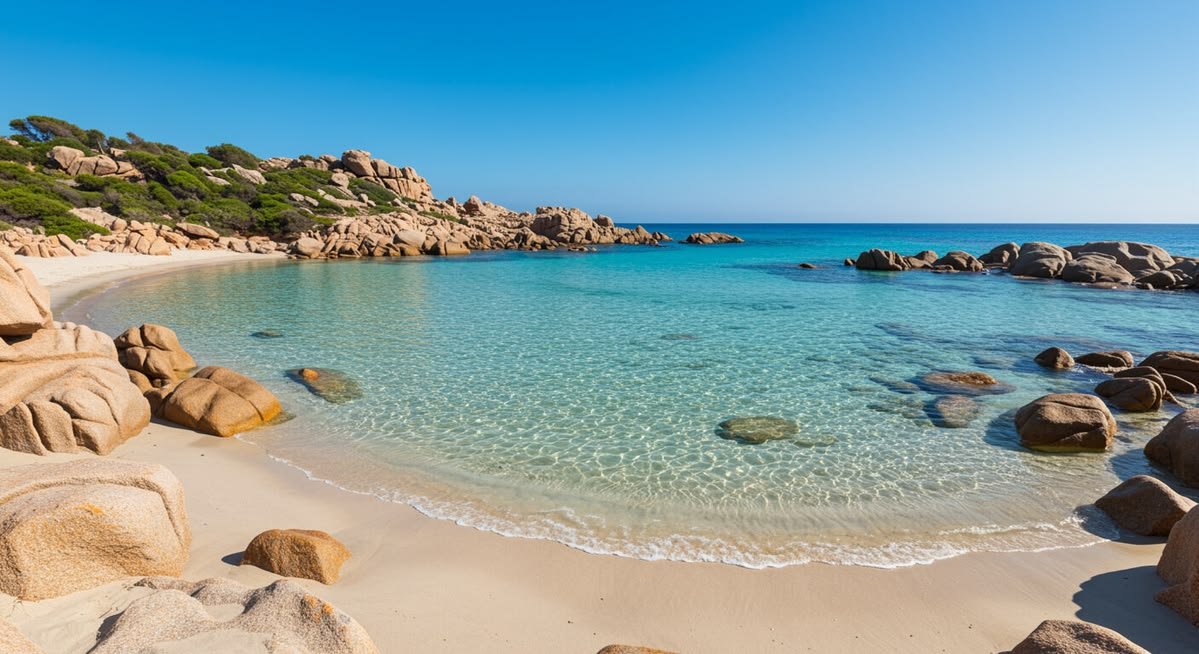

Most people who say they have been to Sardinia have seen perhaps a fifth of it. They have seen the Costa Smeralda’s turquoise coves, the yacht-lined marinas of Porto Cervo, the postcard water that makes the island one of the most photographed in the Mediterranean. What almost none of them have seen is the Sardinia that actually explains why the island fascinates scientists, anthropologists, and serious travellers alike: the mountainous interior, where shepherds still walk miles of rugged terrain each day, where villages have remained genetically and culturally isolated for thousands of years, and where people live longer, in greater numbers, than almost anywhere else on Earth.
The Blue Zone Hiding in the Mountains
In 2004, researchers Michel Poulain and Gianni Pes published findings so unusual that demographers initially suspected a data error. A cluster of villages in Sardinia’s Ogliastra and Barbagia regions showed a concentration of centenarians unmatched almost anywhere on the planet, work that led Dan Buettner to coin the now-famous term “Blue Zone.” What makes Sardinia’s case scientifically distinct from the four other Blue Zones later identified worldwide, Okinawa, Nicoya, Loma Linda, and Ikaria, is that it remains the only one where exceptional longevity is roughly balanced between men and women, and researchers have linked part of that pattern to a rare genetic marker preserved by the region’s long geographic isolation.
A Way of Life That Outpaced Modern Wellness Culture
The explanation for Sardinia’s longevity is not a supplement or a diet trend. It is decades, often a full lifetime, of continuous low-intensity movement across mountainous terrain. Shepherds in villages like Villagrande Strisaili traditionally cover several miles daily on foot, work that current exercise science increasingly recognises as more protective for cardiovascular and cognitive health than short bursts of high-intensity training. Diet plays its part too, durum wheat breads baked hard and dry for shepherds to carry for days, goat’s milk, and moderate consumption of Cannonau wine, whose flavonoid levels run notably higher than most other reds. But researchers increasingly point to something harder to bottle: tight-knit villages where mutual aid remains a lived practice, not a nostalgic idea, and where social isolation, one of the strongest predictors of early mortality elsewhere in the developed world, is genuinely rare.
Stone Towers Older Than Rome
Long before longevity researchers arrived, Sardinia’s interior was already remarkable for what it had preserved architecturally. Scattered across the island are more than seven thousand nuraghi, Bronze Age stone tower complexes unique to Sardinia, built by a civilisation whose isolation from the Italian mainland is part of why today’s Barbagia population is understood to descend directly from these Nuragic-era communities. Walking among the nuraghi in villages far from any coastal resort offers something the beaches simply cannot: direct, unmediated contact with a culture that predates Rome and never fully assimilated into it.
Why the Interior Deserves the Itinerary
Sardinia’s coast will always draw the crowds, and there is nothing wrong with that draw. But travellers who stop there are missing the version of the island that actually explains its reputation among scientists and cultural historians. The interior asks for a different pace: staying in small towns like Aritzo or Seulo, sharing a meal with a shepherding family, walking the same hillside paths that have shaped the region’s health outcomes for generations. This is not adventure tourism dressed up as wellness retreat. It is an encounter with one of the last places in Western Europe where an ancient, self-sustaining way of life has not been diluted by the tourism economy surrounding it.
The Takeaway
Sardinia’s beaches will always be worth the trip. But its interior, quieter, older, and scientifically extraordinary, is where the island’s real story lives. For travellers who want more from a destination than a view, Barbagia and Ogliastra offer something genuinely rare: proof that an old way of living, largely untouched, still has something to teach the rest of the world.