





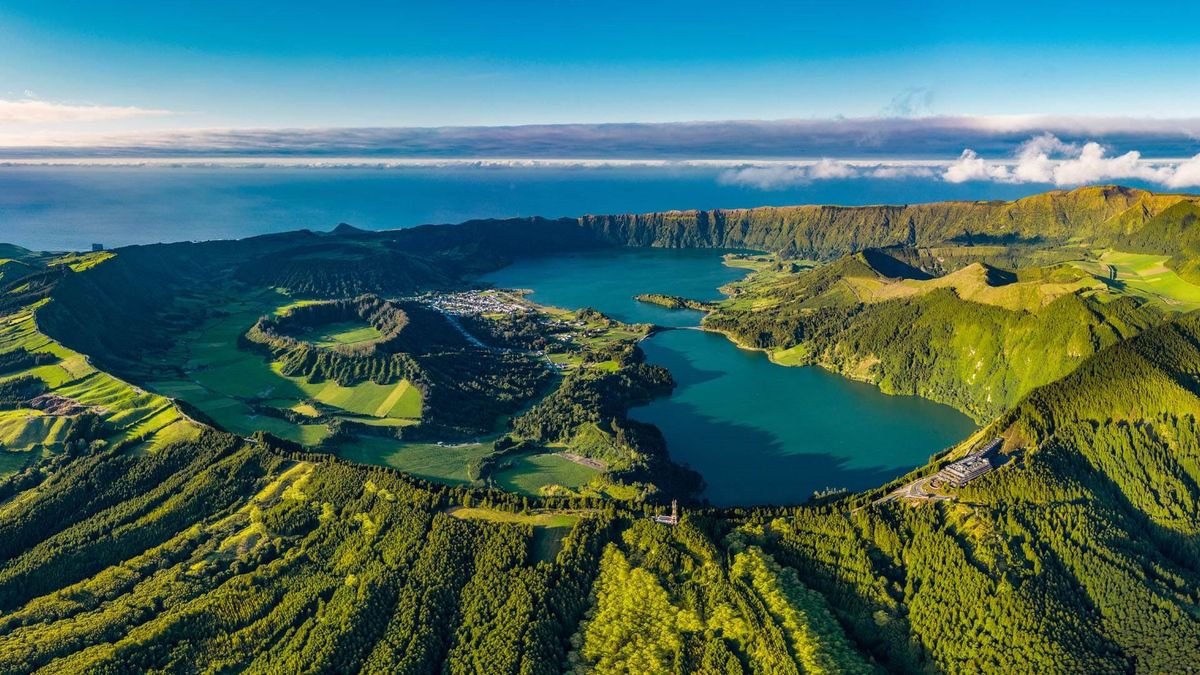

There is a version of the Azores that most people visit — the July and August version, with full car parks at Sete Cidades, a queue at every viewpoint, and accommodation booked out months ahead. It is beautiful. The summer archipelago earns its reputation entirely. But there is another version of the Azores, quieter and more elemental and in many ways more extraordinary, that exists between November and March — and it belongs almost entirely to the travellers who have learned to go when nobody else does. The winter Azores is not the bad version of summer. It is a completely different experience, built from a different set of conditions, revealing a different face of nine islands that have been quietly holding this face in reserve.
The Weather Reality: Not What You Fear
The Azores sit at 39° north latitude — the same latitude as Madrid — and enjoy a subtropical oceanic climate. Winter temperatures are mild by any European standard: 14 to 17°C during the day, rarely below 10°C at night. It never freezes at sea level. The variable is rain, and the rain deserves honest treatment: weather in winter is quite unpredictable — in a single day, you can go from sunshine to a downpour in minutes, or find fog at a lagoon and clear skies just a few miles away. Although it might sound inconvenient, the rain usually doesn’t last for many hours at a time — it comes in intervals. The Azorean saying — that you can experience all four seasons in a single day — is an exaggeration, but it captures a meteorological reality that winter travellers learn to work with rather than resist. Pack a good waterproof layer, keep the itinerary flexible, and understand that a misty morning very often becomes a clear afternoon.
What Winter Does to the Landscape
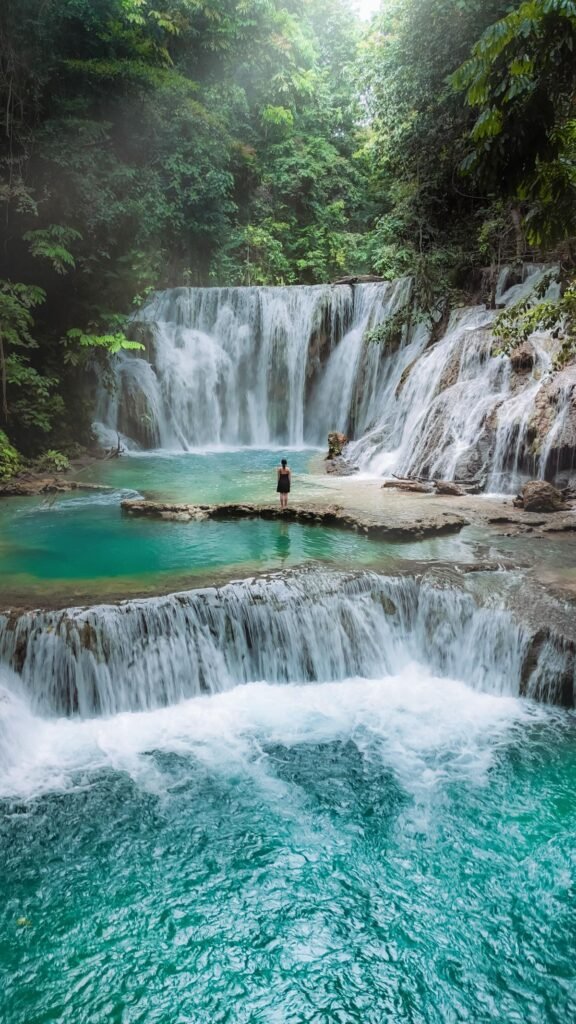
This is the essential argument for going between November and March. Waterfalls along inland cliffs — sometimes reduced to a trickle in August — are spectacular in winter. The Ribeira dos Caldeirões in São Miguel or the plateau waterfalls of Flores reach their peak. The contrasts between mist, piercing rays, and vivid green mosses on black stones create scenes you will not find in summer. This is photographers’ favourite season. The landscape is more saturated, more dramatic, and more photogenic than it is at peak tourist season — a counterintuitive truth that every returning winter visitor confirms. The winter light and occasionally misty conditions create different landscapes to enjoy, and the combination of volcanic black rock, vivid green vegetation, and low Atlantic light produces images that summer’s brighter, flatter conditions simply cannot replicate.
The Thermal Baths: Better in Winter Than in Any Other Season
If there is one experience that the Azores does better in winter than in any other season, it is the thermal baths — and this is not a marginal improvement but a fundamental one. The pleasure of a 38°C bath in the cool December air, with vapour rising above the water, is incomparable. Furnas makes perfect sense in winter. At Caldeira Velha, iron-rich pools sit in a jungle-like environment of extraordinary beauty. Terra Nostra Park’s huge thermal pool, with water between 95°F and 104°F (35–40°C), is perfect for cooler weather. The park is also a 30-acre botanical garden where you can wander among exotic species. Poça da Dona Beija, also in Furnas, offers a more intimate version of the same experience. These are not tourist attractions made tolerable by their novelty — they are genuinely extraordinary places to spend two hours on a cold afternoon, and winter is the season in which they are most fully themselves.
Sete Cidades, Furnas, and the Crater Lakes: Almost to Yourself
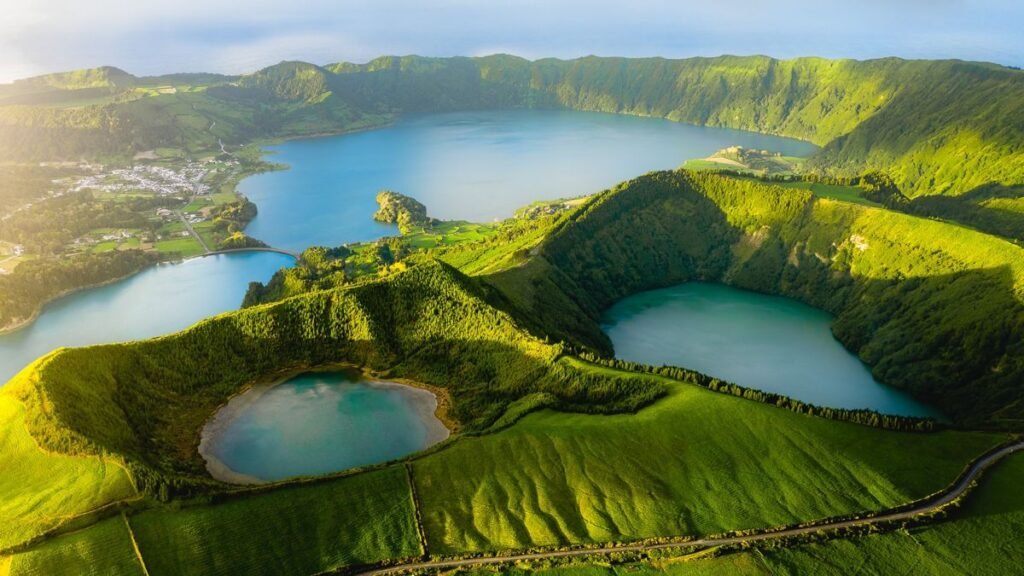
You will have Sete Cidades, Furnas, and the Lagoa do Fogo almost to yourself or close to it. The experience is radically different from July and August. This single fact is worth the entire off-season itinerary. Sete Cidades — the twin crater lakes that define São Miguel’s visual identity — is one of the most photographed landscapes in the Atlantic. In summer, every viewpoint is shared with coach parties and cruise-day tourists. In winter, you stand at the miradouro in silence, watching mist move across the water below, with the entire lake system visible in both directions and no one else in your frame. Emblematic hikes such as Sete Cidades, Lagoa do Fogo, and Caldeira do Faial are open and with fewer crowds, delivering trail experiences that feel genuinely exploratory rather than choreographed.
Whale Watching: Year-Round, With Caveats
There are fewer whales in the water in winter because most species migrate and are only in the archipelago during spring and summer. However, sperm whales are present all year round, as are three types of dolphins. It would be unusual to go out and not see anything. For travellers who want to add a cetacean experience to a winter visit, sperm whale sightings remain entirely possible from November through March — and the smaller group sizes on winter boat tours produce a more intimate experience than the busy summer departures that fill quickly and return crowded.
The Budget Case: Flights Down 40%, Accommodation Available
The cheapest months to visit the Azores are November through February. Flights can drop by up to 40%, and car rentals are often much cheaper too. For a destination that commands premium pricing in July and August — particularly for rental cars, which are in tight supply during peak season — winter pricing represents a genuinely different financial proposition. Restaurants are available without booking, kitchens work in tranquillity, and you’ll be able to find Azores travel deals for half the price if you choose to visit during this season. The archipelago does not become less extraordinary when the crowds leave. The price simply reflects the fact that fewer people have worked out what the regulars already know.
Which Island in Winter: Focus on São Miguel
The advice is to focus travel on São Miguel in winter. With its hot springs, waterfalls, and different microclimates, you can really lean into slow off-season travel. The island is noticeably quieter and calmer. Ponta Delgada has a more local feel, with fewer tourists and more Azoreans in the streets on weekdays. São Miguel is also the most accessible island year-round — with the most reliable inter-island flight and ferry connections, the widest accommodation range, and the most diverse landscape concentration on a single island anywhere in the North Atlantic. São Miguel in winter stays mild, around 14–18°C, with plenty of bright days for exploring. It is a good time for hiking, coworking, and recharging indoors when the rain rolls through.
The Practical Winter Itinerary
Rent a car on arrival — this is non-negotiable. Road trips are the best way to explore the islands. Don’t count on being able to explore easily by public transport. Plan three to five days on São Miguel as the base — thermal baths at Furnas one day, the Sete Cidades crater loop on a second clear morning, the east coast waterfalls and tea plantations at Gorreana on a third. Terra Nostra Garden and the tea plantations at Gorreana and Porto Formoso, and pineapple greenhouse tours are seasonal highlights, alongside São Jorge cheese and Pico wines if island hopping extends the itinerary. Pack layers, a waterproof outer shell, and at least one pair of walking boots. Leave the schedule loose enough to follow the weather rather than fight it.
The Azores in winter is not a compromise destination for travellers who missed the summer window. It is a deliberate choice for travellers who understand that the most extraordinary version of a place is rarely the most crowded one — and that an archipelago built from volcanic rock and Atlantic weather is, in many ways, most completely itself when the storms pass through and leave everything washed and vivid and entirely yours.