






Dubrovnik deserves its reputation. The walled city, the limestone streets, the Adriatic light hitting the old town at golden hour — none of it is overstated. But Croatia’s most famous city has, through sheer gravitational pull, created a peculiar problem: millions of visitors land, spend three days inside its walls, and fly home having seen barely five percent of one of the most dramatically beautiful coastlines on earth. The Dalmatian Islands — 79 of them scattered across the Adriatic between Zadar in the north and the waters south of Dubrovnik — contain some of the most varied, least crowded, and most genuinely rewarding island experiences in the Mediterranean. Most of them remain almost entirely unknown to the international travellers who fly directly past them to reach the city that accidentally eclipsed them all.
Korčula: The Island That Dubrovnik Forgot to Mention
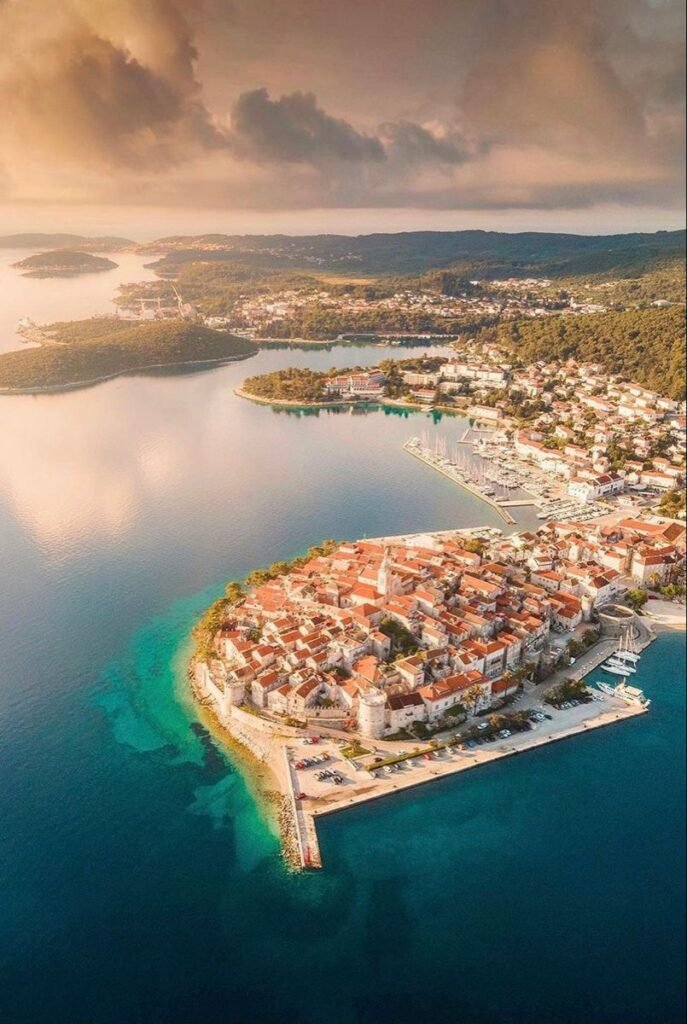
Korčula Town has all the walled medieval grandeur of Dubrovnik at roughly a quarter of the crowds — which, depending on your tolerance for peak-season tourism, makes it significantly more enjoyable to actually experience. Rumoured to be the birthplace of Marco Polo, Korčula is a jewel of Southern Dalmatia — its medieval old town is a masterclass in urban planning, with marble alleys laid out in a herringbone pattern designed to protect against the wind. Beyond the old town walls, the island produces world-class white wines — Pošip and Grk in particular — from vineyards that cover its pine-forested interior. The water surrounding the island is extraordinarily clear, and catching live music at sunset from a table by the water with a glass of wine becomes the kind of experience that explains why people keep coming back. Passenger catamarans connect Korčula directly to Split, Hvar, and Dubrovnik — making it a straightforward addition to any southern Dalmatian itinerary.
Vis: The Island That Kept Its Secrets for Decades
Until 1989, Vis was a closed Yugoslav military base, entirely off-limits to international visitors. The consequence of that enforced isolation is an island that developed none of the tourist infrastructure that shaped its neighbours — and has, as a result, retained an authenticity that the rest of the Dalmatian chain largely sacrificed in the 1990s. Vis is known for its relaxed vibe, its Blue Cave, and its incredible seafood — the fish restaurants here are frequently cited by returning visitors as the best they’ve encountered anywhere in Croatia. The Blue Cave itself, on the nearby islet of Biševo, produces one of the Mediterranean’s most genuinely surreal natural light effects, with the cave interior turning an electric, otherworldly blue when sunlight refracts through an underwater opening. Vis rewards travellers who stay at least three nights — it is not a day-trip destination, and those who treat it as one consistently report wishing they had stayed longer.
Lastovo: Europe’s Darkest Skies, Best Kept Secret
Lastovo is one of the islands furthest from the mainland — also known as a wonderful place for stargazing. It is one of the most remote inhabited islands in the Adriatic, and that remoteness is precisely its appeal. For nature and serenity, Lastovo is a tranquil sanctuary defined by national parks, pristine night skies, and an authentic atmosphere far from the tourist trail. The island holds UNESCO Dark Sky Park status — making it one of Europe’s premier destinations for astrophotography and undisturbed star observation in the summer months. Local favourites such as Mljet and Lastovo come alive in autumn, when evenings cool, days still reach 18 to 25 degrees, and the crowds disperse entirely, offering a truly authentic insight into Croatian island life.
Mljet: The Island Odysseus Refused to Leave
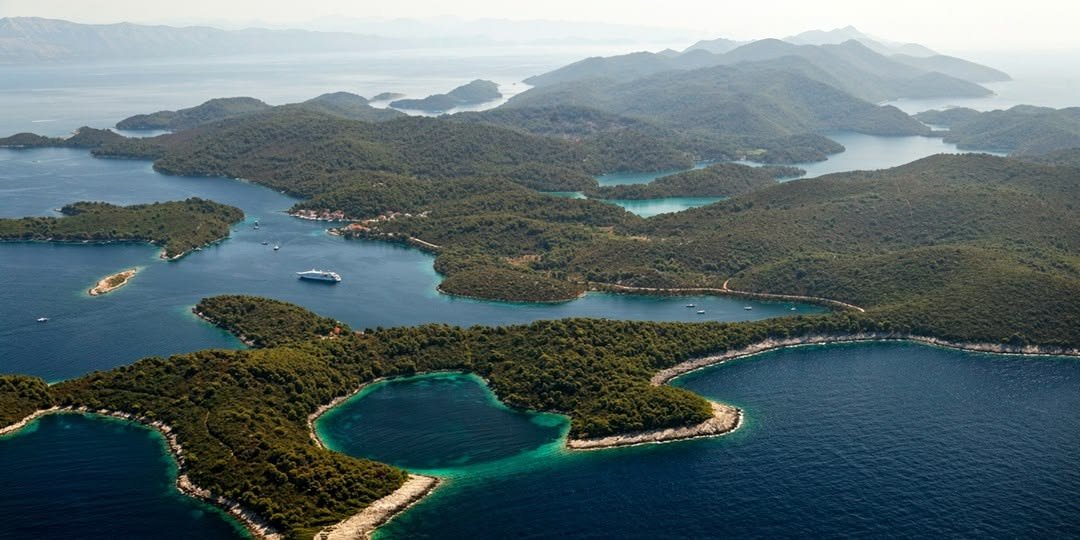
Mljet Island is considered one of the most beautiful Croatian islands — with its single main road, two saltwater lakes, and a national park that drapes over half of the island’s landscape, it is an incredibly unique destination in Dalmatia. Local legend holds that Odysseus was so captivated by Mljet that he stayed for seven years — and while the mythology is impossible to verify, the impulse it describes is entirely understandable. The two saltwater lakes at the island’s heart are navigable by kayak and connect to the sea, creating a remarkable inland waterway experience that no other Dalmatian island replicates. Things to do on Mljet include diving, swimming in caves, cycling, hiking, and kayaking — all in an environment that feels closer to a national park than a tourist destination, because that is precisely what half of it legally is.
Šolta: Forty-Five Minutes From Split, Forty Years From the Crowds
Šolta sits just 45 minutes by ferry from Split and yet feels like a completely different world — an island of olive groves, honey production, and quiet coves that the summer crowds largely bypass. There are no buses, no tour groups, no particular agenda. You swim, you eat, you watch the light change on the water. The tiny harbour town of Maslinica recently underwent a significant renovation, introducing a small castle and a handful of excellent restaurants while maintaining its atmosphere of complete calm. For those who find Hvar too hectic or Brač too accessible, Šolta is the answer. It is also, practically speaking, one of the easiest alternative islands to reach from a Split base — a half-day trip if you want, or a two-night stay that reshapes the entire character of a Dalmatian itinerary.
The Elafiti Islands: Dubrovnik’s Own Backyard Secret
The tiny Elafiti Islands are an exceedingly relaxing choice at the southernmost part of the Croatian coastline — a good option for travellers who want to be close to Dubrovnik. Three of the islands are inhabited — Koločep, Lopud, and Šipan — and all three are accessible on day boats from Dubrovnik’s Gruž harbour. The striking detail: most Dubrovnik visitors never visit them at all, despite the crossing taking under an hour. Car-free, quiet, and anchored in a time that the old city itself abandoned decades ago, the Elafiti offer the genuine seclusion that Dubrovnik’s walls can no longer provide.
Getting There: The Practical Reality
The most efficient way to hop between islands is via the extensive network of ferries and catamarans operated by the national carrier Jadrolinija, with frequent routes from major ports including Zadar, Šibenik, Split, and Dubrovnik. May, June, and September are the optimal months — warm enough for swimming, uncrowded enough for the islands to feel like themselves. July and August bring peak prices and peak people, which can dilute the magic, particularly on Hvar. For the less-connected islands — Lastovo, Vis, Mljet — planning ferry schedules in advance is essential, as frequency drops considerably outside peak season. For those willing to sail, the Dalmatian chain reveals itself most fully from the water — reaching bays and coves that ferries don’t serve, anchored in near-total quiet.
Dubrovnik will keep its visitors and keep deserving them. But the Dalmatian Islands that fan out to its north and west are a different, quieter, more personal version of Croatia — one that the city has never quite managed to hide, despite decades of trying.