





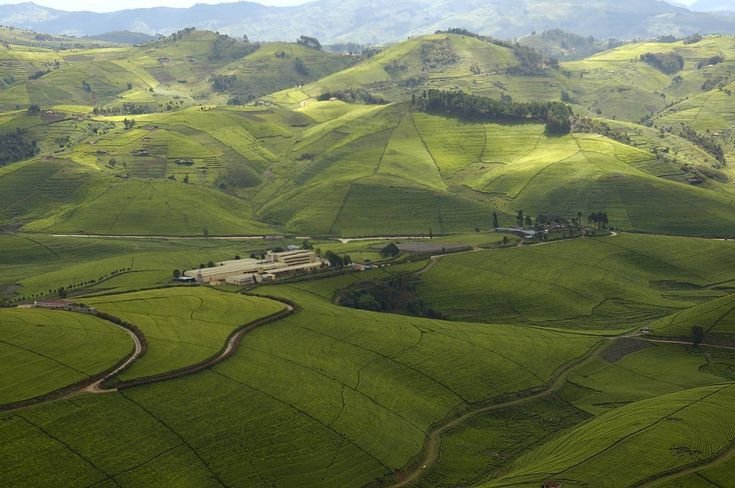

There is a comparison that keeps appearing in conversations among serious Africa travellers — people who have done the Masai Mara, done Amboseli, done the Serengeti circuit, and are now asking the question that experienced travellers always eventually ask: where next? Where is the place that offers something genuinely different, genuinely excellent, and genuinely not yet overwhelmed by the infrastructure of mass expectation?
Increasingly, the answer is Rwanda.
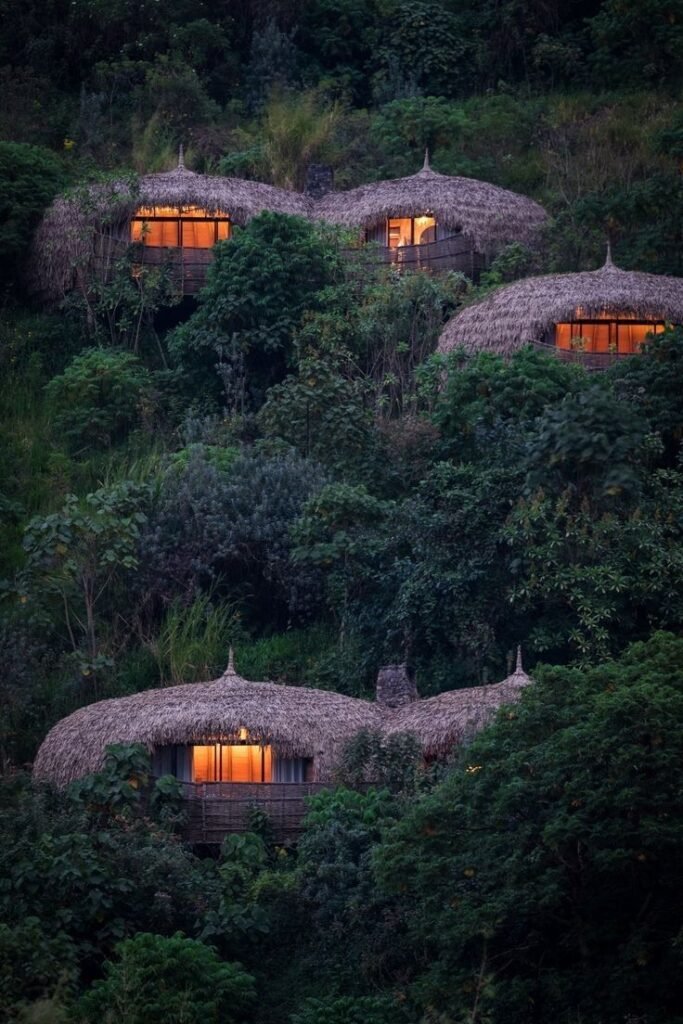
It is a country of 26,338 square kilometres — smaller than Belgium, smaller than the state of Maryland — compressed into a landscape of such dramatic, continuous elevation that the colonial name given to it by Belgian administrators, Le Pays des Mille Collines — the Land of a Thousand Hills — feels, when you are moving through it, like an understatement. There is no flat Rwanda. There are only hills folding into hills, valleys dropping away between them, and a quality of green so saturated and persistent that it registers less as a colour and more as a condition of the air.
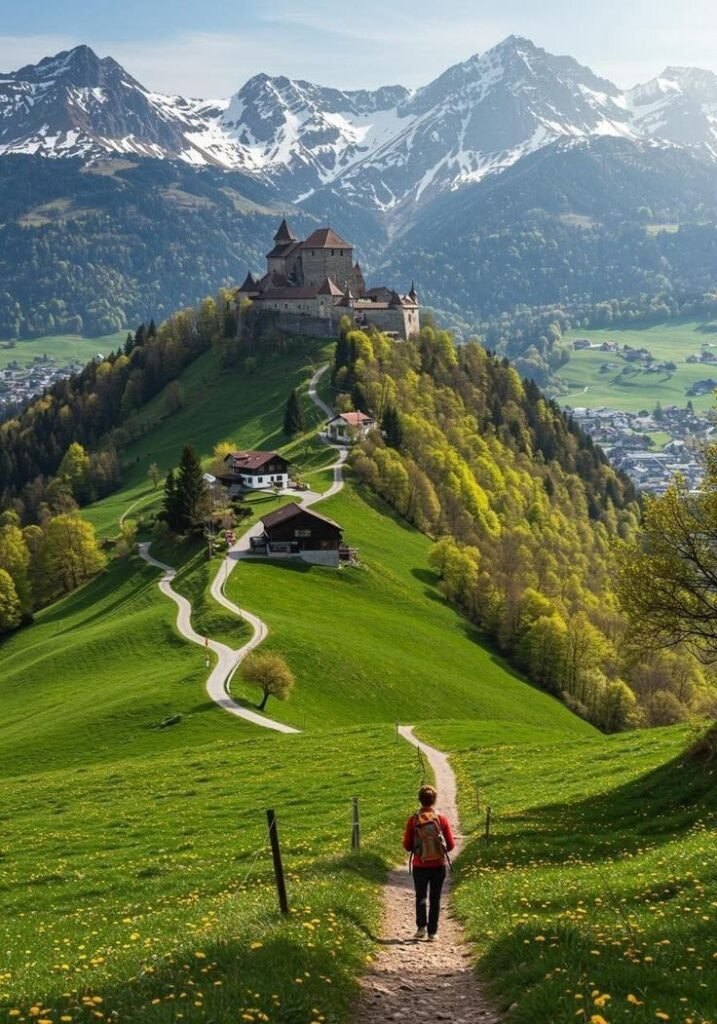
The Switzerland comparison — which Rwandans themselves sometimes make, with a mixture of pride and gentle irony — is not primarily geographic. It is institutional. It is about what Rwanda has built, in thirty years, from almost nothing.
The Transformation That Has No Parallel
What Rwanda has accomplished since 1994 is, in the full context of its starting point, one of the most remarkable national reconstructions in modern history. The genocide of 1994 — in which an estimated 800,000 Tutsi and moderate Hutu were killed in 100 days — left a country physically intact but socially, institutionally, and psychologically devastated. The infrastructure of government had collapsed. The economy had contracted by half. A third of the population was displaced.
Thirty years later, Rwanda ranks among the least corrupt countries in Africa on Transparency International’s index. Kigali — the capital — is consistently cited as the cleanest city on the continent, the result of a national monthly community cleaning day, Umuganda, in which every citizen participates. Plastic bags have been banned since 2008. The streets are genuinely, visibly clean — not in the performative sense of a swept tourist quarter but throughout the city, at all hours, in all neighbourhoods.
Rwanda’s GDP has grown at an average of 7-8% annually for two decades. Healthcare coverage has expanded to reach over 90% of the population through a community health insurance scheme. Girls’ enrolment in secondary education now matches boys’. The country’s parliament has the highest proportion of female legislators of any national legislature in the world.
These are not tourism statistics. They are the context without which Rwanda’s appeal as a travel destination cannot be properly understood. The country works — with an efficiency, cleanliness, and institutional coherence that most of its regional neighbours, and many wealthier nations, cannot match. That is not incidental to the experience of visiting. It is central to it.
The Gorillas That Changed Everything
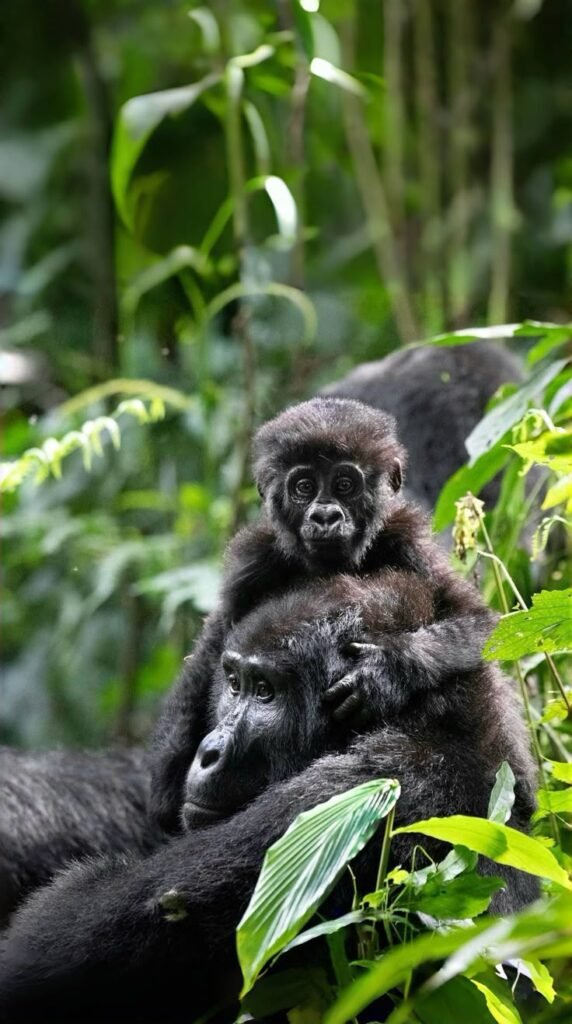
Rwanda’s position on the global travel map was established by a single species: the mountain gorilla. Of the approximately 1,000 mountain gorillas remaining on earth, the majority live in the Virunga Massif — a chain of volcanoes straddling the borders of Rwanda, Uganda, and the Democratic Republic of Congo. Rwanda’s Volcanoes National Park protects the Rwandan section of that habitat and offers what is, by the consensus of travellers who have experienced it, one of the most profound wildlife encounters available anywhere in the world.
Gorilla trekking in Volcanoes National Park involves a permit — currently priced at $1,500 per person per visit — that limits access to a small number of habituated gorilla families per day, each visited by groups of no more than eight people for a maximum of one hour. The price is deliberate. The limitation is deliberate. Rwanda made a considered decision, decades ago, to pursue a high-value, low-volume conservation tourism model — fewer visitors, paying more, with more of that revenue directed toward the communities and ecosystems that make the experience possible.
The hour spent with a gorilla family — watching a silverback move through forest vegetation, observing juveniles in the canopy above, sitting within metres of animals whose DNA is 98.3% identical to your own — produces an experience that travellers consistently describe as the most significant wildlife encounter of their lives. The limitation of one hour makes it more so, not less: you leave wanting more, which is the correct relationship to have with something irreplaceable.
Beyond the Gorillas: A Country Worth Exploring Slowly
Rwanda’s gorilla reputation has, if anything, slightly obscured the rest of what the country offers — and what it offers is considerable.
Nyungwe Forest National Park in the southwest protects one of Africa’s oldest and most biodiverse montane rainforests — home to 13 primate species including chimpanzees, colobus monkeys, and L’Hoest’s monkeys, navigable via a canopy walkway that offers a perspective on the forest unavailable from the ground. The biodiversity here rivals anything in East Africa, in a forest that receives a fraction of the attention it deserves.
Lake Kivu — one of Africa’s Great Lakes, straddling the border with the DRC — offers a quality of lakeside peace that the more famous Lake Victoria cannot currently provide. The lakeside town of Gisenyi in the north and Kibuye in the centre both offer accommodation of genuine quality, boat excursions across water of extraordinary clarity, and a rhythm of life organised around the lake rather than around tourism.
Kigali itself repays more time than most travellers give it. The Kigali Genocide Memorial — required, difficult, and handled with a dignity and educational seriousness that serves the dead — is a visit that every traveller to Rwanda should make, not as obligation but as understanding. The city’s café and restaurant scene, its art galleries, its weekend market at Kimironko, its general quality of urban life — these belong to a city that has decided, with some deliberateness, what it wants to be.
The Honest Conversation About Rwanda
Rwanda’s transformation has not occurred without complexity. President Paul Kagame’s government — which has overseen the reconstruction — has also been credibly accused of suppressing political opposition, restricting press freedom, and operating with an authoritarianism that sits uneasily alongside the country’s genuine achievements.
Serious travellers go to Rwanda knowing this. They go because the gorillas are there and nowhere else in the same concentration, because the country is safe and functional in ways that simplify travel considerably, and because the story of reconstruction — imperfect, contested, and still unfolding — is itself one of the most important stories in contemporary Africa.
The hills hold all of it: the beauty, the complexity, the grief, the genuine accomplishment. Rwanda does not offer a simple experience. It offers an honest one.
How to Go
Rwanda is served by RwandAir, which connects Kigali’s Bugesera International Airport to destinations including London, Brussels, Dubai, Nairobi, and Johannesburg. Several European carriers also operate connecting services via their hubs.
Gorilla trekking permits must be booked in advance through the Rwanda Development Board — demand consistently exceeds supply, and permits for peak season (June to September, December to February) should be secured months ahead. Accommodation in and around Volcanoes National Park ranges from the extraordinary — Singita Kwitonda Lodge, One&Only Gorilla’s Nest — to comfortable mid-range options in Musanze town.
The dry seasons — June to September and December to February — offer the best trekking conditions, though Rwanda’s highland climate is temperate year-round and the hills remain green in every season. Budget a minimum of five days for the country. Ten is better. Rwanda is not a destination to pass through.