





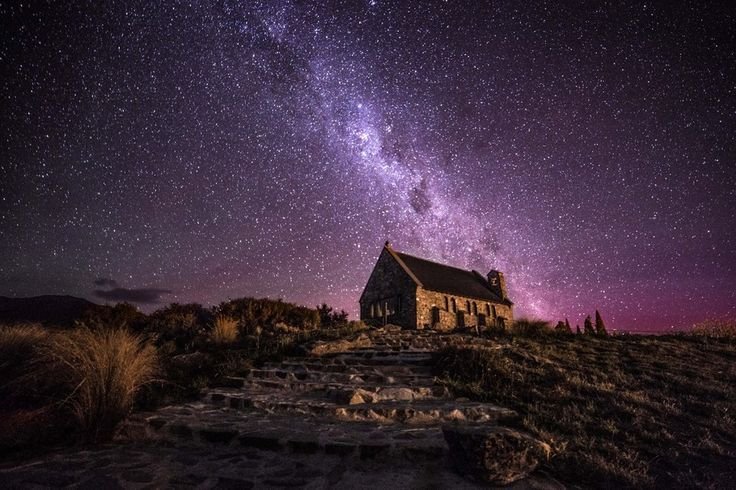

There is something that happens when you see the Milky Way properly for the first time. Not the faint smear visible from a suburban garden on a clear night, but the actual thing — the dense, luminous river of light arching across a completely dark sky, so detailed and so vast that your brain initially refuses to process it as real.
Most people alive today have never seen it.
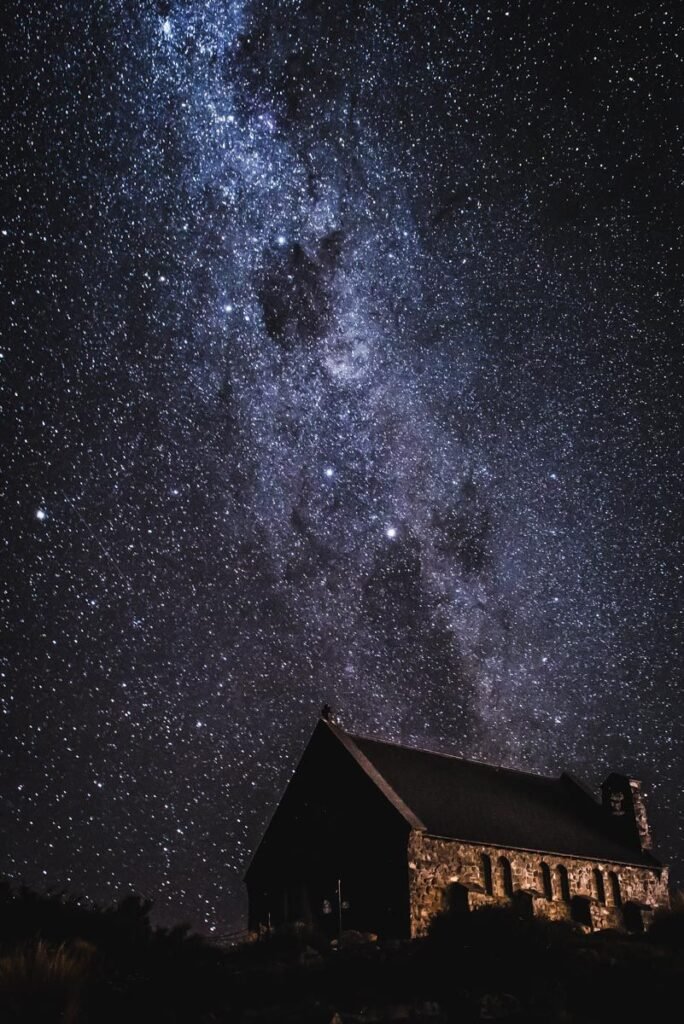
According to research published by the Light Pollution Science and Technology Institute, approximately 80 percent of the world’s population lives under skies too bright to see the Milky Way with the naked eye. The combination of urban expansion, artificial lighting, and the normalisation of light-polluted skies has quietly stolen one of the most profound natural experiences available to human beings — and most people do not know what they are missing because they have never seen the alternative.
Astrotourism — travel specifically oriented around dark skies, stargazing, and astronomical events — is one of the fastest-growing travel niches of 2026. It combines the fundamental human response to an unpolluted night sky with the growing global awareness of light pollution as an environmental issue, and the result is a category of travel that is simultaneously ancient in its appeal and urgent in its relevance.
These are the destinations that deliver the darkest skies, the clearest views, and the most extraordinary astronomical experiences on earth.
What Makes a Great Stargazing Destination
Before the destinations, understand the variables. The quality of a stargazing experience depends on four factors that every serious astrotourist needs to understand.
Light pollution — measured by the Bortle scale from 1 (perfectly dark) to 9 (inner city sky), light pollution is the primary determinant of what is visible. A Bortle 1 sky reveals the Milky Way in such detail that its structure — spiral arms, dust lanes, the galactic core — is visible to the naked eye. A Bortle 4 sky, typical of rural areas, shows a clear Milky Way but loses the faintest details. Anything above Bortle 5 and the Milky Way begins to fade.
Altitude — higher altitude means less atmosphere between you and the stars. Less atmosphere means less light scattering, less moisture, and sharper, brighter stellar views. The world’s great observatories are built at altitude for this reason — and the world’s great stargazing destinations are predominantly high-altitude locations.
Weather and humidity — clear, dry air produces the best views. Desert climates — low humidity, minimal cloud cover, and large temperature differentials that create atmospheric stability — consistently produce the finest stargazing conditions. Coastal and tropical locations, despite their darkness, frequently suffer from humidity and cloud that limits visibility.
Moon phase — the full moon outshines everything except the brightest stars and planets. The new moon — when the moon is absent from the sky entirely — is the optimal phase for deep-sky observation. Planning a stargazing trip around the lunar calendar is not optional for serious observers — it is the most important scheduling decision you will make.
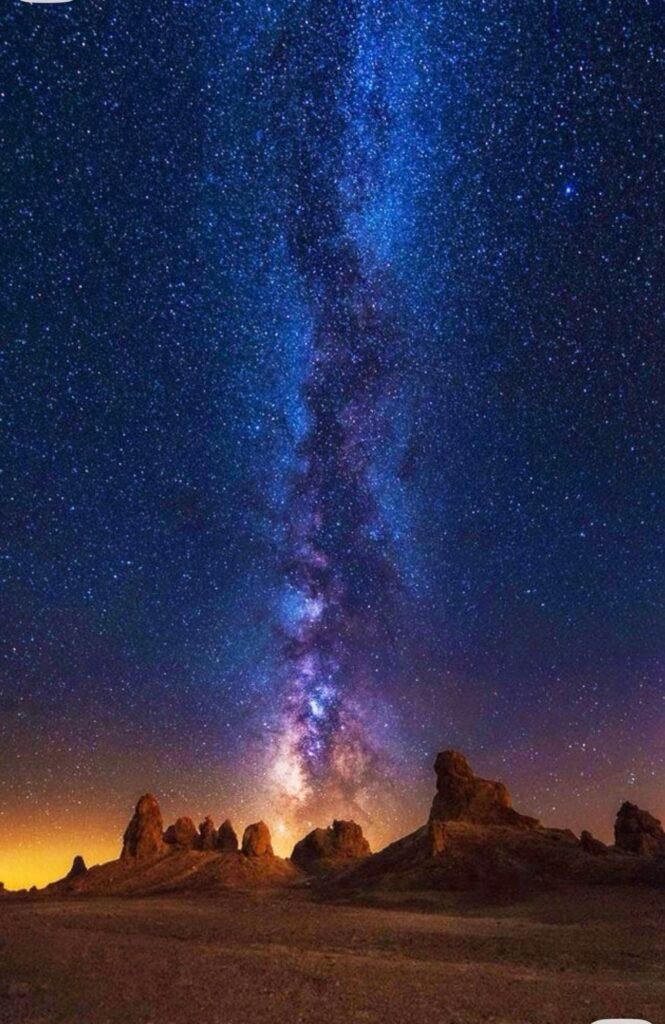
The Atacama Desert, Chile — Earth’s Premier Stargazing Destination
The Atacama Desert in northern Chile is, by scientific consensus, the finest stargazing location on earth accessible to civilian visitors. The combination of factors that make it exceptional is almost unfair in its comprehensiveness — altitude averaging 2,400 metres across the plateau, virtually zero rainfall, humidity consistently below 20 percent, minimal light pollution across thousands of kilometres of surrounding desert, and an atmosphere so stable that the professional observatories built here — including the European Southern Observatory’s ALMA array and the Very Large Telescope at Paranal — represent the most powerful ground-based astronomical installations on earth.
San Pedro de Atacama, the small desert town that serves as the base for most stargazing visits, has developed one of the world’s most sophisticated astrotourism infrastructures. The SPACE observatory offers nightly tours with high-powered telescopes guided by astronomers who calibrate the experience between scientific education and pure wonder. The Atacama Large Millimeter Array offers occasional public visits to its 66 high-precision antennas spread across the Chajnantor Plateau at 5,000 metres.
On a clear new-moon night in the Atacama — which describes the majority of nights year-round — the Milky Way is visible from horizon to horizon with a brightness and detail that experienced astronomers describe as the closest thing to viewing from space while remaining on the ground. The Magellanic Clouds — two satellite galaxies of the Milky Way visible only from the Southern Hemisphere — hang in the sky like separate islands of light, close enough to feel reachable.
Best time to visit: April through November for the driest conditions and longest nights. June and July offer the Milky Way galactic core at its most prominent.
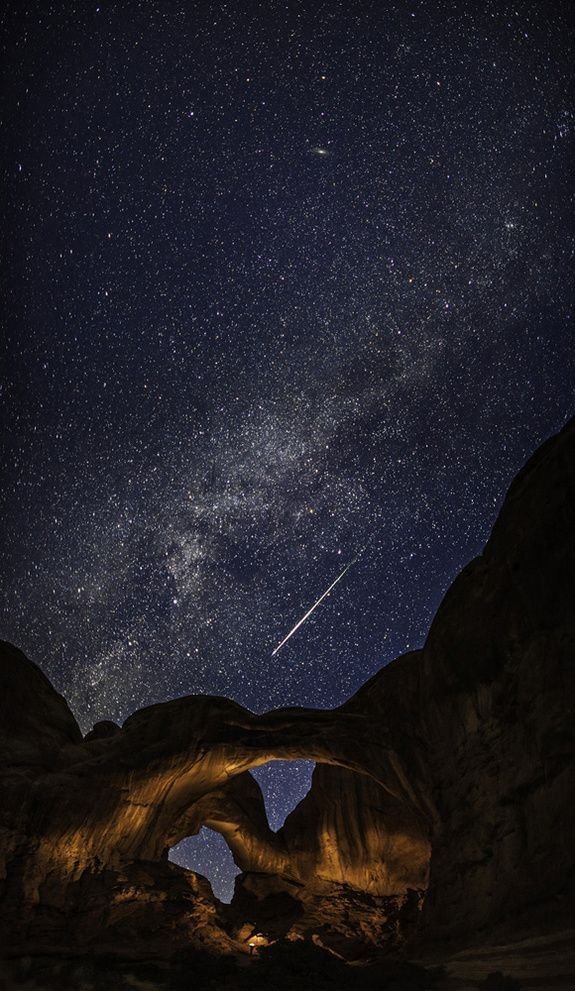
Aoraki Mackenzie, New Zealand — The Southern Hemisphere’s Dark Sky Reserve
The Aoraki Mackenzie International Dark Sky Reserve in New Zealand’s South Island was designated in 2012 and covers approximately 4,300 square kilometres of the Mackenzie Basin — making it one of the largest dark sky reserves on earth and the first in the Southern Hemisphere to receive Gold Tier status from the International Dark-Sky Association.
The reserve encompasses Aoraki Mount Cook National Park and Lake Tekapo, and the combination of the Southern Alps’ altitude, the basin’s distance from significant urban light sources, and the exceptional clarity of New Zealand’s South Island atmosphere creates stargazing conditions that professional astronomers consistently rate as world-class.
The University of Canterbury’s Mount John Observatory, situated on a peninsula above Lake Tekapo, offers public stargazing tours year-round — the experience of viewing Saturn’s rings, Jupiter’s moons, and the structure of globular clusters through research-grade telescopes against the backdrop of lake and mountain below is among the finest astrotourism experiences available anywhere in the world.
The additional dimension that Aoraki Mackenzie offers beyond pure sky quality is landscape. Watching the Milky Way rise over a perfectly still Lake Tekapo, reflected in water that mirrors the stars above, with the Church of the Good Shepherd silhouetted on the peninsula — this is a visual experience that transcends astronomical observation and becomes something closer to art.
Best time to visit: June through August for the longest nights and the Milky Way galactic core visible in the south. Winter temperatures drop significantly — dress accordingly.
Wadi Rum, Jordan — Stargazing in a Desert That Feels Like Another Planet
Wadi Rum is the most visually dramatic stargazing destination on this list — not because its skies are the darkest (they are exceptional but not Atacama-level) but because the landscape beneath the stars is unlike anything else on earth. The red sandstone mountains and ancient desert floor of this UNESCO World Heritage site have hosted everyone from Lawrence of Arabia to the film crews of The Martian and Dune, all drawn by the same quality: a landscape that looks improbably, almost offensively, like another planet.
Overnight desert camps — from basic Bedouin tents to glass-domed bubble accommodation that frames the sky above the sleeping guest — have made Wadi Rum one of the most accessible premium stargazing experiences in the Middle East. The Bortle 2 skies above the desert reveal the Milky Way in extraordinary detail, while the absence of any horizon-obscuring features — the desert floor is vast and flat between the isolated monolithic mountains — means the full 360-degree sky is available from a single position.
The Bedouin guides who lead many of the stargazing tours bring an additional dimension that pure astronomical knowledge cannot provide — centuries of desert navigation by stars, names for constellations that differ from the Greek tradition, and stories about the sky that have been told in this desert for longer than most astronomical traditions have existed.
Best time to visit: October through April for the coolest temperatures and clearest skies. Summer temperatures in Wadi Rum reach 40 degrees — stargazing remains possible but the heat is challenging.
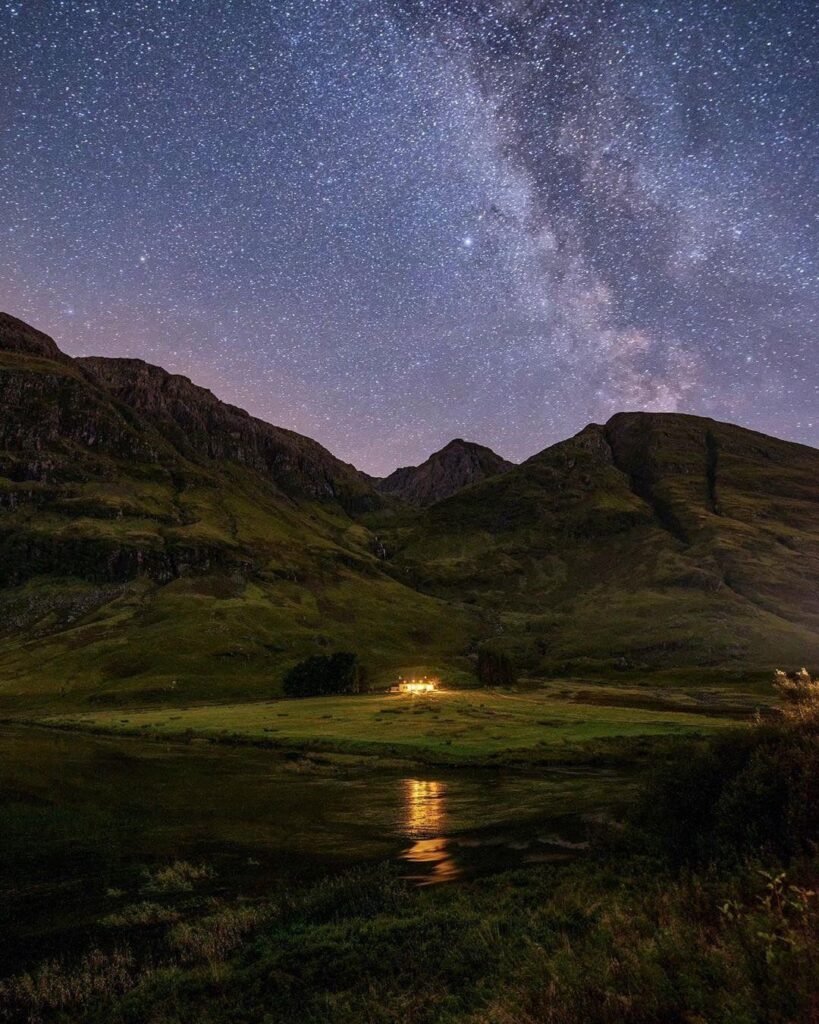
Exmoor National Park, United Kingdom — Dark Skies Without the Long-Haul Flight
For European travellers for whom the Atacama or New Zealand represent logistically complex expeditions, Exmoor National Park in southwest England holds the distinction of being Europe’s first International Dark Sky Reserve — designated in 2011 — and offers genuinely impressive stargazing within a three-hour drive of London.
Exmoor’s designation reflects both the quality of its dark skies — Bortle 3 to 4 across much of the moor — and the park authority’s active management of light pollution through responsible lighting policies in villages and farms within the reserve. The result is a sky that reveals the Milky Way clearly on moonless nights, shows thousands more stars than are visible from any British city, and provides a stargazing experience that most British residents have never had without leaving the country.
The Brendon Hills, Dunkery Beacon, and the coastal areas around Porlock Bay offer the darkest spots within the reserve. The Dark Sky Festival held annually in October has become one of Europe’s premier astrotourism events — combining telescope viewing, astrophotography workshops, talks by professional astronomers, and the particular pleasure of a clear autumn night on an English moor.
Best time to visit: October through February for the longest nights and the park’s annual Dark Sky Festival in late October.
Teide National Park, Tenerife — Europe’s Finest High-Altitude Observatory
Tenerife’s Mount Teide — at 3,715 metres the highest point in Spain and the third largest volcano on earth — sits above the cloud layer that covers the Canary Islands for significant portions of the year, placing its peak in air of exceptional clarity and darkness. The Teide Observatory, operated by the Instituto de Astrofísica de Canarias, is one of Europe’s leading astronomical research facilities and conducts public observation sessions that represent the finest professional-grade stargazing experience available within European time zones.
The combination of altitude, the Atlantic position away from continental light pollution, and the cloud layer that sits beneath the observatory — creating a sea of white below and a perfectly dark sky above — produces conditions that the observatory’s professional astronomers describe as comparable to the world’s finest sites for optical observation.
The experience of watching the sun set from the Teide cable car station, watching the shadow of the volcano stretch across the cloud layer below, and then watching the first stars appear in a sky that is already darker than anything visible at sea level — is one of the finest transitions from day to night available to any traveller in Europe.
Best time to visit: Year-round, though spring and autumn offer the best balance of temperature and sky clarity. The cable car to the summit requires advance booking.
Bonus Destinations Worth Knowing
NamibRand Nature Reserve, Namibia — Africa’s first International Dark Sky Reserve and one of the continent’s finest stargazing destinations, combining Bortle 1 skies above the Namib Desert with the extraordinary landscape of red dunes and ancient riverbeds. The reserve’s strict lighting policies protect skies that professional astronomers consistently rate as among the finest accessible on earth.
Uluru, Australia — the skies above Australia’s red centre are among the darkest on the continent, and the experience of watching the Milky Way rise above Uluru — a rock of such ancient geological and spiritual significance that it reorients your sense of time — combines astronomical wonder with a landscape context that few other stargazing destinations can offer.
Tromsø, Norway — the premier destination for Northern Lights viewing in Europe, Tromsø sits directly beneath the auroral oval and offers aurora experiences from September through March combined with the particular drama of Arctic winter darkness that makes every clear night a potential spectacle.
Mauna Kea, Hawaii — at 4,205 metres above sea level, Mauna Kea hosts the world’s most powerful collection of astronomical observatories and offers public stargazing at the visitor information station at 2,800 metres — the point below which altitude sickness is not a significant risk. The skies here are among the finest in the Northern Hemisphere.
Practical Astrotourism: What You Need
A red light torch — white light destroys night vision, which takes 20 to 30 minutes to fully develop. Red light preserves it. Every serious stargazer carries one.
A star map app — Stellarium, SkySafari, and Star Walk are the three most capable apps for real-time sky identification. Download the offline version before travelling to locations with limited connectivity.
Appropriate clothing — dark sky sites are predominantly high-altitude, desert, or exposed moorland environments. Night temperatures drop dramatically regardless of daytime conditions. Thermal layers, a wind-proof outer layer, and warm footwear are non-negotiable for any extended outdoor observation session.
A camera with manual settings — astrophotography requires a camera capable of long exposures — 15 to 30 seconds — at high ISO settings. A wide-angle lens, a sturdy tripod, and a remote shutter release complete the basic astrophotography kit. The images from a Bortle 1 sky, even with a modest camera, will redefine what you thought your equipment was capable of.
The Sky You Have Been Missing
Light pollution is one of the most pervasive and least discussed forms of environmental degradation affecting human experience. It has removed one of the oldest sources of human wonder — the night sky in its full complexity — from the daily lives of most people on earth so gradually that most of us have not noticed what we lost.
Astrotourism is, at its best, an act of recovery. It returns something that was taken — not dramatically, not all at once, but incrementally over decades of illuminated expansion — and presents it whole.
One clear night under a Bortle 1 sky changes how you think about darkness, about light, about the scale of what exists beyond the atmosphere you spend your life beneath.
It also, consistently, changes what you consider worth travelling for.
Explore our Travel section for more destination guides, emerging travel trends, and the experiences in 2026 that go far beyond the ordinary.