





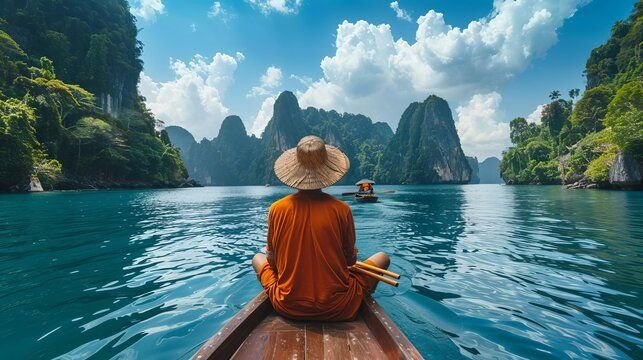

Southeast Asia has a tourism problem that it created entirely through its own excellence. Thailand, Bali, and Vietnam became so genuinely extraordinary — so photogenic, so culinarily rich, so well-infrastructured for visitors — that the rest of the region spent two decades standing quietly in their shadow, equally remarkable and dramatically undervisited.
That shadow is worth stepping out of.
The countries and destinations below are not lesser versions of their famous neighbours. They are different experiences entirely — places with their own distinct cultures, landscapes, histories, and flavours that reward the traveller willing to look slightly beyond the obvious. In several cases, they offer experiences that Thailand, Bali, and Vietnam simply cannot replicate.
The tourist trail exists for good reasons. But the most interesting travel has always happened slightly to the side of it.
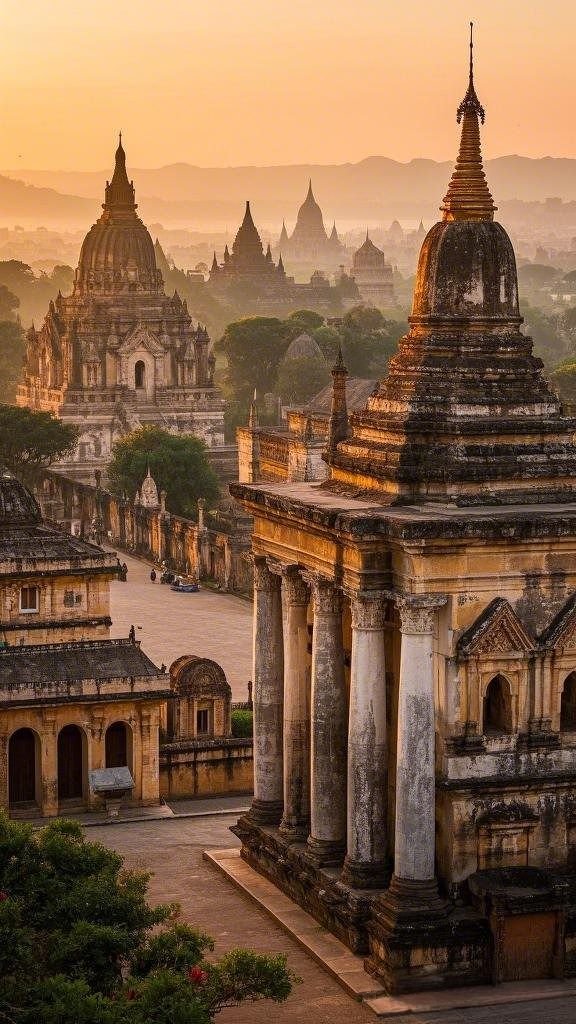
Myanmar — Ancient Temples and a Country in Transition
A note of context before anything else: Myanmar’s political situation has been complex and evolving since the military coup of 2021. Travel here requires genuine research into the current situation, careful consideration of the ethical dimensions of tourism revenue, and up-to-date government travel advisories. For travellers who make an informed decision to visit, what awaits is a country of staggering historical and natural beauty that receives a fraction of the visitors its heritage warrants.
Bagan — a plain of 2,000 ancient Buddhist temples stretching to the horizon, best seen from a hot air balloon at dawn or by e-bike at dusk — is among the most extraordinary archaeological landscapes on earth. The Inle Lake region, where fishermen balance on one leg at the bow of their boats to cast nets in the early morning mist, delivers a visual and cultural experience with no parallel in the region. Yangon’s colonial architecture — faded, layered, and atmospheric in a way that no renovated city can replicate — tells a story of empire, independence, and resilience that rewards extended exploration.
Practical note: Research current entry requirements and travel advisories carefully. Ethical tourism operators who direct revenue away from military-controlled enterprises are the recommended approach for travellers who choose to visit.
Laos — The Slow Country That Changes Your Pace
Laos is Southeast Asia at its quietest, its most unhurried, and its most spiritually resonant. In a region defined by sensory intensity and relentless forward motion, Laos operates at a different frequency — one that most travellers initially find disorienting and ultimately find deeply valuable.
Luang Prabang — a UNESCO-listed town at the confluence of the Mekong and Nam Khan rivers — is the centrepiece. The daily alms-giving ceremony at dawn, in which saffron-robed monks walk in silent procession through mist-covered streets to receive offerings from kneeling locals, is one of the most quietly moving experiences available to travellers in Southeast Asia. The town’s French colonial architecture, its night market, and the Kuang Si waterfall — a series of turquoise terraced pools in a jungle setting — complete a destination of extraordinary gentleness.
Beyond Luang Prabang, the 4,000 Islands region in the south — where the Mekong spreads into a labyrinth of islands, waterfalls, and river dolphins — offers slow travel at its most complete. Rent a bicycle, find a hammock, watch the river. There is no itinerary here and that is entirely the point.
Best time to visit: November through February for dry season and manageable temperatures.
Cambodia Beyond Angkor — A Country Consistently Undersold
Most visitors to Cambodia arrive for Angkor Wat and leave having seen relatively little else — which means they have experienced one extraordinary thing and missed an entire country of considerable depth.
Angkor itself deserves more than most visitors give it. The complex contains over 1,000 temples spread across 400 square kilometres of jungle, and the standard three-temple sunrise circuit barely scratches its surface. Ta Prohm — the jungle temple whose roots have grown through the stone over centuries — and the Bayon with its 200 serene stone faces require at minimum a full day each to absorb properly. Arriving before dawn and staying past sunset reveals versions of the temples that the day-tripper crowds never see.
Beyond Angkor: Kampot — a riverside town of crumbling French colonial buildings, excellent coffee, and extraordinary pepper farms in the surrounding countryside — has developed one of Southeast Asia’s most appealing slow-travel scenes without yet suffering the tourist density that has transformed similar towns elsewhere. The coastal town of Kep, 25 kilometres east, adds seafood of extraordinary freshness — the crab market’s pepper crab, eaten at a simple table overlooking the Gulf of Thailand, is one of the great under-celebrated food experiences in the region.
Phnom Penh’s Tuol Sleng Genocide Museum and the Choeung Ek memorial — sites of the Khmer Rouge’s atrocities — are among the most important historical sites in Southeast Asia and among the most sobering. They are not comfortable experiences. They are necessary ones.
Best time to visit: November through March for dry season.
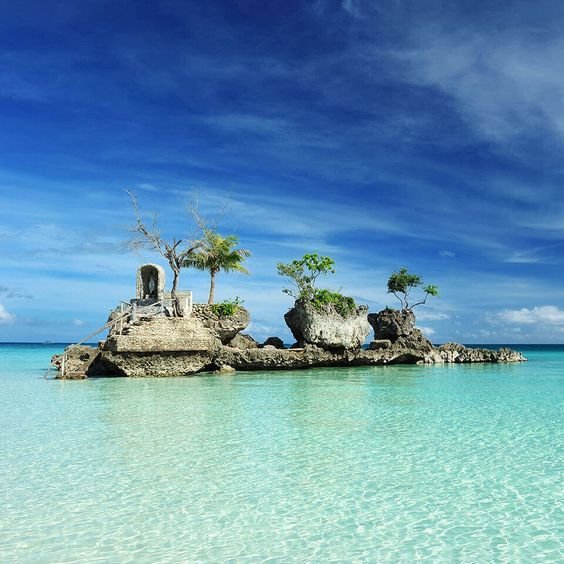
The Philippines Beyond Boracay — 7,641 Islands, Most of Them Empty
The Philippines is the most geographically extraordinary country in Southeast Asia — 7,641 islands, each with its own character, culture, dialect, and coastline — and most international visitors see approximately 0.03 percent of it, concentrated in Boracay and Palawan.
Both are genuinely spectacular. Both are also genuinely crowded. The Philippines beyond them is where the country’s real character lives.
Siargao — a teardrop-shaped island in the northeast that has built its reputation on surfing but offers far more: lagoons accessible only by boat, a cave pool system that looks like a film set, coconut forests cycling through on a single-speed bicycle, and a surf culture that remains genuinely local despite growing international recognition.
Batanes — the northernmost province of the Philippines, closer to Taiwan than to Manila, is a cluster of windswept islands where Ivatan stone houses have withstood centuries of typhoons, terraced hills roll to dramatic cliff edges above the Pacific, and the pace of life is so unhurried that the ferry schedule is considered a suggestion rather than a commitment. It is the Philippines at its most remote and its most distinctly itself.
The Visayas — the central island group of Cebu, Bohol, Negros, and Leyte contains the Chocolate Hills of Bohol, whale shark swimming at Oslob, the centuries-old Magellan’s Cross in Cebu City, and coastline after coastline of genuinely empty white sand beach. Island-hopping through the Visayas by ferry and occasional small aircraft is Southeast Asia’s finest multi-island itinerary that almost nobody is currently doing.
Best time to visit: December through May for the dry season across most islands.
East Timor — The Youngest Country in the World
East Timor — officially Timor-Leste — became independent in 2002 and remains the youngest country in Asia and one of the least visited destinations on earth. That combination of recent history, frontier travel conditions, and extraordinary natural beauty makes it one of the most genuinely unusual destinations available to the serious traveller in 2026.
Dili, the capital, carries the particular atmosphere of a country still finding itself — Portuguese colonial architecture alongside UN development projects, traditional tais textile markets beside surprisingly good coffee shops, and a warmth of welcome that comes specifically from a place that receives very few visitors and is genuinely pleased to see the ones who arrive.
The diving around Atauro Island — 25 kilometres north of Dili across the Banda Sea — is among the finest in the Indo-Pacific, with coral walls dropping to depths that even experienced divers describe as overwhelming in their richness. The mountainous interior, culminating at Mount Ramelau at 2,963 metres, offers trekking through villages where Portuguese, Tetum, and a dozen indigenous languages exist in complex daily combination.
East Timor is not comfortable travel. The infrastructure is limited, the roads are challenging, and the tourist industry is minimal. It is, for the right traveller, precisely what makes it extraordinary.
Best time to visit: June through September for the dry season and clearest diving conditions.
Brunei — The Pocket Country With No Equal
Brunei is Southeast Asia’s great overlooked destination — an oil-rich sultanate on the north coast of Borneo that most travellers fly over without considering stopping. It is tiny, deeply Islamic, and the antithesis of the party-tourism model that defines much of the region. It is also, for those who visit, a genuinely fascinating window into a way of organising a country and a society that exists nowhere else.
The Omar Ali Saifuddien Mosque — reflecting in its artificial lagoon in the centre of Bandar Seri Begawan — is among the most beautiful examples of Islamic architecture in Southeast Asia. The Kampong Ayer water village — a community of 30,000 people living in stilted houses above the Brunei River, navigated by water taxi, with its own schools, mosques, and fire stations — is the largest water settlement in the world and one of Southeast Asia’s most extraordinary living communities.
The Ulu Temburong National Park — accessible only by longboat through mangrove rivers — delivers pristine Borneo rainforest with a canopy walkway offering views across an unbroken jungle horizon that is increasingly rare anywhere in the region. Brunei protects 70 percent of its land as forest. The result is visible and remarkable.
Practical note: Alcohol is prohibited in Brunei and dress codes in religious sites are strictly observed. These are cultural requirements, not inconveniences — approach them accordingly.
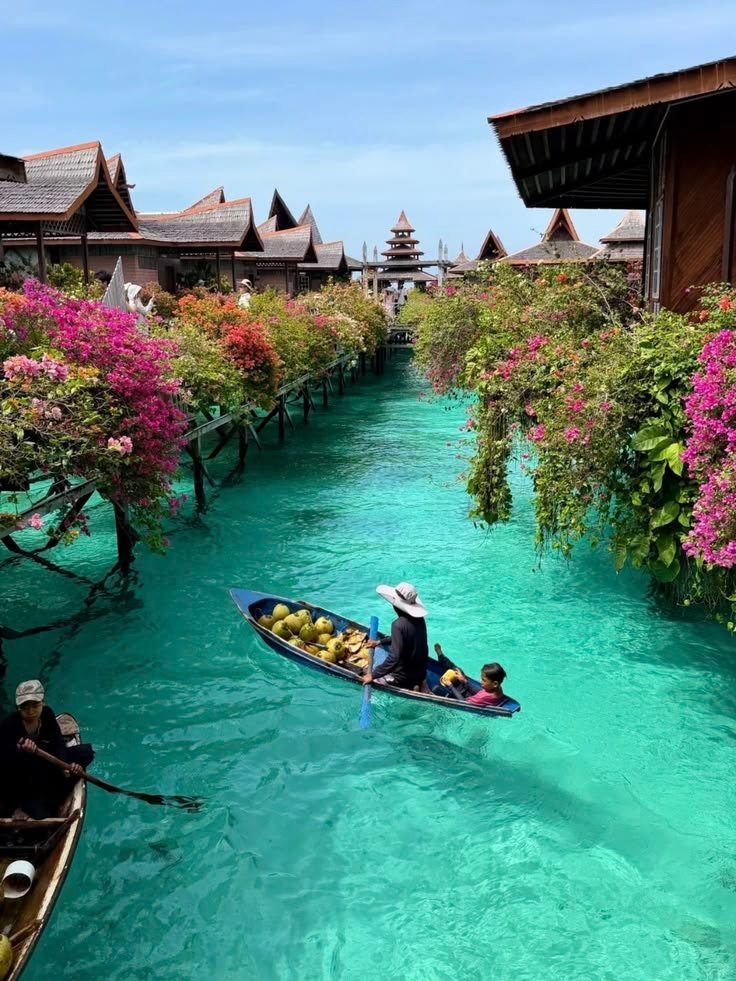
Malaysian Borneo — Orangutans, Rainforest and Caves
While peninsular Malaysia is well-established on the tourist circuit, Sabah and Sarawak — the Malaysian states occupying the northern third of Borneo — remain dramatically undervisited relative to what they offer.
Sabah’s headline experience is the Kinabalu National Park — Mount Kinabalu at 4,095 metres is the highest peak between the Himalayas and New Guinea and one of the world’s most accessible high-altitude climbs, rewarding with a sunrise above the clouds that experienced climbers rank among their finest. The Sepilok Orangutan Rehabilitation Centre, the pygmy elephant sanctuary along the Kinabatangan River, and the diving around the Semporna archipelago — where Sipadan Island consistently ranks among the world’s top five dive sites — complete a destination of extraordinary wildlife density.
Sarawak’s Mulu National Park contains the Sarawak Chamber — the largest cave chamber on earth, large enough to contain 40 Boeing 747s — and the Deer Cave, whose nightly exodus of three million bats spiralling into the dusk sky is one of the most spectacular natural events in Southeast Asia. The longhouse communities of the Iban people along the rivers of the interior offer genuine cultural immersion in a living tradition that has adapted to modernity on its own terms.
Best time to visit: March through October for most of Malaysian Borneo, avoiding the monsoon season.
Practical Southeast Asia Beyond the Trail
Getting between these destinations — AirAsia, Scoot, and Cebu Pacific connect most Southeast Asian capitals and secondary cities at prices that make multi-country itineraries genuinely affordable. Budget between $30 and $100 for most intra-regional flights. Ferry connections between Philippine islands and between Indonesian islands are frequent, affordable, and — particularly at sunset on the open water — among the most pleasurable forms of travel in the region.
Visas — the Philippines, Laos, and Cambodia all offer visa-on-arrival or eVisa for most Western passport holders. East Timor issues visas on arrival at Dili airport. Brunei is visa-free for most nationalities for up to 90 days. Myanmar’s current entry requirements change frequently — verify current status before planning.
Health — hepatitis A and typhoid vaccinations are recommended for most of the destinations above. Malaria prophylaxis is recommended for rural areas of Myanmar, Laos, and Malaysian Borneo. Consult a travel health clinic a minimum of six weeks before departure.
The right mindset — travel in less-visited Southeast Asia requires more flexibility, more patience, and more willingness to accept uncertainty than the polished tourist infrastructure of Thailand or Bali demands. It rewards those qualities with experiences of corresponding depth and authenticity. The infrastructure imperfections are not obstacles. They are, for the experienced traveller, part of the texture.
The Region That Rewards the Curious
Southeast Asia’s most famous destinations became famous for excellent reasons. Thailand’s islands, Bali’s rice terraces, and Vietnam’s ancient towns are genuinely magnificent — and will remain so regardless of how many people visit them each year.
But the region is larger, more varied, and more surprising than its tourist trail suggests. Every country above offers something that cannot be found in the places most travellers default to — a different flavour of the same extraordinary part of the world, available to anyone willing to look slightly further than the first search result.
The trail continues east. Follow it.
Explore our Destinations section for more Southeast Asia travel guides, hidden destination deep-dives, and the travel intelligence that keeps you ahead of the crowds in 2026 and beyond.