




There are countries you visit, and then there are countries that visit you back — long after you’ve returned home, still lingering in your memory like the last light on a snow-capped peak. Switzerland is unquestionably the latter.
Ten days in Switzerland sounds indulgent. It is. But it is also exactly enough time to move through this landlocked alpine jewel without feeling rushed — to let the glaciers settle into you, to learn the difference between the German-speaking north and the French-speaking west, and to understand why so many travellers who “just stop through” end up extending their stay entirely.
This is your complete, day-by-day guide to doing Switzerland right.
Why Switzerland Rewards the Unhurried Traveller
Most people make the mistake of treating Switzerland like a highlight reel — Zurich for a night, Interlaken for a selfie, Geneva for a layover. What they miss is the texture. The tiny cable cars ascending to villages with no road access. The alpine meadows that smell like wild herbs after rain. The cheese fondue eaten in near-silence with a family who has lived in the same valley for six generations.
Switzerland rewards slowness. And ten days, planned well, gives you just enough time to experience both its drama and its quiet.
The 10-Day Itinerary
Days 1–2: Zurich — Urban Energy Before the Mountains
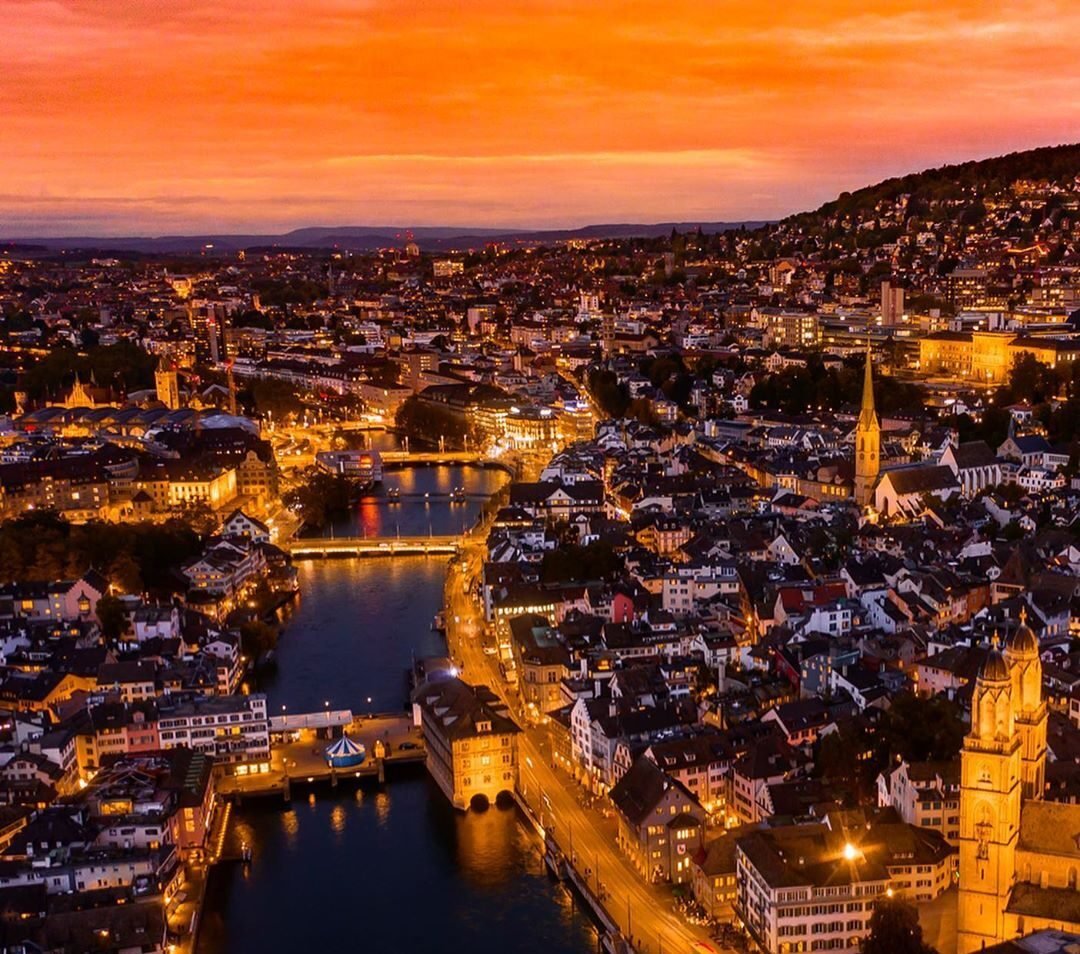
Begin in Zurich, Switzerland’s largest city and one of Europe’s most liveable. Spend your first morning walking the cobbled lanes of the Altstadt (Old Town), crossing the Münsterbrücke bridge, and climbing the towers of Grossmünster for your first view of the city’s rooftops over the lake. By afternoon, take a boat cruise on Lake Zurich — your first preview of the blue water and forested hills that will define the days ahead.
On day two, visit the Kunsthaus Zürich, one of Europe’s finest art museums, then head to Langstrasse for an evening that feels nothing like the polished Switzerland of postcards. It is real, slightly rough, and completely worth your time.
Days 3–4: Lucerne — Bridges, Chapels, and Mountain Backdrops
A 45-minute train ride brings you to Lucerne, widely considered Switzerland’s most photogenic city. The Chapel Bridge — a 14th-century covered wooden walkway stretching across the Reuss River — is one of the most recognised landmarks in the country, and nothing about seeing it in person disappoints.
From Lucerne, take a day trip up Mount Pilatus by the world’s steepest cogwheel railway. At the summit, above the clouds and the noise, you will understand something about scale that photographs simply cannot convey.
Days 5–6: Interlaken and the Jungfrau Region
Interlaken sits between two lakes with the Eiger, Mönch, and Jungfrau looming behind it like silent sentinels. It is the adventure capital of Switzerland — paragliding, white-water rafting, canyoning, and skydiving are all accessible from here. If adrenaline is not your thing, take the train up to Jungfraujoch, the “Top of Europe” at 3,454 metres, where the Aletsch Glacier stretches for 23 kilometres through a valley of ancient, wordless ice.
Days 7–8: Grindelwald and Lauterbrunnen — The Real Alpine Switzerland
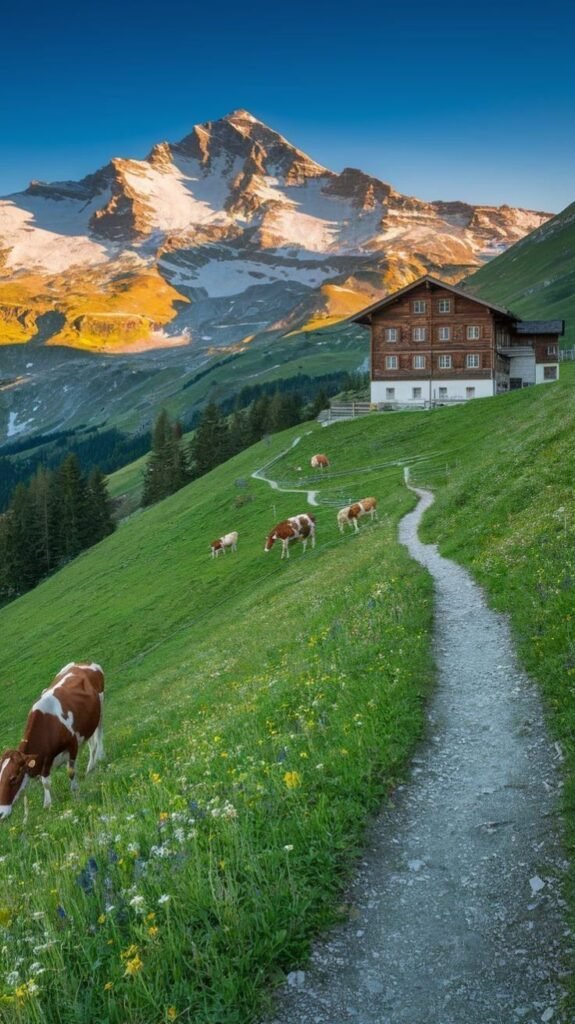
Leave Interlaken’s tourist trail and move into the valleys. Grindelwald offers some of the finest hiking in Europe, including the Bachalpsee trail, where the reflection of the Schreckhorn peak in the still lake feels almost offensive in its beauty. Lauterbrunnen, with its 72 waterfalls thundering down sheer cliff walls, is the valley that reportedly inspired J.R.R. Tolkien’s vision of Rivendell — and standing in it, you will believe every word of that story.
Days 9–10: Geneva or Lausanne — Lakeside Elegance to Close
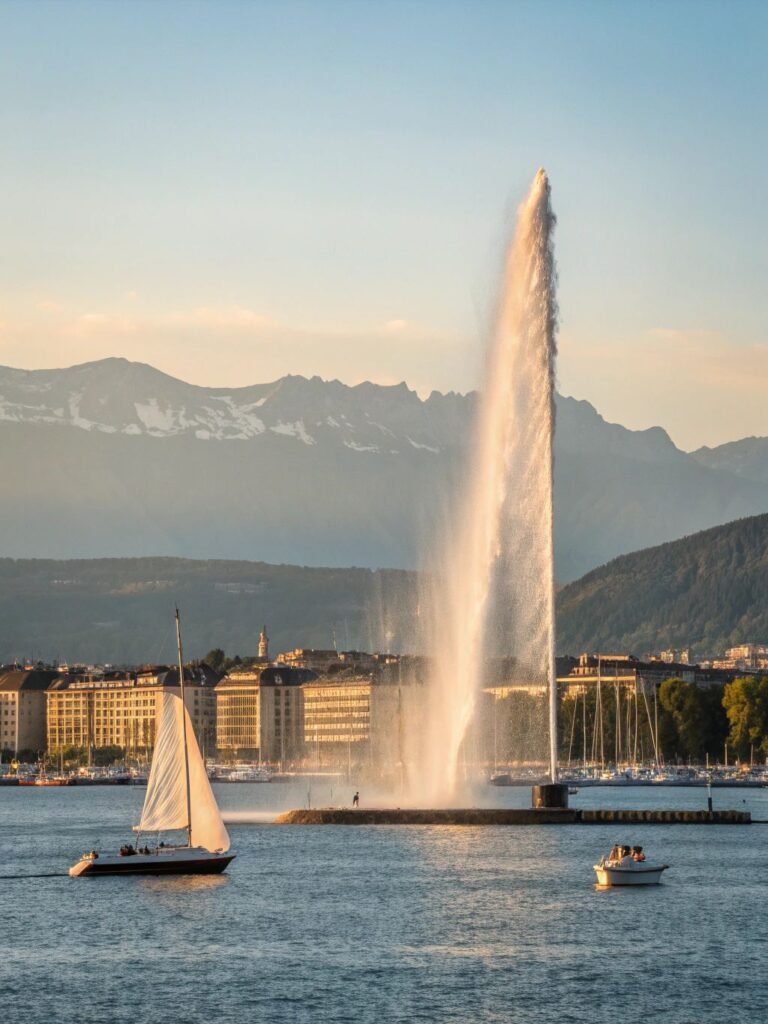
Finish your journey in the French-speaking west. Geneva carries the weight of global diplomacy gracefully, but its real pleasure is simpler: long walks along Lac Léman, excellent coffee, and the Jet d’Eau fountain shooting 140 metres into the sky. Alternatively, Lausanne — smaller, younger, and increasingly celebrated for its wine culture and Olympic Museum — offers a quieter close to ten days that have been anything but.
Practical Switzerland: What You Need to Know
Getting around — The Swiss Travel Pass is non-negotiable. It covers trains, buses, boats, and many mountain railways on a single pass. Switzerland’s public transport is so punctual and comprehensive that renting a car is genuinely unnecessary.
Best time to visit — June through September for hiking and clear mountain views. December through February for skiing, Christmas markets, and the particular magic of snow-buried villages. Avoid late October to early November, which is shoulder season with unpredictable weather.
Budget reality — Switzerland is expensive, consistently ranking among the world’s priciest destinations. Budget CHF 150–250 per person per day, excluding accommodation. Book trains and mountain excursions in advance — prices rise steeply with shorter notice.
What to eat — Rösti (the Swiss take on a potato cake), raclette, cheese fondue, and Zürcher Geschnetzeltes (sliced veal in a cream sauce). In the west, move toward French-influenced menus. Everywhere, eat the chocolate. The comparison to what you know at home will be quietly devastating.
The Feeling Switzerland Leaves You With
There is a particular kind of exhaustion that comes from ten days in Switzerland — not the fatigue of over-scheduling, but the deep, satisfying tiredness of someone who used every hour well. Who stood above the clouds, walked beside glaciers, ate too much fondue, and took trains through tunnels that emerged into valleys so beautiful they seemed staged.
Switzerland does not try to impress you. It simply exists, at altitude, in extraordinary detail — and trusts that you will notice.
You will notice.
Planning your Switzerland trip? Explore our Travel Guides section for destination deep-dives, packing tips, and the best travel tools for 2026.