







Tucked away in the heart of Bavaria lies a town that feels as though it has been gently lifted out of a storybook and preserved for centuries. Rothenburg ob der Tauber, with its cobblestone streets, medieval walls, and half-timbered houses, is often described as a living time capsule of Germany’s past. For travelers seeking a destination where history and charm intertwine seamlessly, this enchanting town offers a journey into the Middle Ages, without the need for imagination.
A Town Frozen in Time
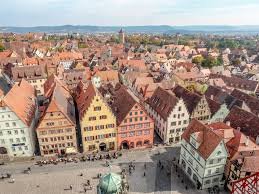
Rothenburg ob der Tauber, meaning “Red Fortress above the Tauber,” was founded in the 12th century and flourished as a free imperial city during the late Middle Ages. Its prosperity was tied to trade routes, viticulture, and craftsmanship, making it one of the wealthiest towns in the Holy Roman Empire.
Unlike many European towns, Rothenburg has managed to preserve much of its historic character. Walking through its gates is like stepping back into the 14th century. From the perfectly maintained city walls to the iconic Plönlein—an idyllic corner with a leaning timber-framed house and cobbled lanes leading to watchtowers—the town embodies the spirit of medieval Germany.
The Magic of the Old Town
At the heart of Rothenburg lies the Marktplatz, or Market Square, framed by the Gothic-style Town Hall and the ornate St. George Fountain. The Town Hall itself tells a story of time’s passage, blending Gothic and Renaissance architecture. Climb its tower, and you’ll be rewarded with panoramic views of the old town’s red-tiled roofs stretching to the horizon.
Nearby, narrow lanes reveal treasures at every turn: charming bakeries offering the famous Schneeball (snowball pastry), cozy taverns serving Franconian wine, and boutiques filled with traditional handicrafts. Evenings bring a special kind of magic as lanterns illuminate the streets and the Night Watchman’s Tour begins, where guides in medieval attire recount tales of Rothenburg’s storied past.
A Town of Legends and Resilience
Rothenburg’s history is rich with legends, one of the most famous being the “Master Draught” tale. According to local lore, during the Thirty Years’ War in 1631, General Tilly threatened to destroy the town. Salvation supposedly came when the town’s mayor drank nearly three liters of wine in one gulp, impressing Tilly enough to spare Rothenburg. Though historians debate its accuracy, the story is celebrated annually during the Meistertrunk Festival, bringing the legend to life in vibrant reenactments.
The town also carries scars from World War II. In 1945, Rothenburg narrowly avoided destruction when American forces chose to negotiate its surrender rather than bomb it, acknowledging its cultural value. This decision preserved the town as a historical treasure for future generations.
Rothenburg as a Living Museum
What sets Rothenburg apart is not just its preserved architecture but the way it embraces history as part of daily life. Museums such as the Medieval Crime and Justice Museum and the German Christmas Museum offer immersive insights into the past. Meanwhile, traditional festivals, markets, and seasonal events ensure that history is not confined to books or buildings—it’s alive in the town’s rhythms.
Perhaps the most magical time to visit is during the Rothenburg Christmas Market, one of Germany’s oldest. The town transforms into a winter wonderland, where twinkling lights, mulled wine, and carolers revive centuries-old traditions.
A Symbol of Bavaria’s Heritage
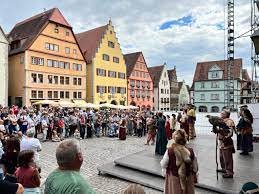
Rothenburg ob der Tauber has become an international symbol of Bavaria’s cultural and historical identity. It has inspired artists, filmmakers, and even theme parks—Disney’s animators drew from its architecture when creating “Pinocchio” and parts of Fantasyland. Yet despite its fame, Rothenburg retains an intimate charm. Visitors are encouraged not just to take photos but to slow down, walk its walls, and imagine life in another century.
Final Reflections
In an age of rapid modernization, Rothenburg ob der Tauber stands as a rare time capsule, reminding us of the beauty in preserving history. Its medieval streets, legends, and traditions invite travelers to step outside the present moment and into a world where time seems to stand still.
For anyone wandering through Bavaria, Rothenburg is more than a tourist stop—it is a journey into Europe’s living heritage, a place where the past whispers through every tower, stone, and timbered home.